The Power of Partnerships in Sign-Making
Working with other businesses can open doors to new markets, services, and expertise. Here, SignLink examines how building the right partnerships can strengthen day-to-day operations and long-term success.

With a variety of different hardware options on the market for wide-format printers and sign-makers, we take a look at the latest roll-to-roll devices and ask four manufacturers their thoughts on the developments and trends in this sector

As fabric printing has become more and more popular in recent years, the role of roll-to-roll printers has also increased in popularity thanks to their ability handle a wide range of media types, as well as their ability to print fast and reliably.
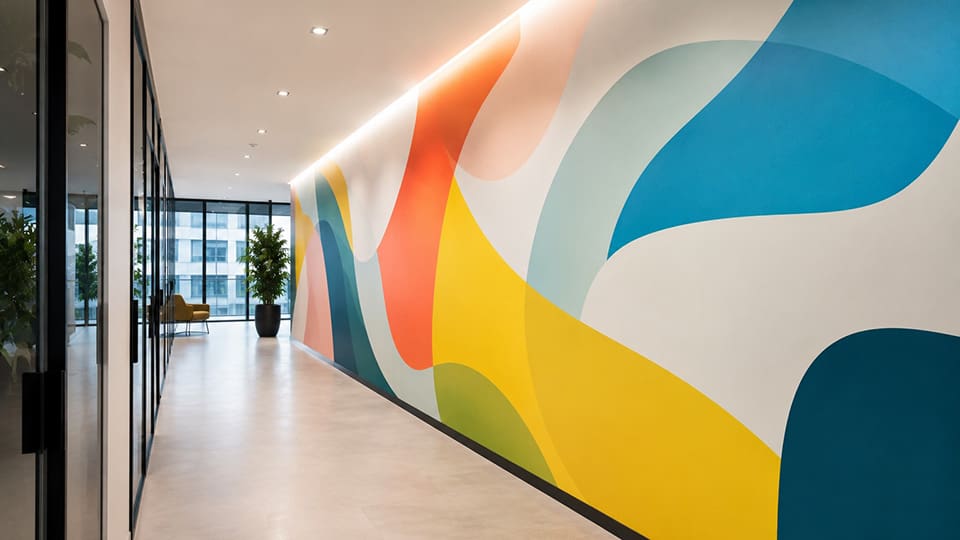
In the world of signage, roll-to-roll printers can be used for a number of applications such as banners, retail displays, wallpaper, interior décor, and signage. As businesses diversify, there are also a range of other markets printers and sign-makers can go into with a roll-to-roll device such as labels, wall and floor graphics, and even superwide-format prints.
With this market continuing to expand, and different brands offering new solutions and hardware options, we take a look at some of the options on the market, and speak to manufacturers about their advice when looking at a roll-to-roll device.
First up to offer its view on the world of roll-to-roll printers is HP, a global technology company in both computing and printing, with a strong focus on large-format printing, particularly roll-to-roll solutions.
Speaking about the company’s role in the industry, Bruce Van Greunen, UK & Ireland large format pre-sales consultant for HP, says: “HP’s large-format portfolio is designed to deliver an optimal balance of speed, image quality, and versatility, helping print service providers (PSPs) respond to constantly evolving market demands.”
Speaking about the benefits of HP’s roll-to-roll portfolio in 2026, Van Greunen explains: “HP’s Latex and DesignJet rolltoroll printers are well suited to the needs of printers and signmakers in 2026, supporting applications ranging from highimpact signage, vehicle graphics and décor to technical and CAD output.
“Features such as instant‑dry Latex inks, high‑speed production, and broad media compatibility help customers meet growing demand for fast turnaround and short‑run work while enabling more responsible production. HP’s water‑based Latex inks are designed to support a healthier work environment with lower emissions and compatibility with a wide range of recyclable and environmentally preferable media. The portfolio is scalable, allowing businesses to grow from entry‑level systems to high‑volume, industrial‑scale production environments in line with HP’s commitment to sustainable innovation.”
When it comes to the changes HP has seen in roll-to-roll machines in the past few years, Van Greunen says that have been significant advances in ink technology in the past two to three years, which has improved durability, colour accuracy, and support for a wider range of sustainable media.
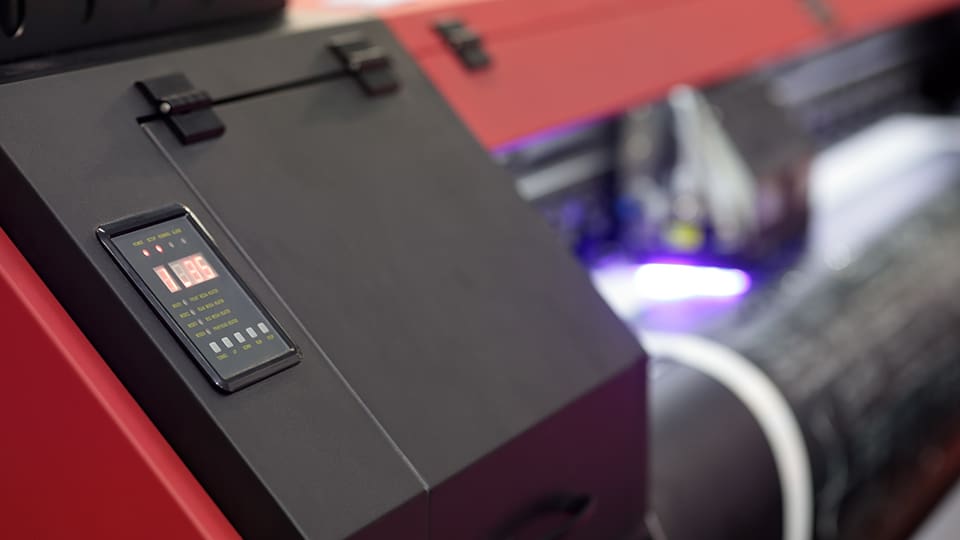
Manual intervention has also reduced according to Van Greunen thanks to increased automation in areas such as media handling, colour management, and overall maintenance. “At the same time, improved connectivity and software integration have enabled smarter, more datadriven production workflows,” Van Greunen adds.
When it comes to HP’s solutions, the company has released a number of new options for roll media within the Latex range, which span rigid, production, and industrial printers. In April 2025 the company released the HP Latex 730 and 830 models which are designed for small and medium-sized operations, and both offer double sided printing capabilities. The first 830W (which includes white ink) was installed at NTI Diatec in Ireland last year, which Andrew Dunne, print division manager at the company saying: “This state-of-the-art printer was selected for its exceptional print quality, versatility, and eco-friendly features.”
When it comes to industrial products, HP has the FS50 Series and the FS70 W, the latter of which was released in October last year and was billed as HP most productive Latex printer to date. The press offers vibrant colour prints at 117sq m/h for outdoor prints and 91sq m/h for indoors, with a max speed up to 162sq m/h. The addition of a 6L white ink cartridge has been added to allow PSPs to grow into higher-margin applications while providing confidence in unattended overnight printing.
The HP Latex FS70 W also features a number of enhancements designed to aid unattended printing, alongside a range of optimised print modes. Key features include a ‘jumbo’ dual-roll kit, a high-capacity ink kit supporting cartridges up to 10L, and an optimised cleaning system engineered to provide confidence in unattended long runs.
Factoid:Some high-speed roll-to-roll printers can print billboard-quality graphics at speeds exceeding 1,000sq ft per hour
Commenting on the ability for customers to provide more end-to-end solutions thanks to the diversity of roll-to-roll media, Van Greunen says: “HP roll‑to‑roll printers are designed to integrate seamlessly with RIP software, finishing solutions, and automated production workflows. Through continued investment in HP PrintOS, HP enables smarter workflow management, production monitoring, and data‑driven insights that can integrate with existing CRM and business systems.
“Compatibility with cutting, laminating, and mounting solutions supports efficient, end‑to‑end in‑house production, helping PSPs improve turnaround times, maintain consistent quality, and gain greater operational control.”
When it comes to roll-to-roll devices, as well as wide-format printers in general, many alternatives have come onto the market in recent years, with China bringing a lot of solutions to the market.
China Print Supplies (CPS) is a specialist important of printing equipment from Chinese manufacturers, offering the entire import and logistics process through to installation, support, and maintenance. Scott Clutton, managing director of CPS, says: “We hold spare parts in the UK and provide a 12-to-24-month gold warranty on everything we sell, so our customers get the competitive pricing of Chinese hardware with the security of a local partner.” When it comes to roll-to-roll presses specifically, Clutton says the company has built a portfolio that covers everything from entry-level 1.8m UV machines right up to 3.2m production printers.
When asked about what printers and sign-makers should be looking at in 2026, Clutton comments: “We’ve got three machines that are really turning heads right now. The Hapond UP3321D is our 3.2m simultaneous three-in-one double-sided printer, which lets you print both sides of a banner, flag, or backlit in a single pass, or run two completely independent jobs at the same time.
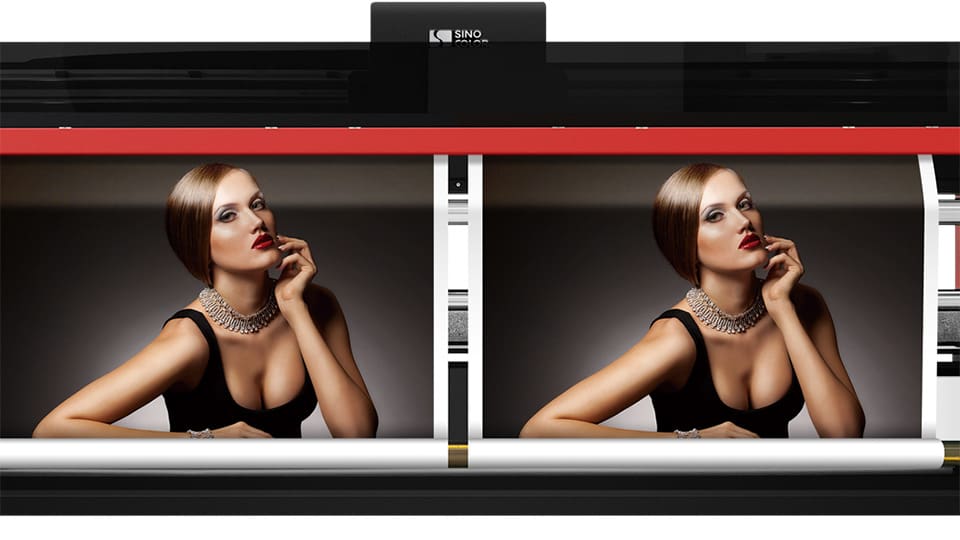
“The SinoColor UR3200 is a 3.2m UV roll-to-roll that covers everything from production-speed work at over 100sq m/hr right through to photographic quality output, with up to eight colour configurations including white, varnish, and fluorescent options.”
Clutton also highlights the Thunderjet AQ1800UV which is a high-speed 1.8m UV roll-to-roll device which “punches well above its weight” according to Clutton, due to its build quality and print performance.
When it comes to the changes in the market over the past few years, Clutton believes that roll-to-roll technology has been fairly settled for a while, with the two biggest developments being simultaneous double-sided printing (achievable on the Hapond UP3321D) and the expanded colour gamuts on UV printers (with six and eight colour configurations including fluorescent, white, and varnish options).
When you combine a roll-to-roll printer with a cutting plotter and the right preflight and layout software – which links everything together – you’ve got a genuine end-to-end workflow from file to finished product
Commenting on how CPS is responding to customers’ needs and requests, Clutton re-emphasises the firm’s dedication to support and reliability, but also points out the increased desires for hybrid and multi-function machines from businesses with smaller budgets or floorspace.
As printers and sign-makers continue to diversify, hardware upgrades are crucial for businesses staying relevant. When asked about how roll-to-roll printers can be used with other solutions, the standout for Clutton is the integration between print and cut. “When you combine a roll-to-roll printer with a cutting plotter and the right preflight and layout software – which links everything together – you’ve got a genuine end-to-end workflow from file to finished product,” says Clutton. “The software side of things has improved enormously, with RIP and nesting tools that talk directly to both the printer and the cutter, which takes a lot of the manual handling and guesswork out of production.”
As Clutton pointed out, roll-to-roll technology has been quite consistent for the past few years, so with this being the case, a number of manufacturers have used this stability in order to broaden offerings and help printers and sign-makers realise different revenue streams.
Agfa, a developer of printing systems, inks, and software for the print and signage industries, has used the past few years to overhaul its range of presses and give customers a more diverse selection of printers. Last year the company revealed its hybrid press the Jeti Tauro H3300 XUHS, as well as the Onset Panthera FB3216 to the public for the first time at FESPA Global Print Expo, while this year it debuted the Jeti Bronco H3300 HS.
Speaking of the company’s roll-to-roll offerings, Philip Van der Auwera, product manager for Sign & Display at Agfa, says: “Agfa offers several roll-to-roll machines that ensures print service providers can find the right press for their specific requirements.
“In the three-meter space, the Anapurna RTR3200i and Oberton RTR3300 stand out as defining solutions for the sector. The former is a dedicated 3.2m UV LED roll-to-roll printer designed as a robust production workhorse. It is well suited to businesses producing indoor and outdoor applications such as banners, billboards, display graphics, and other work on flexible media. It offers strong image quality and dependable productivity for companies looking to strengthen or expand their roll-to-roll capabilities.”
When it comes to the Oberon RTR3300, Agfa’s 3.3m high-end roll-to-roll platforms for PSPs with higher productivity and premium output quality, Van der Auwera says the press is particularly attractive to businesses that a roll-to-roll solution than can handle a wide range of applications in a demanding production environment.

“For printers seeking additional capacity, Agfa offers the 5.2-meter Jeti Condor RTR5200 HS,” notes Van der Auwera, who adds: “This machine can print up to three rolls at once at speeds up to 672m²/h and features clear fluid printing, high-opacity white ink, and in-line varnish. Quick and easy media loading, enhanced by multiple media handling solutions for large and heavy rolls, results in a truly versatile press that can tackle the biggest tasks with ease.”
Speaking of new technologies in recent years, Van der Auwera has observed a growing focus on automation, efficiency, and ease of use, which has all had a big impact on day-to-day production. He also notes that better media handling, enhanced print stability, along with smarter workflow integration has meant vital improvements in the market, which are needed to keep roll-to-roll technology evolving.
When it comes to how Agfa is responding to the needs of printers and sign-makers, Van der Auwera comments: “Agfa is focusing on the areas that matter most to its customers; namely, efficiency, versatility, and ease of use. The advancement of UV LED curing technology is central to this work as due its reduction in energy consumption while enabling compatibility with a wider range of media. In parallel, water-cooled print plates in the Oberon range ensure stable processing of heat-sensitive materials, maintaining consistent quality without risking substrate distortion.”
Van der Auwera says that operator efficiency is also being enhanced through features like dynamic vacuum systems, ionizer bars, and intuitive graphical user interfaces, which have all been designed to minimise manual intervention.
Concluding his thoughts, Auwera says: “Roll-to-roll printing delivers the greatest value when it is part of a connected production workflow. Through integration with Agfa’s Asanti workflow software, businesses can streamline everything from job preparation to color management, nesting, queue handling, and production planning. This creates a more efficient path from file submission through to printing and finishing.
“When combined with downstream finishing processes such as cutting, trimming, sewing, or mounting, roll-to-roll systems help PSPs deliver a more complete service offering. This supports faster turnaround times and leads to greater consistency, with the result of creating a smoother production journey.”
Last but not least, we speak to Hybrid Services, the exclusive distributor for Mimaki in the UK and Ireland. The company supplies and supports Mimaki’s entire product portfolio through its network of authorised reseller partners, which Hybrid says are “instrumental in specifying the most appropriate solution for the customer.”
Also commenting on the role of roll-to-roll printers in a business offering end-to-end solutions, Andrew Edwards, partner sales manager (Sign & Graphics) at Hybrid, says: “Roll-to-roll printers work best as part of a joined-up production line. When print is aligned with cutting, finishing, and job management, businesses reduce handling, avoid rework and move jobs through faster.
“Mimaki’s ecosystem supports this through seamless integration with its cutting solutions and RIP software. In addition, its latest PICT Printer Management Software allows businesses to monitor and manage their printers remotely, track production and maintain oversight across multiple devices or sites. Put together, print, cut and workflow management allows companies to offer a more complete end-to-end service, with better control of quality, lead times, and capacity.”
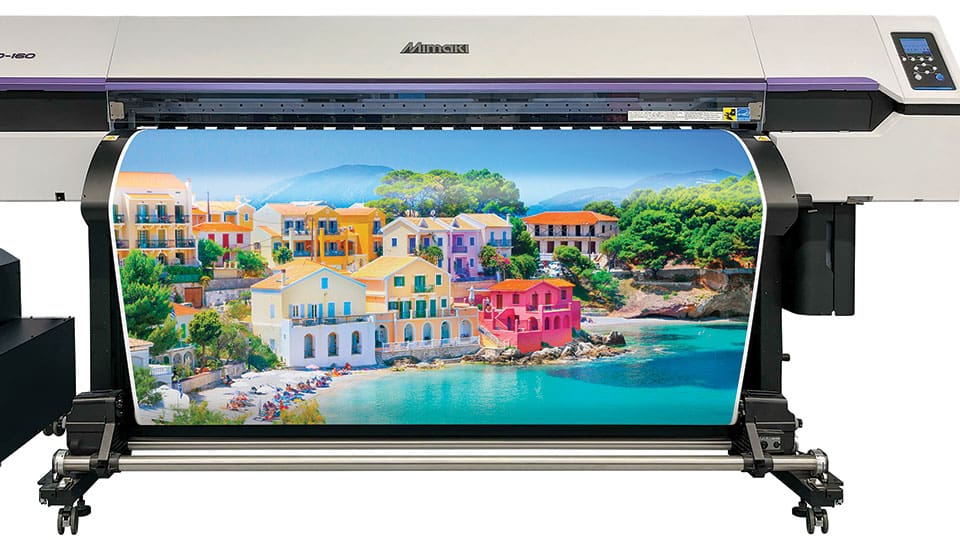
When it comes to Hybrid’s perspective on the changes in customer requests, Edwards says that the company is seeing customers prioritise predictable production and breadth of application over headline specifications. With this in mind, Edwards highlights the recently launched Mimaki UJ330H-160 Hybrid UV printer, as it gives businesses the option to print to roll-fed media and rigid boards on one platform.
“For an accessible route into UV, Mimaki’s brand new UJV200-130 and UJV200-160 are strong options for everyday roll applications such as general signage, window graphics and short-run display work,” notes Edwards, who adds: “Solvent options such as the Mimaki JV330/CJV330 and JV200/CJV200 Series remain proven platforms – available in print-only and print-and-cut configurations – for businesses that need consistently high-quality throughput and a familiar workflow for sign and graphics production.”
Regarding the changes in technologies over the past two to three years experienced by Hybrid, Edwards emphasises the effort to make production easier to run, and easier to repeat. “Mimaki has added automation and control features which reduce set-up time, cutting down operator intervention and helping print companies keep output consistent over long runs and across different media.
“These advances included automated media set-up, improved dot control and a raft of Mimaki’s proprietary Core Technologies, all designed to keep printing stable whilst reducing maintenance.”
As evident by all those we have spoken to, roll-to-roll printers remain a stable and evolving part of print and signage hardware, with more variations and options available than was seen before.
Van Greunen says: “Looking ahead, rolltoroll print providers are increasingly focused on efficiency, sustainability, and flexibility as they adapt to shorter runs, faster turnaround times, and a broader range of applications. HP continues to invest in technologies that help customers streamline production, reduce waste, and futureproof their businesses. By combining reliable hardware with intelligent workflow and service innovation, HP aims to support longterm growth opportunities for printers and signmakers.”
Customers want machines that are straightforward to operate, reliable and affordable to run
Edwards echoes the simplicity that is being fed into new roll-to-roll devices, adding: “Customers want machines that are straightforward to operate, reliable and affordable to run. Mimaki has addressed that with simpler workflows, reduced routine maintenance and innovative yet simple ink-saving functionality.”
Simplicity, affordability, and problem-solving are all elements brought up by the companies we have spoken to, with Agfa and CPS also demonstrating that new technologies, options, and answers are allowing printers and sign-makers to see their output in a new way.
If you didn’t think a roll-to-roll printer was an option for your business before, or if you got an older model which lags behind current innovations, perhaps now is the time to investigate the various options on the market.