The Power of Partnerships in Sign-Making
Working with other businesses can open doors to new markets, services, and expertise. Here, SignLink examines how building the right partnerships can strengthen day-to-day operations and long-term success.

Blending creativity with technical precision, vehicle wrapping is opening up new possibilities for signage companies looking to move beyond traditional applications. Rob Fletcher finds out more

Vehicle wrapping has firmly established itself as one of the most popular expansion areas for signage companies in recent years. Once considered a niche service, it is now a core offering for many businesses, driven by increasing demand from brands seeking impactful and cost-effective ways to promote their message on the move.
From full fleet graphics to colour change wraps and specialist finishes, the scope of applications continues to grow. Advances in materials and installation techniques have made wraps more durable, versatile, and visually striking, enabling companies to take on a wider range of projects across commercial, retail, and private markets.
However, while the opportunity is clear, success in vehicle wrapping requires more than simply adding another service line. Quality of installation, material selection, and design expertise all play a crucial role, meaning companies must carefully consider how they approach this fast-moving and highly competitive segment.
The good news for those in this market is that there is a solid choice of reliable suppliers and material manufacturers to work with. Among those is 3M, whose EMEA field marketing manager for personal auto solutions, Pen Webley, says for print and signage businesses entering the vehicle wrapping field, several common pitfalls can hinder success.
“One of the most frequent mistakes is selecting the wrong film type, using intermediate or nonconformable materials on complex curves often leads to lifting or premature failure,” Webley says, continuing: “Surface preparation is another challenge; inadequate cleaning or decontamination remains a leading cause of adhesion issues. Temperature control during installation is also essential, as extreme conditions affect tack and stretch behaviour. To prevent these challenges before happening, installation training is critical, such as the 3M Endorsed Installer training on offer.”
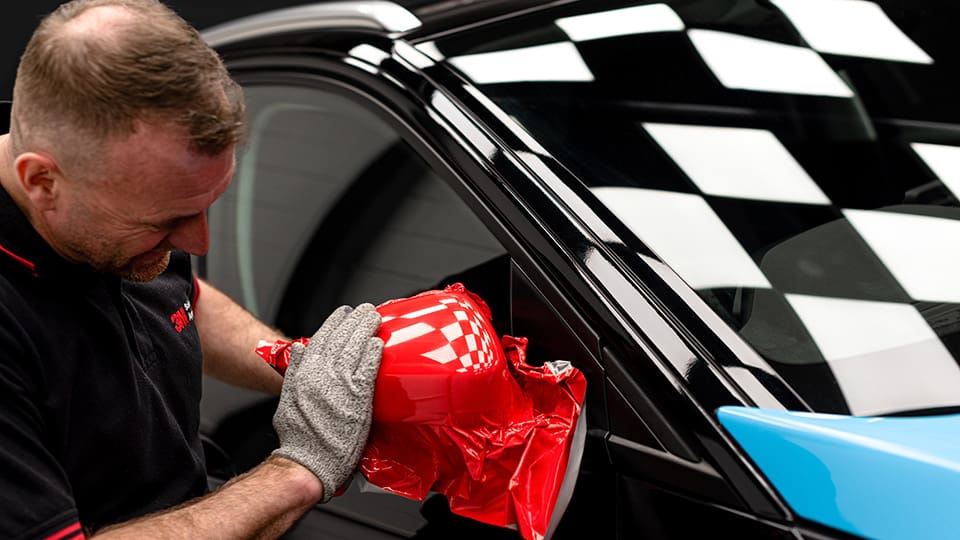
For those that do make the move, Webley says there are certain demands and trends to keep in mind to help them win the most profitable work. In the B2B market, she says 3M sees companies increasingly using vehicle graphics as a cost effective, high impact advertising method that avoids the permanence of a paint job. She adds improvements in wrap film technology have increased confidence in both short term and long-term applications.
“Advances in wrap film material technology have transformed what installers can achieve,” she explains, adding: “Modern films offer improved outdoor durability, enhanced UV resistance, and better protection against fading and cracking, resulting in longer service life.
“The range of finish options has expanded dramatically, giving installers access to gloss, matte, satin, metallic, brushed, and colourshift effects that previously required custom paint. Application has also become more efficient thanks to advanced adhesive systems such as airrelease offered by 3M Comply and repositionable technology as shown by 3M Controltac, reducing installation time and enabling cleaner, more reliable removals.”
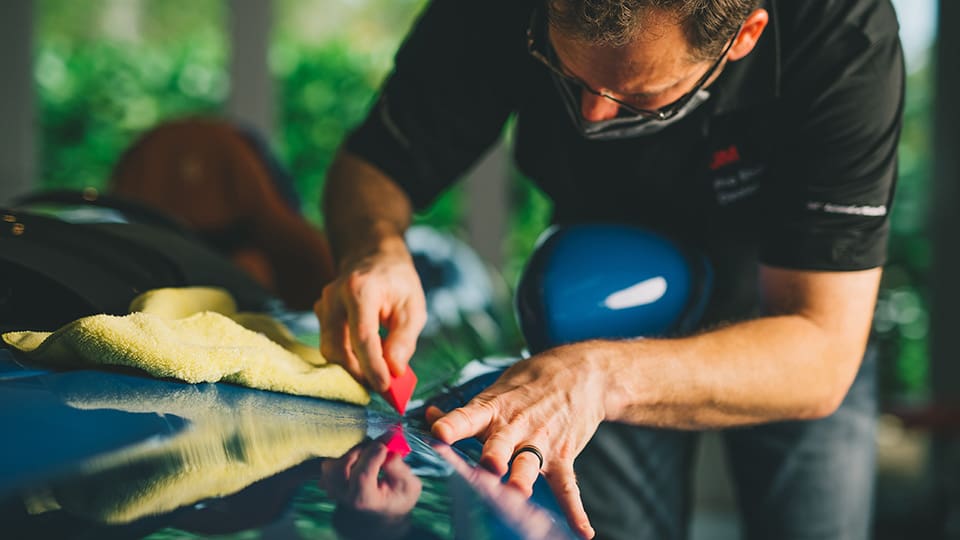
Looking to B2C, she says that personal customisation remains a key demand driver, but increasingly protection – such as that offered by the 3M Paint Protection Film range – is becoming an important factor.
“The market is seeing new and innovative products being launched; one example is 3M Protection Wrap Film that combines protection and colour change in one film. Application choice has also become more flexible, as seen with the 3M Protection Wrap Film, which can be applied both wet or dry.”
Advances in wrap film material technology has transformed what installers can achieve
As for future demand, Webley says several areas present strong growth potential for the wrapping market. She says fleet modernisation will continue as companies update branding and pursue flexible, scalable identity solutions across large vehicle groups.
Webley also says personal customisation remains a major opportunity, particularly with the demand for premium textures, specialty effects, and unique colour change finishes. Hybrid wraps that combine aesthetic films with protective layers are also gaining traction as customers look for a blend of appearance and surface protection. In addition, she notes how the rise of electric vehicles offers another emerging segment, as EV fleets and private owners seek branding and protective solutions amid limited OEM colour options.
Elsewhere, Paola Cerchiai, head of go-to-market and trade marketing graphics at Fedrigoni, says one of the main growth drivers is the increasing need for cost-effective, high-impact advertising.
“Currently, the strongest demand can be seen across commercial fleets, last-mile delivery services, such as food delivery, and small- to medium-sized enterprises that want to promote their brand locally, which are rapidly expanding and require scalable branding solutions,” she says.
“Fleet graphics in particular offer a way to transform vehicles into mobile billboards, delivering continuous visibility at a relatively low cost. At the same time, there is strong demand from the personalisation segment, where end users are looking for unique finishes, colour changes, and customisation options.”
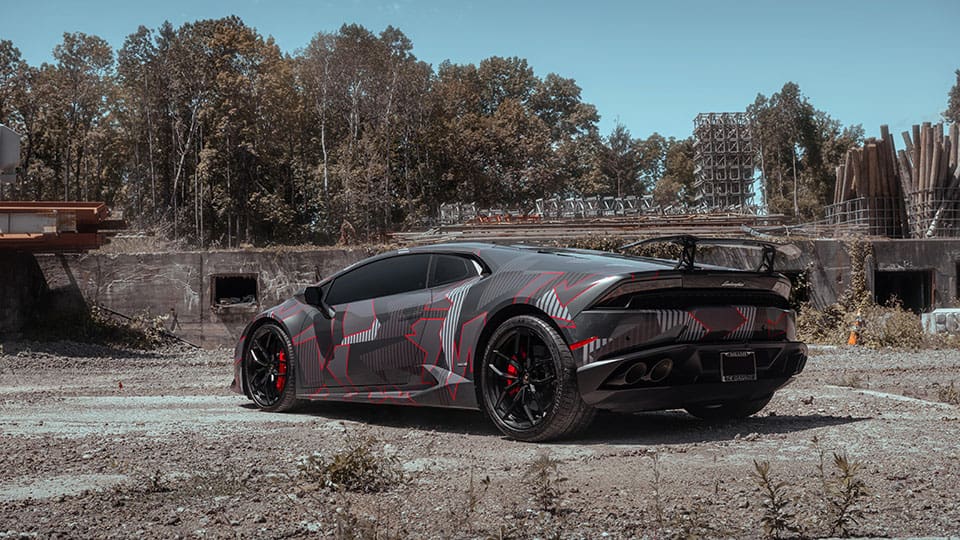
Cerchiai goes on to say that advances in wrapping films and materials have significantly expanded what is possible for installers. She explains that modern cast films offer excellent conformability, making applications on complex curves and recessed areas easier to handle.
“Improvements in adhesive technologies such as our slide and tack technology have made installation faster and more forgiving, reducing bubbles and rework,” Cerchiai says, adding: “In terms of durability, today’s films provide longer lifespans, improved UV resistance, and greater dimensional stability. At the same time, the variety of finishes has increased, from matte and satin to textured and special-effect films, supporting both functional and aesthetic applications.”
Looking ahead, Cerchiai says the biggest opportunities in vehicle wrapping lie in both market expansion and application innovation. However, she also notes increasing interest in more sustainable materials, encouraging the development of environmentally responsible films without compromising performance – suggesting even more opportunities for growth.
That said, for those considering entering the market, Cerchiai is keen to highlight some of the most common issues newcomers may encounter.
In reality, wrapping requires a higher level of technical expertise, particularly when working with curves, recesses, and tension management
“One of the most frequent mistakes is a lack of proper understanding of the differences between calendared and cast vinyls,” Cerchiai explains, continuing: “Price is often the main decision driver, but in vehicle wrapping this can lead to costly mistakes. Choosing the wrong type of film for the application, for example, using calendared films on complex surfaces or for long-term projects, can result in failure over time.
“Another key issue is underestimating the importance of surface preparation and correct application techniques, including temperature control and post-heating. Many new entrants also overlook the need for proper training, assuming that existing signage skills are sufficient. In reality, wrapping requires a higher level of technical expertise, particularly when working with curves, recesses, and tension management.”
Another leading name in this market is Avery Dennison. Mike Rees, sales and business development manager for the UK and Ireland at Avery Dennison, says fleet work remains a key area, especially with supermarket home delivery vehicles and van conversions.
“Our Supreme Wrapping Film and digital offerings are popular with fleet contracts,” he says, continuing: “We can bespoke-colour match the SWF to guarantee brand colour, while the warranty period of ten years with near clean removal is a big benefit factor. Customers also now have a choice of over 100 colours with Avery Dennison SWF, and we have a visualiser they can use to see the pre-image of their vehicle.”
As for other benefits of materials from Avery Dennison, Rees picks out how it’s easy-apply adhesive offers simpler application and is repositionable, while the developer’s finished gloss and matte face film offer excellent aesthetics and optimisation, on top of high opacity. In addition, the company recently rolled out its new Paint Protection Film to address the rising demand for protection-type projects that was also highlighted by 3M’s Webley.
With digital products, the most important aspect is to allow the product to flash off prior to fitting
For those new to this market or companies seeking to improve their offering, Rees says the most common challenge he sees involves the initial cleaning of the vehicle. This is especially true because new cars have various surfaces applied that aren’t compatible with adhesive bonding unless cleaned thoroughly.
He also picks up on the importance of post-heating, advising: “With digital products, the most important aspect is to allow the product to outgas prior to fitting. This can take between 24 and 48 hours, and we often see issues because the product is sometimes fitted before the full process is complete.”
Clearly, there is plenty of new materials and innovations coming to market at a steady rate, with those in the sector not short of options if they are seeking a new effect or taking on a particularly tricky project. Innovation was also very much the subject of discussion at the most recent edition of WrapFest, which, for the first time, took place outside the UK and alongside the main FESPA Global Print Expo 2026 event in Barcelona, Spain.
As was the case at the first two outings of WrapFest – both of which were hosted at Silverstone in the UK – the event offered attendees an overview of cross-sector opportunities within print, signage, personalisation, and beyond. This year, the event was spread across an area of 2,000sq m, with exhibitors showing off their latest products, solutions, media, and consumables – not just in vehicle wrapping but also the wider vinyl applications market.
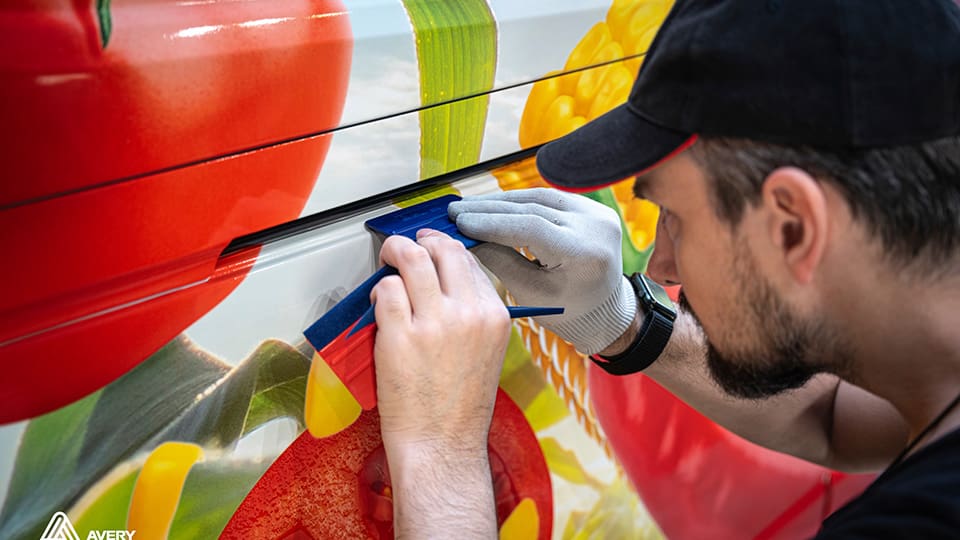
Duncan MacOwan, FESPA’s head of marketing and events, comments: “Since its launch in 2023, WrapFest has established itself as a key meeting point for wrapping professionals, which offers valuable insights into the latest trends and innovations across the sector.
“It has consistently enabled attendees to identify and capitalise on opportunities that drive business growth and we are confident that bringing these events together will further strengthen this impact.”
Among the names in attendance this year were Antalis, Arlon, Hexis, LX Hausys, Legend PPF and SOIF, with highlights including informative ‘WrapTalks’ sessions offering insights into the latest trends and challenges within the industry, as well as how visitors could expand their business.
Factoid: According to Popin Graphics, a UK commercial vehicle will cover approximately 20,000 miles per year, meaning up to 12 million impressions each year
The event also hosted two rounds of FESPA’s World Wrap Masters, namely the European and Series Final competitions first-hand, judged by industry experts Ole Solskin, Kiss Lajos, Penelope Garrido, Ivan Tenchev, Carlos Ruiz, and Paige Walton.
As evident by this recent event, and those we have spoken to, vehicle wrapping has rapidly evolved from a niche offering into a core revenue stream for many signage businesses, driven by strong demand for high-impact, mobile advertising, and personalisation. However, success in this market depends on more than simply adding the service; material selection, surface preparation, and technical expertise remain critical, with training and process control essential to delivering consistent, high-quality results and long-term durability.