The Power of Partnerships in Sign-Making
Working with other businesses can open doors to new markets, services, and expertise. Here, SignLink examines how building the right partnerships can strengthen day-to-day operations and long-term success.

From large-scale installations to precision-crafted displays, LED signage is helping businesses stand out like never before. Rob Fletcher explores how sign-makers can make the most of this versatile and fast-evolving technology

LED signage has become something of a cornerstone of modern visual communication, offering sign-makers the ability to deliver bold, high-impact displays across a wide range of applications. From towering digital billboards to subtle architectural accents, LEDs are reshaping how brands capture attention.
Advances in efficiency, brightness, and control have made LED solutions more accessible and adaptable, allowing businesses to tailor signage to specific environments and audiences. Whether used for retail, hospitality, or corporate branding, the flexibility of LED technology is opening up new creative and commercial possibilities.
However, achieving standout results requires more than simply adding illumination. Careful planning, design integration and technical understanding are all essential to ensure performance, longevity, and visual impact. For sign-makers willing to invest in these areas, LED signage presents a powerful opportunity to differentiate and grow.
First up to offer advice and guidance to those companies seeking growth within this sector is Carlo Matarazzo, director at Digital Sign Solutions, which is part of Signs Now UK. Matarazzo explains that a stand-out LED installation is not just about brightness or resolution but how well it fits its environment.
“The best projects have a very clear intent, whether that’s to tell a story, guide movement, or create a memory,” Matarazzo says, continuing: “Great installations also respond to their surroundings – lighting, traffic, and atmosphere – so they belong rather than compete, and appear integrated rather than added on. The content itself is of course key; it has to be engaging, relevant, and dynamic to truly connect with people. A standard screen shows information, but a stand-out installation creates an experience.”
The best projects have a very clear intent, whether that’s to tell a story, guide movement, or create a memory
With this in mind, how do factors like brightness, colour calibration, and content optimisation impact the final result, and where do sign-makers most often go wrong when working with LED signage? Matarazzo says brightness, colour, and content tend to be treated as technical details, but all have a huge impact on how a screen is actually experienced.
Expanding, he says brightness levels should suit the environment; too high can feel harsh, too low and the screen lose impact. He adds that colour calibration is also important as even small inconsistencies can make an image feel ‘off’, even if people can’t explain why. However, he refers back to content, saying this ultimately dictates whether a screen succeeds or fails.
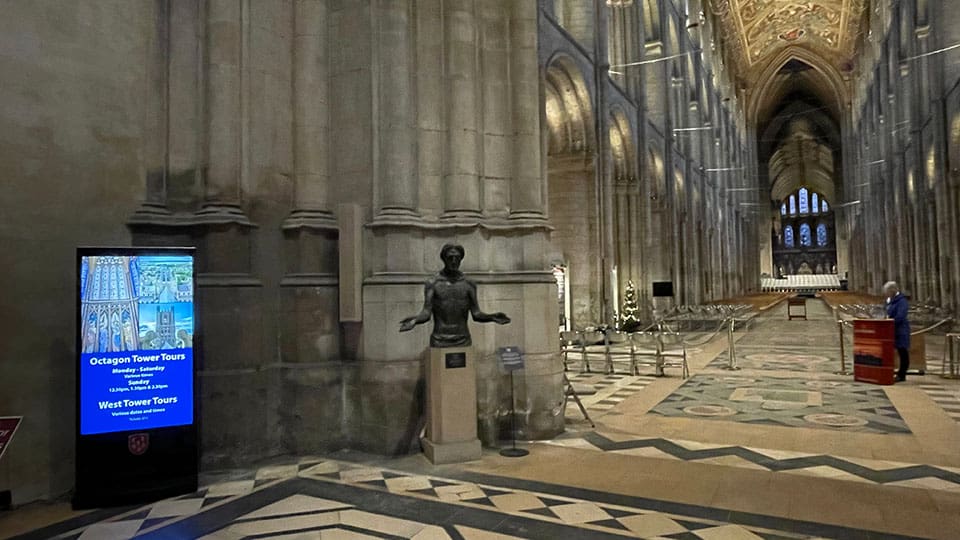
“They’re usually seen very briefly and at a distance, so simple, bold messaging will always work best,” he explains, adding: “Where sign-makers often go wrong is focusing too heavily on specifications rather than real-world performance; in general, a well-calibrated screen with well-designed content will outperform a higher-spec display that hasn’t been properly tuned.”
In terms of application types, Matarazzo says considerations across design, specification, and installation will differ from project to project. However, the core principles of clarity, impact, and purpose always remain consistent across digital displays.
With compact retail settings, Matarazzo says the viewing experience is close and considered, with greater emphasis on pixel pitch, colour accuracy, and content detail. Displays must integrate seamlessly into the surrounding space, with content suited to longer or repeat viewing at short distances.
However, with large-format outdoor screens, these are designed for visibility at distance and in motion, so they need bold, high-contrast content that can be understood instantly. On this, Matarazzo says higher brightness is essential to compete with ambient light, while weather resistance, thermal management, and long-term reliability are crucial for durability.
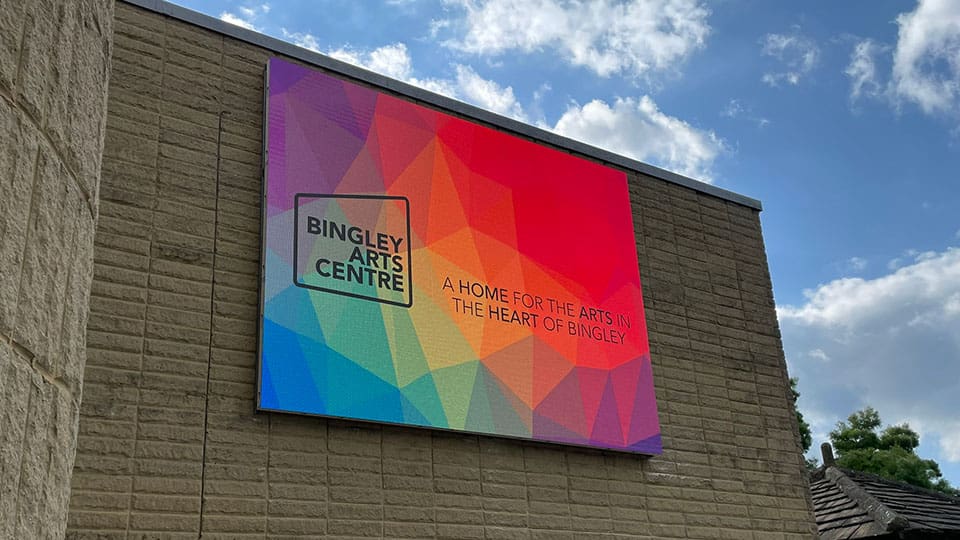
Matarazzo also says installation requirements also depend on the setting, explaining: “Retail environments need discreet, design-led integration within often constrained spaces, while outdoor installations are more engineering-focused, requiring structural support, safe access and consistent performance in sometimes challenging conditions. Neither approach is more complex - they just require different mindsets depending on the viewing context.”
So, for those moving into the area for the first time, what can these companies to do ensure a successful transition? Matarazzo believes moving into LED and digital signage is probably less of a leap and more of a natural next step. He says the easiest entry points without the need for large-scale installations are shop windows, retail displays, menu boards, reception areas, and meeting spaces, adding that the main shift is understanding that LED and digital signage are systems, not just products.
The sign and print businesses that succeed are the ones that stay curious, embrace collaboration, and see digital not as a departure from sign and print but as a natural extension of it
“They bring together hardware, content, and environment, so it is important to have a working knowledge of how these elements interact,” he says, adding: “We also believe that partnerships are often the fastest route to success, and we frequently collaborate with experienced suppliers, AV integrators, and content specialists.
“It’s very much about building on what you already do well – design, client relationships, and project management – while adding technical awareness. The sign and print businesses that succeed are the ones that stay curious, embrace collaboration, and see digital not as a departure from sign and print but as a natural extension of it.”
On the subject of partnerships within this area, Very Displays is a trade-only brand supplier of large-format print display products and portable signage solutions, working with its customers across a wide range of projects, including some within the LED signage sector.
Kirsty Corcoran, marketing manager of Very Displays, explains that when it comes to striking up a partnership, choosing the right supplier is key. She says having a clear understanding of their range, capabilities, and support offering makes integrating LED signage far more straightforward and ultimately more successful.
With this, she picks out an easier route to the market for newcomers, saying how rather than focusing on complex, fixed installations, companies should look to portable, reusable display systems, which build on what sign and print businesses already do.
“For many traditional sign-makers and printers, LED can feel like a leap into the unknown, with concerns around technical complexity and cost,” she advises, continuing: “Portable LED systems remove those barriers, offering a low-risk, practical entry point, without the need to become an AV specialist.”
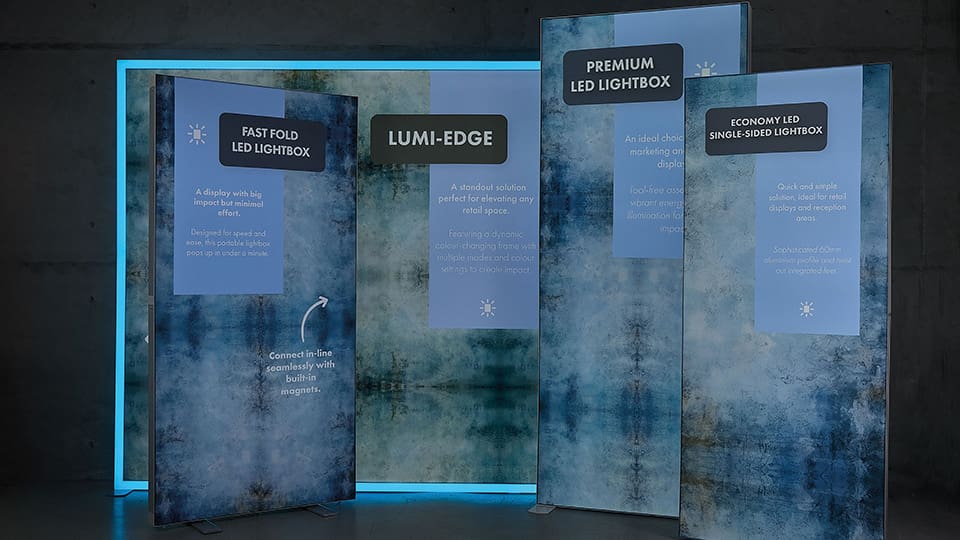
Very Displays addresses exactly this with its Lightbox range, with Corcoran saying how the products within this portfolio offer high-impact illumination with a flexible, low-risk approach.
“Whether it’s enhancing a small retail space or creating a large-scale modular exhibition stand, there’s a solution for all applications; the range is designed to suit all requirements,” she explains.
At the entry level end of the range is the Economy Lightbox, which Corcoran says provides a cost-effective option for budget-conscious projects. For speed and convenience, Corcoran points to the FAST-FOLD Lightbox, which assembles in under a minute and is billed as ideal for quick setups.
Towards the premium end are the Premium Lightboxes, which Corcoran says set the industry standard, with a wide range of sizes for more ambitious builds. Completing the line-up, the LUMI-EDGE Lightbox adds a dynamic twist, featuring a colour-changing frame with multiple modes and settings. This, Corcoran says, is perfect for brands looking to stand out and adapt their look with ease.
“These systems fit seamlessly into existing product ranges,” she says, adding: “If you’re already supplying exhibition stands, backwalls, retail graphics, or POS, you’re already operating in the environments where LED delivers the most impact. Portable LED simply enhances those spaces, adding movement, brightness, and flexibility without changing the core offering.”
Switching the focus back to one of the core growth industry markets of recent years, and as the use of LED digital signage continues to increase as more brands use the technology to connect with consumers. Jeroen Brants, global product director for LED at PPDS, says in terms of size and shape, there is a lot more scope for immersivity with well-integrated LED displays.
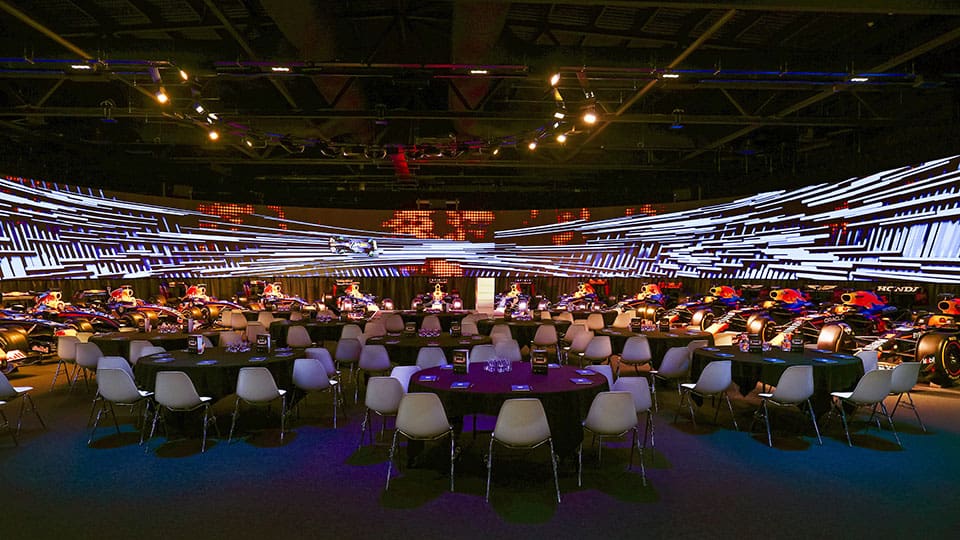
He offers the example of the giant Philips LED horseshoe at Oracle Red Bull Racing’s MK-7. Wrapping around the event space, the LED replaced a huge videowall and 12 giant hanging banners. Brants adds that bringing in high-quality sound means the stereo tracks around the display.
“The biggest shift is that you design for the use case and environment first, then choose the pixel pitch and installation method to match,” Brants says, adding: “A compact retail screen is about close-viewing impact, slim integration, and fast deployment; a large outdoor screen is about brightness, durability, service access, and structural engineering.
“With LED, there is the opportunity to tailor more to the viewing distance, to the type of content being viewed, and to who is viewing it. That’s really why LED has been seen as a bit of a dark art, especially when it was first emerging, as there were so many different factors to consider. As the technology has become more ‘mainstream’ it’s more easily understood, and we are also trying to make it more accessible still.”
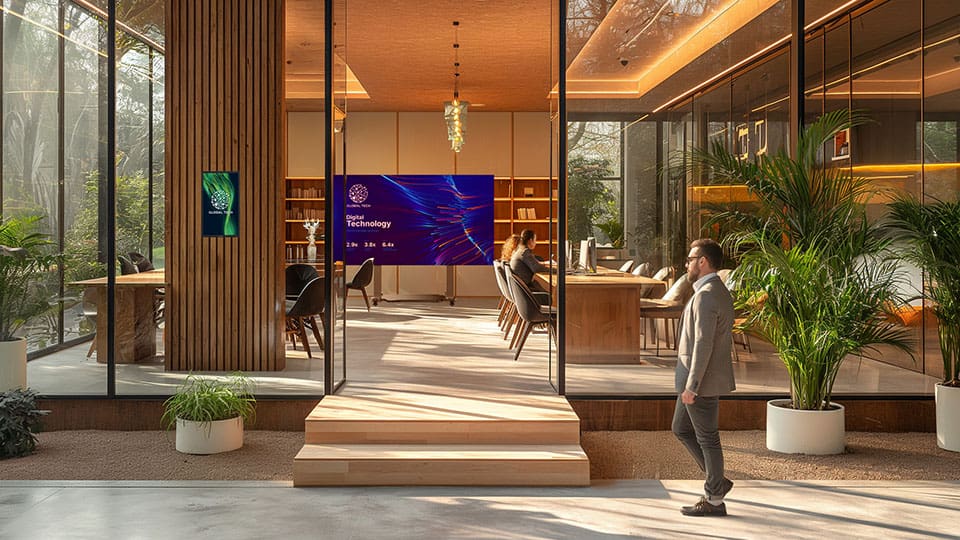
When it comes to LED, Brants says choosing a reputable, established brand usually ensures that key factors such as brightness, colour calibration, and refresh rate have been properly considered and addressed. Just as importantly, he says experienced teams behind these brands can offer guidance tailored to the specific needs of an installation. LED technology presents a wide range of options, enabling customers to select solutions that best suit both their audience and the display environment.
In terms of actual solutions, Brants says customers who want to create a custom display, Brants recommends the Philips LED Configurator. This, he says, allows people to add in details about their setting – indoor, outdoor, or brightness – their space, focusing on aspects such as size and viewing distance, as well as the audience and factors like whether higher refresh rates would be needed for cameras.
Factoid: Modern LED systems can achieve wide colour gamuts and are capable of displaying millions of colours through RGB mixing
“For those requiring a more standard 16:9 display, in terms of installation, Brants says the All In One LED displays are ‘pretty much ready out of the box’, making it an even more accessible option.
“Whatever is needed, ensuring you can draw on expertise from your manufacturer team, and from an experienced and well-trained LED installer, means that the considerations are better taken care of,” Brants adds.
He concludes: “For traditional sign and print businesses looking to enter the LED market, partnering with manufacturers, taking advantage of their training, and utilising their assets is key. It can be very easy to select the cheapest models on the market, have them shipped to your warehouse, and to try out the install unaided, but with the reassurance of a manufacturer with LED expertise that can be local to you, ready to help you out and advise you on those installs – that is invaluable and makes integrating LED into your portfolio much easier.”
With clearly plenty of movement in the LED signage sector, now could be the perfect time for your business to make a move into the market or shift up a gear in terms of evolving your offering. Partnering with trusted companies, such as those featured here, will give you a big advantage over your competition.