The Power of Partnerships in Sign-Making
Working with other businesses can open doors to new markets, services, and expertise. Here, SignLink examines how building the right partnerships can strengthen day-to-day operations and long-term success.

With the search for skilled labour becoming more competitive, Jonathan Pert examines the strategies signage organisations are using to champion apprenticeships and professional development

As the signage sector continues to push the boundaries of visual innovation, the industry’s long-term growth now hinges on its ability to bridge a widening skills gap and a tightening labour market. To understand how the sector is fighting back against the skills shortage and labour shortfall, we’ve gathered insights from eight key voices across the industry – spanning specialist recruiters, national trade associations, training organisations, and frontline employers.
From high-level institutional initiatives to the practical, boots-on-the-ground efforts of signage suppliers, we explore how the sector is working to ensure the UK sign industry remains a high-growth career path for the next generation.
The British Sign and Graphics Association (BSGA) plays a central role in championing the UK signage sector while encouraging collaboration and promoting best practice and compliance standards. Alongside this, the association provides a gateway for those seeking to engage with the industry, offering guidance and signposting to appropriate training and development routes.
This includes the Level Three Signage Technician Apprenticeship, which is designed to provide a structured entry route into the industry. The course covers design, production, fabrication, and installation, with the qualification supported by government funding to encourage wider employer and apprentice participation.
Speaking about the work of the association, Linda Edwards, managing director of the BSGA, says: “As the UK’s only dedicated signage trade association, the BSGA champions the nation’s signage industry by cultivating a supportive community that fosters collaboration, promotes compliance, strengthens communication, and drives industry leading best practice and sustainable growth.”
Edwards highlights the challenges facing the industry in recruiting talent, adding: “A key factor is still visibility. Despite the inherent diversity of the sector, it is not widely seen as a mainstream career option, which continues to limit the flow of new entrants.”
Edwards also points out that the industry is facing a widening skills gap, compounded by an ageing workforce, which is continuing to raise concerns regarding the transfer of specialist skills and knowledge bases that are not easily replaced. This, in her opinion, “creates a real pressure point for the long-term capability of our sector.”

Another figure in UK signage that highlights the skills gap issue is Colin Sinclair McDermott, aka The Online Print Coach – founder of Print Mastermind, an online training platform and business community for owners in the print and associated industries. However, McDermott posits that the biggest challenge “is not a lack of opportunity; it is a lack of awareness.” He continues: “Most people simply do not know the signage industry exists as a career path, let alone how varied and exciting it can be. On top of that, businesses are still trying to recruit based on old models, waiting for experienced people to appear instead of building their own talent.”
Alongside this, Sinclair McDermott believes that a perception issue is also at play, with younger generations not immediately seeing signage as creative or tech-driven, despite the truth being the opposite. As he puts it: “The companies that win here are the ones telling a better story about what they do and why it matters.”
Through Print Mastermind, Sinclair McDermott helps print and signage businesses grow through better marketing, smarter positioning, and stronger commercial thinking. “A big part of what we do is education,” he explains, adding: “This is not just for business owners, but for teams coming into the industry who need to understand how everything fits together. The industry is evolving fast, and it is no longer just about production; it is about problem-solving, creativity, and adding value to clients.”
There is still a huge opportunity in production and installation roles for those willing to learn, as these are the areas where demand is high, but talent is short
Sinclair McDermott has seen more interest from young professionals in the creative and digital side of the industry, whether that be design, branding, or social media. Roles that combine creativity with technology are particularly appealing in his opinion, especially when they involve things like wide-format applications or experiential graphics. He concludes: “There is still a huge opportunity in production and installation roles for those willing to learn, as these are the areas where demand is high but talent is short. The key is showing people that these roles are not just jobs, they are skills that can build long-term careers.”
Richard McCombe, managing director of Graphic Warehouse, is another strong advocate of education, entry points, and opportunities for the next generation in signage. His trade-focused wide-format print company hires a variety of younger people in roles across the business, working in tandem with local schools for outreach and recruitment and engaging with Scottish government youth programmes.
Talking about the benefits of the industry for those starting their career, McCombe says: “For newcomers, this is an industry that rewards people who are willing to learn across disciplines rather than specialise too early.
“It is also an environment where attitude and reliability often matter more than prior experience, as many of the technical skills can be taught.”
Like Sinclair McDermott, McCombe has found that design-led roles tend to attract the most interest initially, as they are more visible and familiar to younger people. However, he sees increased engagement in hybrid roles that combine production, software, and machine operation, particularly with the rise automation and digital workflows. As he says: “The most valuable roles today are those that sit between production and commercial output, where individuals understand both how something is made and how it is sold. This reflects the broader evolution of the industry into a more technology-driven environment.”

McCombe’s passion for educating the next generation was made all the more clear by his recent work with trade association, Print Scotland, highlighting funding disparities between English and Scottish print apprentices.
According to the association, a Print Industry Occupations apprenticeship in Scotland typically attracts £3,200 in training contribution for ages 16 to 19, while in England, comparable apprenticeships attract closer to £10,000.
Since Print Scotland issued its warning, the Scottish Government has officially launched a full review of Modern Apprenticeship contribution rates. McCombe, who is vice president of Print Scotland, recently spoke about the issue on The Print Monthly Podcast, questioning “why in Scotland is there such a great disparity?”
Rounding up his thoughts, McCombe asserts: “If the industry is serious about long-term sustainability, it must address the disconnect between education, funding, and real-world skills demand. There is a significant opportunity to reposition print and signage as a modern, technology-led sector that offers stable and rewarding careers. Strengthening partnerships with schools and local communities will be key to achieving this, particularly by encouraging more site visits and early exposure to the industry. Done correctly, we can build a pipeline of talent that supports both growth and innovation across the sector.”
While for many, the focus in terms of training and entry is on supporting the younger generation, it is also important to note that professionals can enter signage at any point in their career. One advocate of this is national signage network, FASTSIGNS UK, which currently operates from 23 franchised UK locations. As John Davies, managing director at FASTSIGNS UK, asserts: “Across the network, we welcome people from all walks of life including former accountants and gardeners. We know it’s possible to make a real success out of it, no matter what your background. As long as you have tenacity, people skills, and a real drive to do great things, you’ll be on your way.”
Those joining the franchise gain the benefits of the wider international FASTSIGNS network, which includes over 750 locations with a significant presence in the US. Davies describes the benefits of this, declaring: “We also benefit from the insights shared by the US team, whose market is about five years ahead of the UK in terms of products, services, and new technology, giving us and our franchisees a really healthy, competitive advantage.”
Factoid: According to BoldData, roughly 66% of the UK signage industry employs between one and four people
The network provides opportunities to the younger generation as well. One its recent success stories is Alex Horseman and Caitlin Mosler, the new owners of FASTSIGNS Bristol and the organisation’s youngest ever network entrepreneurs. Both were designers and artists who had never run a business before but were given an opportunity by FASTSIGNS UK to gain the skills needed to run their new signage business.
Davies explains: “Alongside the training offered by the business, Caitlin and Alex credit their success so far to the FASTSIGNS network; a network of peers willing and able to share learnings, success stories, and advice, whenever they need it.”
Another organisation supporting professionals at all stages of their career is Make it Happen Signage Consultancy, which supports the sign and print industry through a combination of professional training, product sales, and strategic business advice. As its founder and chief executive officer, Sam Armstrong, says: “Our role is to bridge the gap between where companies are and where they want to be, whether that’s scaling production, refining workflows, or building stronger teams. For those entering the industry, we provide a clear, real-world view of how modern signage businesses operate and what skills are genuinely valuable.”

Armstrong believes that businesses need to shift from expecting ‘ready-made’ employees to actively developing talent from the ground up. As she puts it: “That means investing time in structured training, mentorship, and clear progression pathways.” She also believes that highlighting the creativity, technology, and real-world impact of signage is critical, whether by partnering with schools and colleges or promoting the industry more on social media.
Armstrong’s passion for promoting the industry to newcomers is clear, as seen in her comments to us: “Our industry is often overlooked, yet it’s one of the most dynamic and visible sectors out there. Every shopfront, vehicle graphic, and large-scale installation tells a story and requires a team of skilled people to bring it to life. If we can collectively improve awareness and invest in the next generation, the opportunities for growth are enormous.”
The biggest asset any company can have is not the equipment – it’s boots on the ground
Make it Happen’s offerings include interactive, one-day ‘Training Bootcamps’, with core topics ranging from technical overviews of fabricated and illuminated signs to advice on professional upselling strategies. The organisation also regularly runs ‘The First Drill’, a specialised induction for newcomers to the sign and print world.
Rounding up her feelings about supporting UK signage, Armstrong adds; “It’s an industry that rewards creativity, problem-solving, and practical skills in equal measure. We are proud to play a part in this, supporting our industry people. The biggest asset any company can have is not the equipment – it’s the boots on the ground.”
One of the organisations which has worked alongside Make it Happen is CVI Group, a dedicated training and installation company with over 20 years of experience in the vinyl wrapping industry. In recent years, the organisation has placed a stronger emphasis on training, with the goal of improving overall industry standards and supporting individuals seeking to enter the sector.
Chris Edwards, director and trainer at CVI Group, sees the vehicle wrapping sector as being particularly appealing to younger individuals, largely due to what he describes as “the visual and creative nature of the work.” As he describes: “The transformation of high-end vehicles and the visible results of skilled craftsmanship can create a strong initial attraction.
“Although this represents only a small portion of the industry as a whole, it serves as an effective gateway to broader career opportunities across commercial graphics, fleet branding, architectural films, and specialist installations.”
As part of his effort to inspire new signage professionals, Edwards operates a dedicated training facility which continually explores new ways to improve access to the industry for aspiring professionals. “In my experience, mindset is more important than skillset,” he explains. “Technical skills can be taught to individuals who are motivated to learn, whereas those without the willingness to develop will struggle regardless of prior experience.”
CVI Group offers a variety of courses from beginner vinyl application to comprehensive looks at the intricacies of the wrap process, with the aim of turning potential professionals with a strong mindset into the next generation of experts.
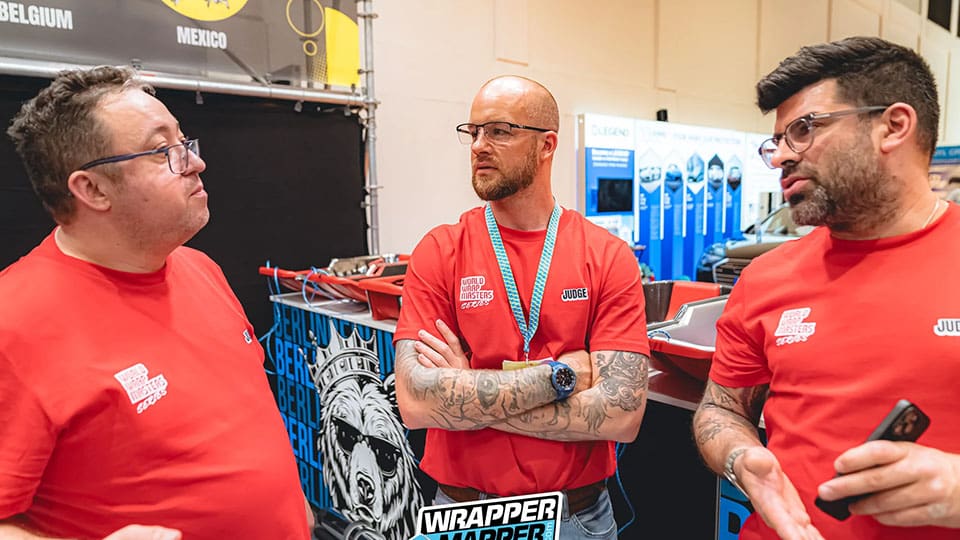
Edwards believes that bringing new individuals into the industry without previous experience can often be advantageous. He says: “With the right training, guidance, and support, these individuals can develop strong foundations and become valuable long-term assets to their organisations.
“There are many highly skilled professionals within the industry; however, they can be difficult to source and retain, which further highlights the importance of developing new talent pipelines.”
Alongside training for newcomers, recruitment agencies like Matching Talent With Opportunity (MTWO) work hard to bring in fresh talent. Nathan Mclauchlan, head of signage at MTWO, explains that beyond the issue of bringing in what he calls “new blood”, another challenge when recruiting can be the expectations of the workforce. He explains: “Since Covid-19, the working world has been sent into a bit of a whirlwind. It feels as though any job has a potential at being hybrid nowadays, and everyone wants flexibility and work life balance (rightly so of course, we all work to live).
“However, within signage a lot of businesses aren’t currently set up to facilitate hybrid working, and as a result miss out on some really strong people coming into the workplace.”
You need to plant the seed of signage into their heads before they even think about what career they want
According to Mclauchlan, being visible and vocal is also highly important for signage businesses to find new talent. He continues: “The main reason younger people don’t get into signage is because they don’t know it exists. You need to plant the seed of signage into their heads before they even think about what career they want.”
Mclauchlan highlights a number of initiatives that work to support the younger generation. These include trade association FESPA UK, which offers support through initiatives including The Next Generation project for young industry professionals. He also mentions The Printing Charity’s Rising Star Awards, which supports print and its associated industries by highlighting the work of young people within it.
While a focus on UK organisations is important, it is also worth noting that the modern industry landscape is international – and with global collaboration more common than ever, your next signage professional may come from elsewhere in the world.
One organisation very aware of this international approach is PRINTING United Alliance, a North American trade association that provides training and education for professionals around the world. Joe Marin, senior vice president of Member Services at PRINTING United Alliance, oversees a number of services including the organisation’s eLearning platform, iLEARNING+.
As Marin describes: “Print and signage are complex industries to enter. There's a steep learning curve with the language, workflow, equipment, and materials. None of it is intuitive to someone walking through the door and seeing it for the first time. A big part of what we do is help companies and individuals shorten that curve through practical, industry-specific education and training.”

Marin also concurs with some of our other contributors that the industry doesn't have the same visibility as other trades, saying: “Young people considering careers in manufacturing or technology often don't think of print and signage as an option – even though it's creative, technical, and genuinely interesting work. Therefore, companies are competing for a smaller pool of candidates who already understand what the industry involves.”
The best recruitment approach, Marin, believes, is to “hire for attitude and aptitude, then invest in training,” including eLearning platforms as an important part of the mix. The Alliance's iLEARNING+ platform is built specifically for training those in the print and signage industries. Marin illustrates that iLEARNING+ is “not generic business training repurposed for a print audience.” He adds: “The courses are contextualised for how this industry actually works, which makes a real difference in how quickly people can apply what they're learning.”
With a revamped landscape of modern apprenticeships, specialised training hubs, and a newfound commitment to mentorship, the UK signage industry is certainly putting its money where its mouth is in terms of combating labour shortages and an ageing industry. The initiatives are in place, the doors are wide open, and the tools are in hand. Whether this will be enough to finally close the dreaded skills gap, however, remains to be seen.