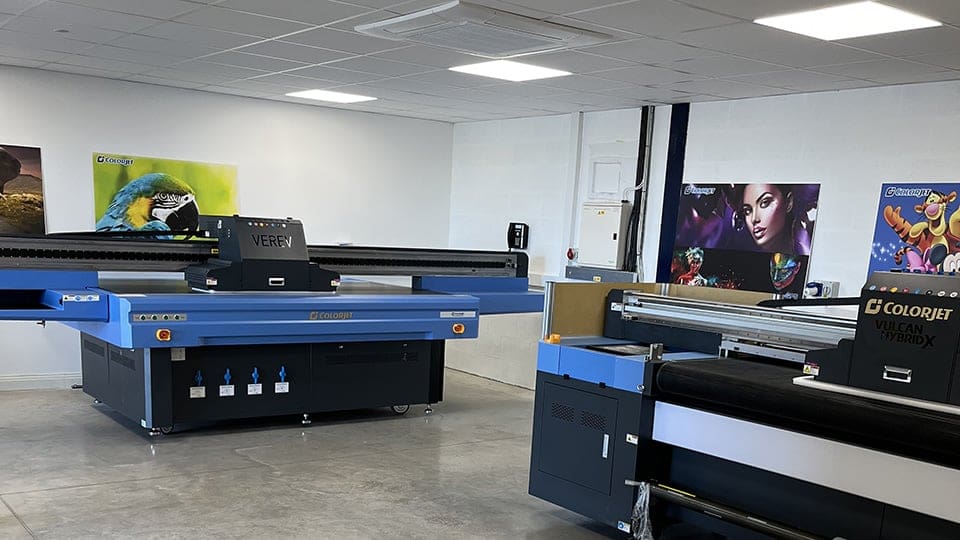
India’s biggest manufacturer of digital printers, ColorJet, has a number of
flatbed printers to match any appetite for solid substrates, the Verve LED 2513
is one of those choices
Guest Writer
December 4, 2024
India would not necessarily be what you expect as the home of a leading press manufacturer, yet you would be wrong holding such an opinion. ColorJet is the country’s larger producer of digital inkjet printers which offer a wide range of products including textile, signage, eco solvent, and UV printers. The ColorJet Group was founded in 1995 and since then it has invested significantly in man hours and money to bring to market fifteen new and high technology products over eight years. Due to this innovation the company has been recognised by the Department of Science & Technology of the Indian government.
From its stable of printers we take a look at the Verve LED 2513, one of the wide-format printers which ColorJet claim can print on almost any rigid substrate including wood, glass, leather, ceramics, and all types of plastic sheet or board.
Colour Overload
One of the USPs of the Verve LED 2513 and in fact any of the others in the range, is the combination of colours and modes that will allow for a very wide range of colour lay down. To understand the configurations, first the model breakdown needs to be understood.
The Verve LED 2513R5 can have between two and nine printheads which can deposit ink at seven picolitres. The second in the range is the Verve LED 2513R6, which can have three to nine printheads, this time with a capacity of five picolitres.
The detail in the combination of heads is the choice between either the GEN5 or GEN6 printheads which will obviously give you differences in speed of production and or resolution — this giving the R5 or R6 suffix to the model numbers.
The speeds can also vary depending on how many heads are deployed of each version, but in bare facts, the speed ranges from 12m2/hr up to 68m2/hr when you have select GEN6 heads in three rows. Depending on mode and head/row selection, the DPI varies between 635 x 600 up to 635 x 1200.
The Ricoh printheads have for a long time been the industry benchmark for quality printing and it makes an obvious choice for ColorJet. The main difference between each head being the volume of ink that can be deployed at the same DPI with the GEN6 version having more capacity then GEN5.
As for colour, the Verve LED 2513 can print in the standard process set of CMYK along with a white and varnish. There can be issues with white inks, as the industry and users know the pigmentations within white ink can suffer from settlement. All the inks and coating are cured with the use of a LED drying system, meaning the product is dry on production.
There is a number of combinations of heads and modes to ensure a balance of volume and quality can be attained
If this is not attended to, the pigments can block tubing and ink jet heads causing both damage and poor print reproducibility. ColorJet have designed into the Verve LED 2513 a white ink circulation system which moves the ink within the system which stabilises the ink and avoids the pitfalls of white ink.
A further design feature of the Verve LED 2513 is what ColorJet call the Dual Negative Pressure System for separate white and colour ink supply. The system has a display which shows the pressure in the supply for greater print control and productivity.
Finally, do not be concerned that you need to constantly monitor the volumes of ink in the printer. ColourJet has designed a low ink volume alarm to alert staff there is a need to replenish the printer with new ink; this is particularly helpful when running with reduced manpower.
Holding on Tight
The colour and print heads are just one aspect of the package, without equal control of the substrate all the investment in time and energy is for nothing. So, what do ColorJet do to ensure the substrate stays exactly where it is needed?
The printer has a large plate for substrates up to 2.56 x 1.68m in area and 100mm thickness. This means the nature of what is to be printed can be almost endless. Regardless of the thickness, the material is held flat and secure by a four-zone vacuum system which can be switched on or off where required on the side of the machine.
This has a number of advantages; the issues with vacuum supply are well known and there is a dramatic drop off of pressure should air inlets be open to the atmosphere. By being able to reduce how many are doing this, will greatly increase the vacuum pressure where it is needed, in turn giving greater draw down to the substrate.
The ColorJet Verve LED 2513 comes with a choice of GEN5 or GEN6 printheads
Holding it is not the only aspect to consider – where it is held is equally important. To ensure the substrate, specifically for multiple prints, is consistently reproduced the vacuum table has a series of holes and stops. This means the pins can be located on the plate for the substrate to be located against, firmly securing it where it is required.
Static can be a major issue on materials which tend to retain it or with the passing of the print head, stimulate the production of it too. To counteract this, as it can greatly affect the deployment of the inkjet process, ColorJet has as an optional static suppression system which will greatly reduce the charge.
Moving Swiftly On
The head itself is held above the table on a large and well-designed overarch which ensures no matter how far across the print head travels, there is no change in height, which can change the printed outcome. Driving the heads are two servo motors which seamlessly sweep the head across the table.
There are always going to be instances where the head could come into contact with the substrate. To avoid this damaging the head itself, there is an anti-crash sensor system which will stop the head on a sixpence and stop likely damage. If the printhead moves too far to the left or right of the printer itself, there are hydraulic stoppers to protect it.
As we outlined in the introduction, India may not be the first place you would consider exporting graphic equipment from, but thankfully there are sellers more close to home like Quality Print Services (QPS) to help you out.
Statistics
K2513R5 K2513R6
Print heads 3 to 9 (7pl) 3 to 9 (5pl) Media size 2.56 x 1.68m Media thickness 100mm max Printable area 2.5 x 1.22m Colours CMYK, W, & Varnish Resolution 1,200 dpi
Brian Sims Principal Consultant, Metis Print Consultancy, www.metis-uk.eu
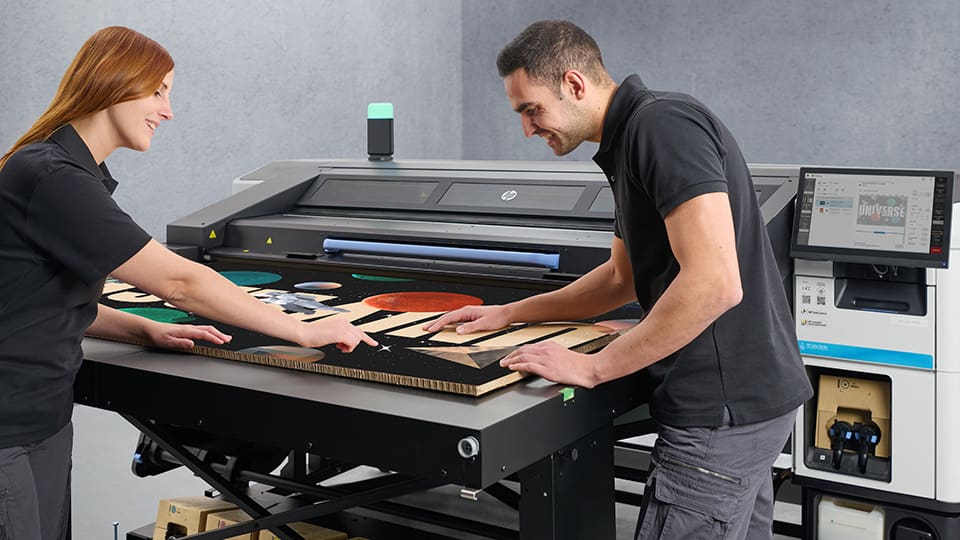
HP is looking to boost the life and appeal of its R-series hybrid Latex printers in rigid media applications with the introduction of an automated feeder/stacker that aims to improve overall productivity from loading to output. Michael Walker joins the queue
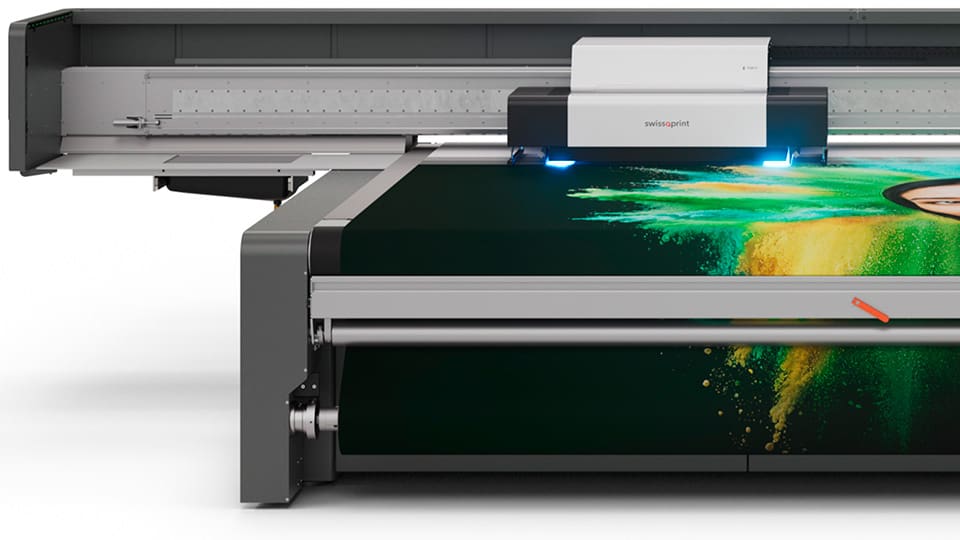
SwissQprint has added a lower production variant to its established 3.2 x 2m UV flatbed printer platform, offering the same features and fifth-generation engineering base as the established Nyala and Kudu models. Michael Walker looks at what’s on the table
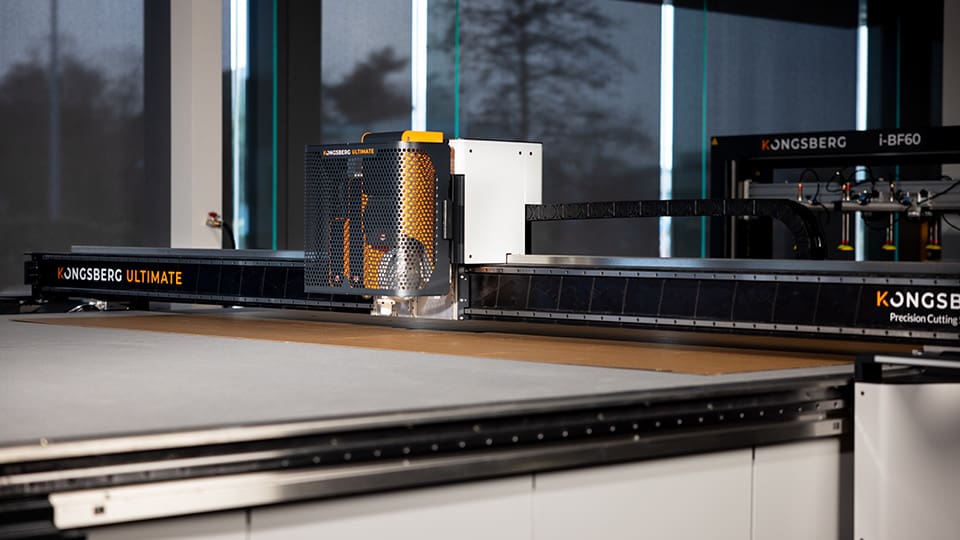
Kongsberg set its sights on the corrugated market with the 2024 launch of the Ultimate line of digital cutting tables. Michael Walker looks at the smallest member of the family
Watch our latest video of the week
SignLink gives you the latest video coverage of companies, people, and events from within the signage, graphics, and wide-format print industries.