Joe Arenella: Effective Strategies for Helping Budget-conscious Clients
Founder of SignTracker, Joe Arenella offers advice on guiding clients with tight budgets to ensure they still opt for the best choice for the long run
Guest Writer
February 14, 2024
We have all heard the promises: “Hook me up on this one and we’ll give you ten more projects!” or “I really want to go with you, but the shop down the street said they can do it for a thousand dollars less!”
Let’s face it: There are potential clients that your shop simply doesn’t need – the ones focused on price point alone, that do not value the services you provide. These clients usually do nothing except suck up all your time and resources. Dropping your price to gain or keep them ultimately leads to lower profits and cutting important corners, resulting in unhappy customers. The best way to deal with them is to simply say: “Nope!”
However, many budget-conscious clients just are not sure what they need for signage, what the budget should be, or the important component signage plays on their branding and store traffic. For these clients, you don’t have to shave a penny off your profits to give them what they truly need. It starts with a firm understanding of your customer’s goals, and your shop’s commitment to never negotiate on sign price alone.
Here are six strategies that worked for my former sign shop:
1. Start with Listening
The more you listen to what your client hopes to accomplish, and the more you discuss solutions to achieve their goals, the less budget becomes the focus of the conversation. Clients need you to reassure them that you understand their concerns and will make their success a priority throughout the project.
2. Educate your Clients
Many potential clients have no clue of the detailed processes involved in research, design, fabrication, permitting, and installation of a sign. Educating your client about these processes and associated costs will help them understand the complexity of the project, the quality of your work, and any warranties you offer with purchase.
PRO TIP:
Your client needs to know that a ‘cheap’ sign with never-ending service calls, which ultimately falls apart in a year, is much more costly to them in the long run.
3. Explain the Value
Clients get more enthused about their signage when they understand the impact it will have on their business and their brand. A larger sign, or a strategically placed second sign, can have a massive impact on your customer’s increased store traffic and sales. Simply Google sign letter size and readability, then point your clients to the numerous visibility studies that show the effectiveness of signage sizes and colors.
4. Go for a Drive
Sometimes seeing is believing. At my former shop, we would often ride around with our clients, allowing them to view their store from all angles, pointing out potential problems and benefits of the placement of signs. A well-placed, readable sign will help your clients stand out from competitors and increase customer loyalty.
PRO TIP:
On-site visits with your client demonstrating the importance of sign placement and pointing out potential problems will show your expertise!
5. Get Creative
Offer ways you can bundle a sign package to help your client stretch their budget, utilising window graphics, roadside monument panels, banners, and whatever else you can dream up. We had a customer a few years back who truly did have a limited budget for her store construction and signage.
The store was on a street with a great deal of foot traffic, so we pitched the idea of a slightly smaller sign over the entrance, with the addition of some impactful, yet less costly, window graphics. The latter wound up garnering more attention than the sign over the entrance. Noting the success of her first shop, she returned to have us design another location, and she was much less budget-constrained the second time around.
6. Offer Financing Options
Most sign shops require some type of deposit to initiate a project with the balance due at installation. You might offer terms to established clients, but have you ever considered a three-payment payout over three months? My shop did this successfully on a few projects where we would take 60% down, 10% at install, and 10% per month for the following three months.
It worked out well, and the financing led to lasting relationships. I would not suggest you put your company in a bind by doing this, but for a few special projects, it may work.
There are also many equipment leasing companies that recognise customer signage as an equipment purchase and offer leasing agreements for signs. Leasing enables your client to finance their project over time, which may help them with cash flow – a huge win-win for both you and your client.
PRO TIP:
Develop a relationship with an equipment leasing firm in your area that is comfortable providing lease terms for signage products.
Overall, there are many ways to help budget-conscious clients. Signs are expensive, so it is important that you take the time to ease your client’s concerns by developing compelling reasons why signage is worth the investment. Focus on the benefits, emphasise their branding, and let them know you really care about their success.
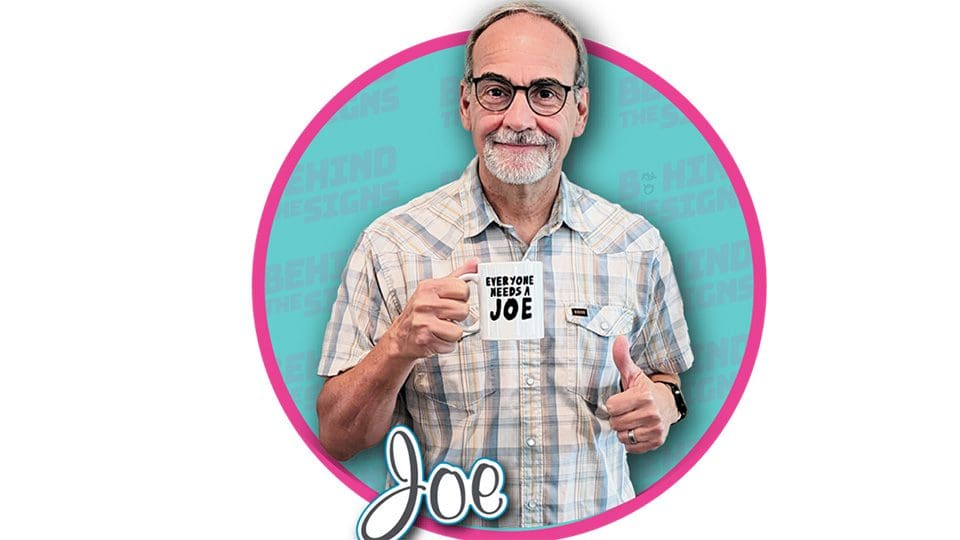
Joe Arenella founded two sign shops before launching SignTracker
Colin Sinclair McDermott, aka The Online Print Coach, makes the case for diversifying your business, and ensuring you offer a complete solution for your customers, without investing in big machinery or materials
In this Industry Tips, Colin Sinclair McDermott, aka The Online Print Coach, says if your onboarding process is nothing more than a quote and a hope, you are leaving repeat business on the table before the ink is even dry
Colin Sinclair McDermott, The Online Print Coach, encourages business owners to stop letting financial ambiguity erode their authority and to build a business that values peace of mind as much as profit
Watch our latest video of the week
SignLink gives you the latest video coverage of companies, people, and events from within the signage, graphics, and wide-format print industries.