In this edition of Fresh Perspectives, we hear from Kaden Borrett, junior marketing member at Stylo, who talks all about marketing a print and signage company in a world where digital communications still seem to dominate
Guest Writer
November 17, 2026
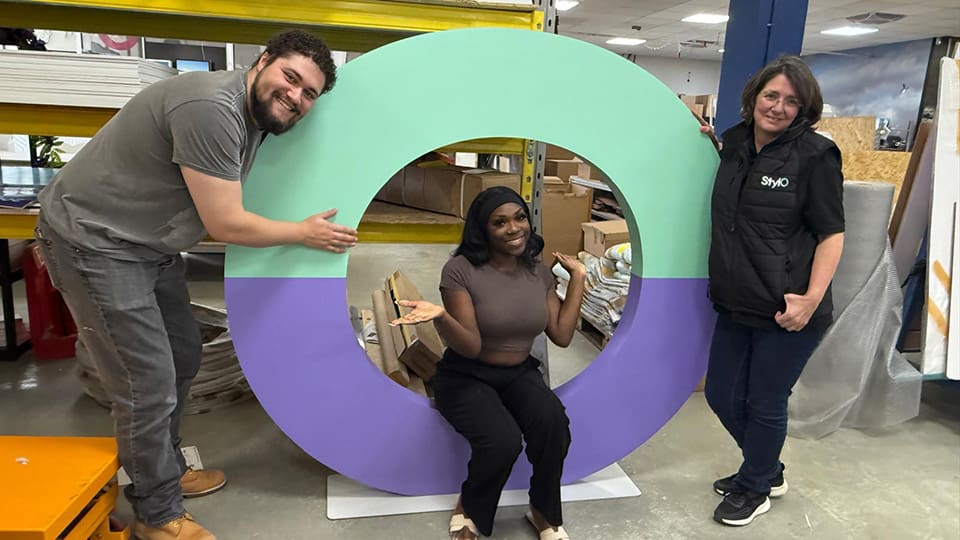
[L to R] Kaden Borrett, junior marketing member, Theka Walcott-Jones, HR manager, and Ed Smallwood, client service manager at Stylo
I’m Kaden and I joined Stylo just over a year ago as a member of the marketing team. My responsibilities include management of our social accounts, research into how we can use AI across channels, and a bit of event planning. Where I was once an inexperienced university graduate, Stylo has pushed me out of my comfort zone and tested my abilities. My job is flexible and has grown with me and allowed me to adapt strategies to better fit the needs of the business.
Where is Print Today?
There is always the argument that “print is a dying industry” but the reality is that print is baked into the real world. Physical experiences are more striking than the world you see behind a screen, this is why popup campaigns are bringing in more attention than ever before. There’s demand for print in places you don’t even think to look; think shop signage, wayfinding, vehicle wrapping, wallpapers, packaging, and displays. Often, some of the most useful applications of print, aren’t noticed as print at all.
If something doesn’t look quite right, chances are it’s probably not
One of my team explained to me that even though digital screens are becoming increasingly common in shop windows, printed flair is still being used to draw consumer attention. Despite the increasing number of screens we see in our everyday lives – high-tech doesn’t always mean better. Relatively speaking, print signage is cheaper than digital alternatives and some projects simply don’t need to be overcomplicated and crammed with digital features. What I’m saying might sound old fashioned but how often do you see influencers and the public looking for curated tangible experiences?
Print Isn’t Competing with Your Social Media Presence
As a junior marketer, posting content online is one of my duties and presents its own challenges. Attention spans on social media are shorter, meaning you have less time to make your point. Algorithms have already sorted you into a taxonomical bracket which can make it hard to reach large audiences. But what if I told you that was a good thing? Reframing these numbers will tell you that your content online isn’t failing; you’re becoming more prominent in the smaller circles you’re trying to infiltrate. When I posted my first video on my company’s socials I was met with a proportionally higher number of views with fewer likes, nowadays the inverse is true. Our accounts still see steady growth (our TikTok followers have grown by 50% in the last year), but the likes come in more consistently even when views don’t hit the highs we all hope for.
[L to R] Kaden Borrett, Renee Murrary-Morrison, film & TV client service manager, and Susan Meekins, office manager at Stylo
As the manager of a social media account, it’s important to focus on making your content the best it can be and relying on the fact that people will come over time. Consistent efforts are appreciated more than one off, half-baked posts.
A Problem with Translation
The reality is that some projects lend themselves to visual media better than others. It’s easy to show off a droptix print with a moving background or new movie props, but the challenge comes from promoting products that are special for the reasons you don’t see. As a remedy for this problem, you can tell a story. If people can’t see why a product is worth seeing, walk them through it.
Last year I was tasked with writing an awards entry for a job we completed, this job was special because it featured a phone holder that could slide along an axis. The problem was that what we were seeing didn’t look impressive. It was an innovative solution to a challenge our client faced, but one most people would gloss over. Explaining the problem that this feature solved was the key to submitting the entry on time. In social media marketing, these can be the hardest things to talk about since they feel so pedestrian.
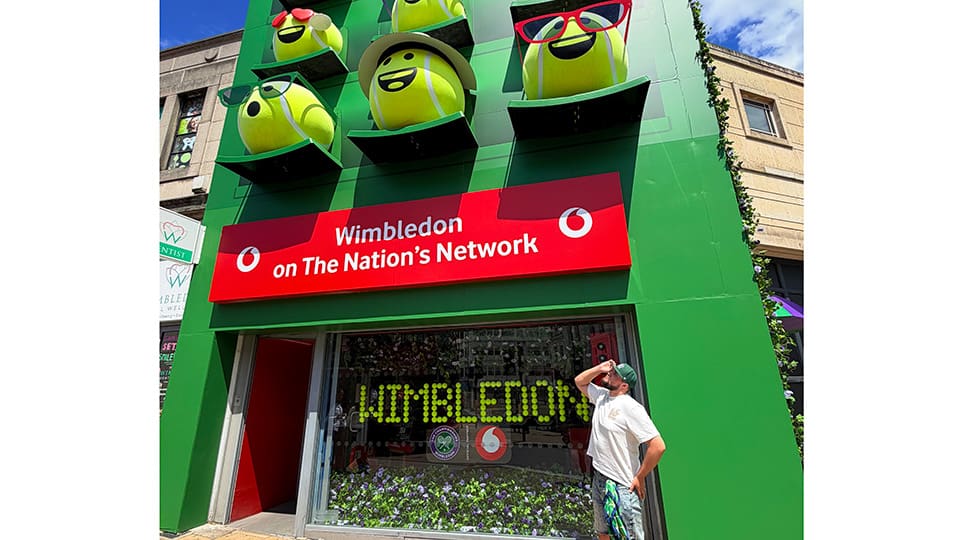
Kaden Borrett with one of Stylo's installations during Wimbledon tennis tournament
Equally important are the things I’ve learned not to photograph. If you always have a camera in your hand, sometimes you capture things you shouldn’t. Most often that means jobs that can’t be shared in the moment, but sometimes you’ll wind up photographing a messy environment or something unsafe. Moral of the story, double-check before posting people and environments so you can learn from my mistakes. If something doesn’t look quite right, chances are it’s probably not.
Reminding Us That It’s Personal
The relevance of print isn’t wavering like people seem to think it is. We see UV print used to print braille onto wayfinding and signage, we see relief prints used for props, flooring, and wallpapers to replicate textures that would otherwise cost a small fortune, and we see plenty of billboards and large-format signage for movies and brands. The bottom line is when you work in marketing, your job is to help reinforce the business by advertising your skills, your products, and your people.
The bottom line is when you work in marketing, your job is to help reinforce the business by advertising your skills, your products, and your people
Results often speak for themselves, but a job’s life started long before you saw it in the real world. I’ve learned that it’s essential to capture these jobs as they’re being made so you can accurately capture the efforts of your team. I produce Stylo’s internal magazine and being able to dedicate a few pages to jobs we’ve completed for people to see work they produced is my way of applauding the hard work from our printers, fabricators, and every single person that makes these jobs possible.
Print Yourself a Family
Print and signage are fantastic industries full of passionate and dedicated businesses and has provided me with an unexpected sense of community. Initiatives like FESPA (of which I’m a Next Gen Committee member) provide a level of camaraderie that doesn’t form overnight. Decades of print workers have come together into a genuinely fulfilling community and one that I’m proud to say I’m a part of. To those of you I have met, thank you for being part of the reason I’ll be staying in this industry, and to those I haven’t, may we cross paths soon!
Following the success of the FESPA Next Generation initiative, we hear from Molly Jackson, head of content and marketing at FESPA UK, who gives her perspective on entering the industry, standing out to employers, and embracing the team you work with
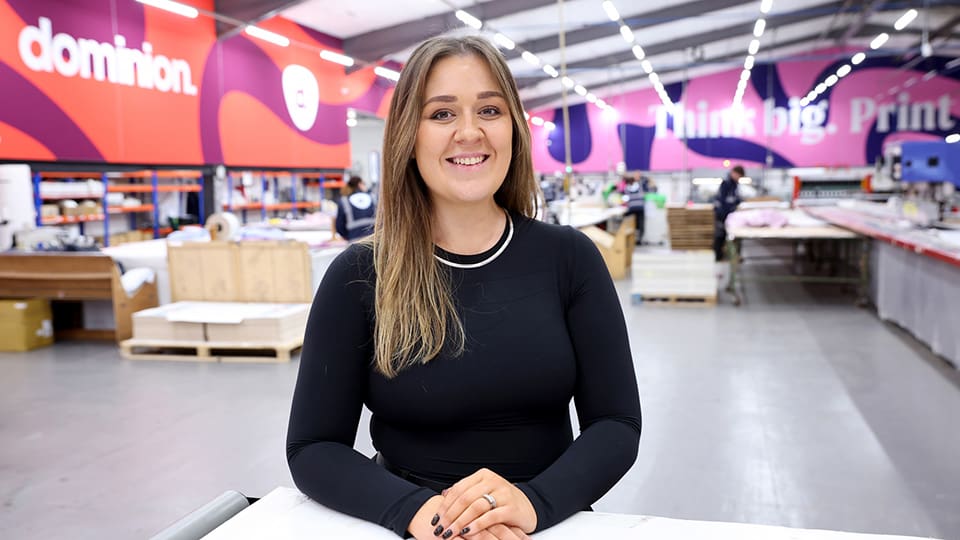
In this fresh perspective, Verity Fox, managing director of large-format print specialist Dominion, reflects on how speed, quality, and service have become baseline expectations in print – and why price now exerts growing pressure on every part of the process
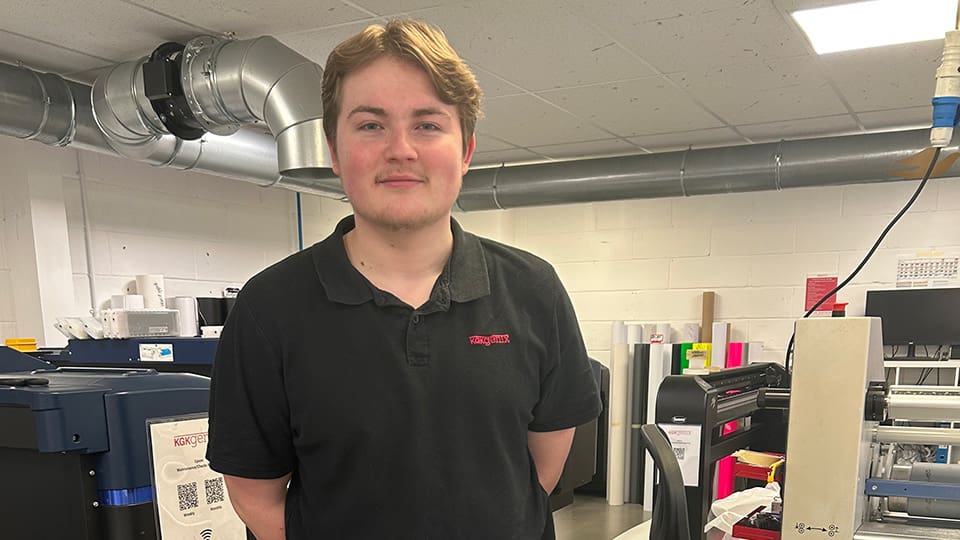
In this edition of Fresh Perspectives, KGK Genix, a provider of wide-format print solutions, highlights the experience of one of its print apprentices, Tom Brazier
Watch our latest video of the week
SignLink gives you the latest video coverage of companies, people, and events from within the signage, graphics, and wide-format print industries.