The Power of Partnerships in Sign-Making
Working with other businesses can open doors to new markets, services, and expertise. Here, SignLink examines how building the right partnerships can strengthen day-to-day operations and long-term success.

Architectural wrapping is opening up new revenue opportunities for sign-makers, offering a cost-effective alternative to refurbishment and replacement. SignLink explores the rapid rise of this growing market

Once viewed as a niche application, architectural wrapping has quickly established itself as one of the fastest-growing segments of the industry. From retail stores and hotels to offices to healthcare settings and residential properties, businesses are increasingly using specialist films to transform interior and exterior surfaces quickly, cost-effectively, and with minimal disruption.
The appeal is clear. Rather than replacing doors, walls, lifts, furniture, or other fixtures, architectural films allow existing surfaces to be refreshed with realistic woodgrains, metallics, stone finishes, and bespoke designs at a fraction of the cost of refurbishment. This not only reduces downtime and project costs but also supports sustainability goals by extending the life of existing materials and reducing waste.
With demand continuing to grow, architectural wrapping presents sign companies with an attractive opportunity to diversify, access new markets, and generate higher-value work. With this in mind, SignLink speaks to several suppliers and specialists about the trends driving growth, the skills and products required to succeed, and how businesses can establish themselves in this expanding sector.
First up, Steve Payne, product specialist at Drytac, says significant growth in this sector has been driven by a combination of economic and aesthetic factors. Payne highlights cost-effectiveness as the most compelling driver, with businesses and designers increasingly recognising that wrapping existing surfaces delivers a high-impact result at a fraction of the cost of full replacement.
“This sits alongside a broader shift in interior design toward greater customisation, where short-term upgrades, seasonal changes, and brand-aligned environments are now expected rather than exceptional,” he says, adding: “Sustainability is also playing an increasingly important role; by extending the life of existing substrates and reducing material waste, wrapping aligns well with the environmental commitments many businesses are working toward.”
For those just starting out, we recommend beginning with repositionable or removable adhesive films, which are more forgiving during installation
With this, Payne offers some words of advice to those considering a move into the market. He says the single most important factor in a successful installation is surface preparation – understanding the substrate and ensuring it is clean, stable, and compatible with your chosen film is non-negotiable. From there, he encourages investment in proper installation training; technique matters enormously in this sector, with this what separates a clean, lasting result from a costly callback.
“For those just starting out, we recommend beginning with repositionable or removable adhesive films, which are more forgiving during installation,” he says, adding: “Beyond the film itself, ensuring compatibility across the full system – print media, laminate, and end environment – is critical, as is familiarising yourself with the right application tools for each job.”
Drytac’s product portfolio covers the full spectrum of architectural wrapping applications. For wall applications where repositionability is important, Payne picks out ReTac Smooth 150 and ReTac Textures, highlighting how they offer the flexibility to install, reposition, and remove without damaging the underlying surface.
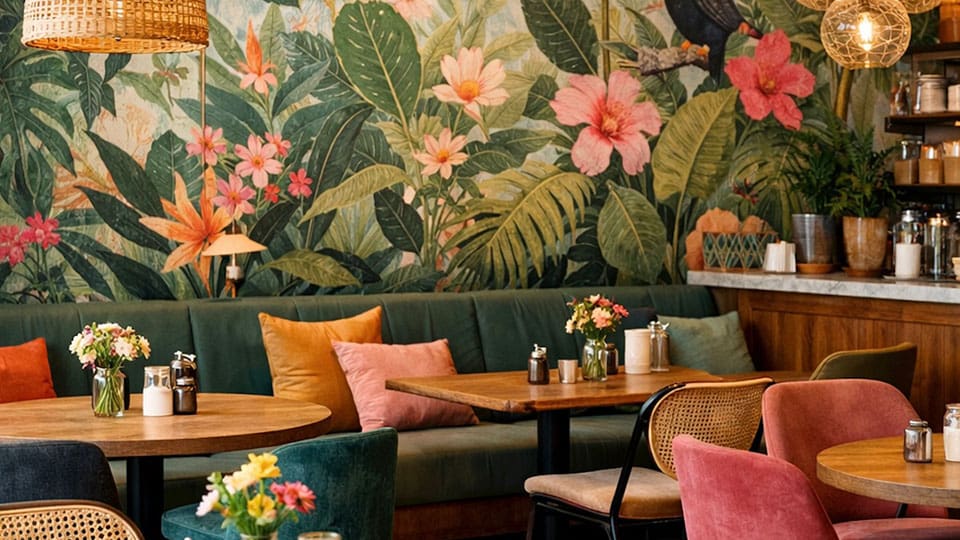
For businesses seeking a non-PVC alternative, he says Paper Fleece Air offers a sustainable wallcovering option without compromising on performance. Meanwhile, in projects where a permanent solution is required, Polar Premium Air and Polar Smooth 150 Air P are strong performers. Further still, for more challenging substrates, Polar Grip Air and Polar HiGrab Air are formulated specifically for harder-to-adhere-to surfaces, while Viziprint Impress Clear is Payne’s “go-to recommendation” for glass applications.
Factoid: Recent research suggests the global decorative surface films market will grow at a CAGR of 6.6% through to 2032, driven by demand for refurbishment, customisation, and sustainable alternatives to replacement furniture
“The opportunity set in this market is broad and growing,” Payne says, adding: “Sign-makers entering this space can expect to find strong demand in interior transformations – walls, doors, lifts, and furniture are all viable substrates – as well as retail and hospitality refurbishments, where visual refreshes need to happen quickly and cost-effectively.
“Office rebranding and wayfinding upgrades represent another consistent revenue stream, and short-term promotional or seasonal interior graphics are a natural extension for sign-makers already producing campaign work. The common thread is that clients in all these sectors want impactful results without the disruption and cost of structural changes.”
Next up is Tiffany Parkin, architectural manager at Space Architectural Interiors, who says the biggest driver in this market is simple – businesses want maximum impact with minimum disruption. She says demand across hospitality, retail, offices, and leisure for faster, more sustainable, and more cost-effective alternatives to traditional refurbishment is rising.
“Architectural films allow existing assets to be refreshed rather than replaced, reducing waste, controlling costs, and minimising downtime,” Parkin says, adding: “For the sign and graphics industry, architectural wrapping has been a natural progression. Many installers already possess the core skills required, including working with self-adhesive materials, surface preparation, and precision application.
“As competition has increased in traditional graphics markets, architectural finishes have created an opportunity to diversify into higher-value refurbishment projects; using expertise many businesses already have.”
On this, Parkin says one of the biggest misconceptions is that signage companies will need a completely new customer base, whereas in reality, many sign-makers are already working with clients who could benefit from architectural wrapping.
“If you’re producing wayfinding signage for a hotel, there may be opportunities to wrap bedroom doors, furniture, and reception desks,” Parkin explains, continuing: “If you are supplying graphics into offices, you could help refresh doors, desks, and tea points. The same applies across retail, healthcare, education, and leisure.
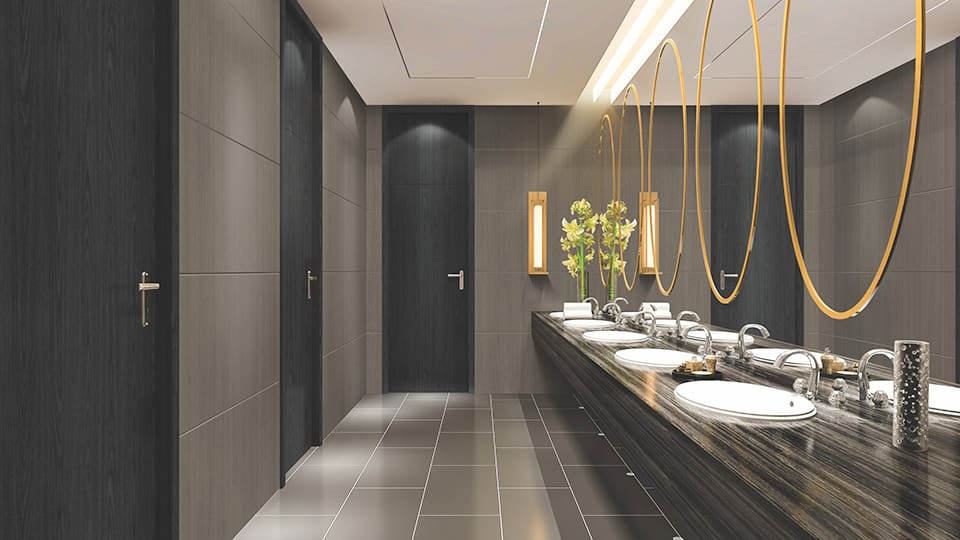
“The opportunity isn’t always about winning new clients. Often it’s about expanding the services you offer to the clients you already have. What I particularly like about architectural wrapping is that it moves the conversation beyond signage and into wider refurbishment and interior transformation projects. That can lead to larger project values, stronger client relationships, and attractive diversification opportunities.”
Going into detail on the type of work in this market, Parkin agrees with Drytac’s Payne that surface preparation is probably one of the most important parts of the project. She says Space has seen many installations where the film gets the blame, when the issue started long before the material came out of the box.
“Space Architectural Interiors was created to provide specialist expertise within the architectural finishes market and is backed by the resources and technical support of All Print Supplies,” she says, adding: “Our role goes far beyond supplying materials. We help customers select the right film, understand surface compatibility, plan installations, and avoid costly mistakes before they happen.”
Our role goes far beyond supplying materials. We help customers select the right film, understand surface compatibility, plan installations, and avoid costly mistakes
With this, Parkin advises those plotting a move into the market, or seeking to improve their current offering, to focus less on the tools and more on the materials, training, and mindset required to succeed.
“Most signage and graphics businesses already have many of the core skills needed,” she says, adding: “The opportunity is often about refining and adapting those skills rather than learning something completely new.
“The key difference is that architectural finishes are expected to perform for many years and are often installed with manufacturer-backed warranties in mind. Unlike some graphics applications, there is far less room for error, and the devil is in the detail. That’s why material selection, substrate knowledge, and surface preparation are so important.”
The final expert to comment is John Davies, UK managing director of FASTSIGNS, who says the efficiency and simplicity of architectural wrapping are two of the main reasons we are currently seeing such a boom with these applications.
“The use of architectural wrapping will only continue to grow across the sector,” Davies says, continuing: “It’s a lucrative new income stream for sign-makers that delivers higher profit margins. It’s also an important way of diversifying the services that a company offers in an industry that is changing all the time.
“Expanding into architectural wrapping allows sign-makers to transition into working on high-margin projects, such as office spaces. At FASTSIGNS, we’ll most often see our franchisees working on commercial office rebranding, retail activations, and facility makeovers.
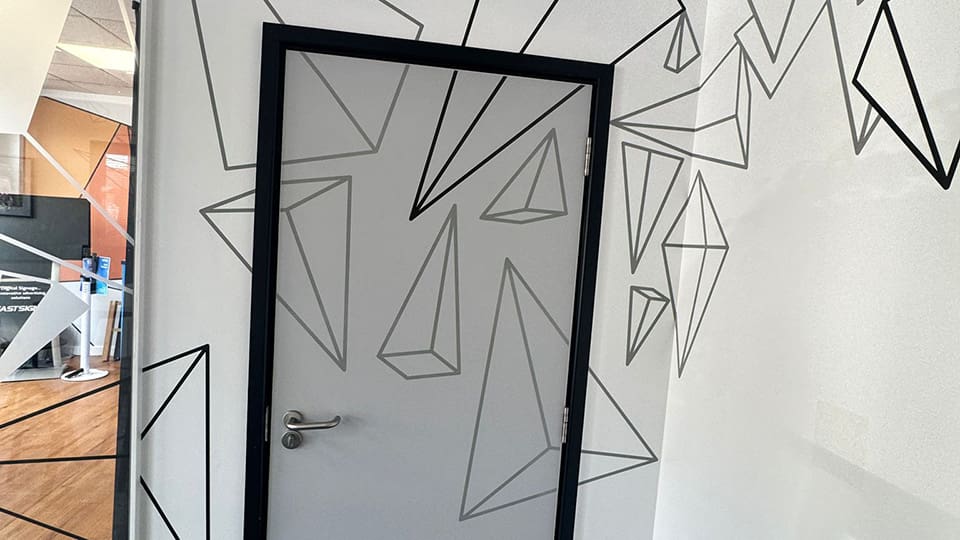
“Interestingly, a lot of sign-makers also use architectural wrapping to influence the energy of a room. Bold and vibrant tones are added to high-energy spaces and softer, more natural designs are used for calming environments. It’s even possible to do institutional upcycling by wrapping items such as lockers, to make them more eye-catching.”
However, for those planning to diversify into this market, Davies advises they approach with caution, saying that like many practical, creative industries, having the right tools is key to success. Sign companies will need heat guns, squeegees, cutters, and rulers, in addition to premium vinyl, to get started in architectural wrapping.
“Before you begin, you and your team will need to be well versed in surface preparation, precise cutting, edge finishing, and applications of curved, irregular, or multi-piece surfaces,” he says, adding: “It’s also important to know what type of material you’re working with, as every vinyl film can be different.
Architectural films allow existing assets to be refreshed rather than replaced, reducing waste, controlling costs, and minimising downtime
“To transition into the architectural wrapping industry, my advice would be to create a portfolio with before and after photographs of your work, to demonstrate the impact of your installation. It’s just as important as networking to get your name out there, as it’ll help you to attract a customer base and establish connections who may recommend you to others they know. “
Concluding the round-up of this market, Davies picks out some of the core areas for sign businesses – both new to the area or already established – to target moving forward. These include retail, hospitality, healthcare, and education – all of which are spaces in which companies want to feel agile, bright, and welcoming, with architectural wrapping facilitating this.
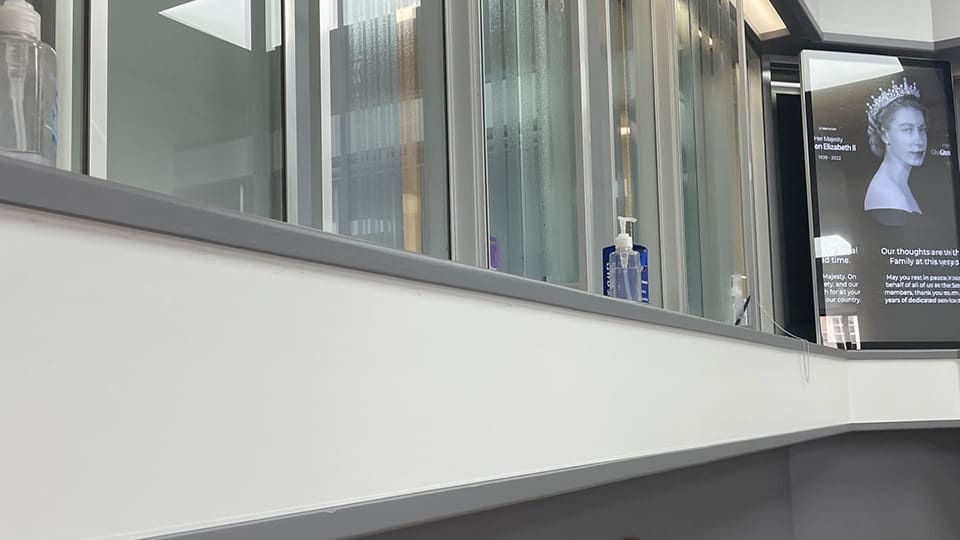
“We offer graphic printing, textured wall and surface coverings, window graphics, and dimensional letters,” he says, adding: “As we have in-house graphic designers and professional installers, we’re able to have full oversight of these projects, as well as bringing in our wider experience of the signage sector, for example, looking at the micro-architecture of how a sign or, in this case, vinyl, integrates with the physical environment.
“Our range of graphic printing capabilities gives architectural wrappers plenty of flexibility in their designs and allows them to unlock more creative possibilities. It provides businesses with a neater, simpler and more cost-effective way of renovating a space. Many of the businesses we work with can implement architectural wrapping, as it’s a sustainable and durable method of updating their premises.”
Looking at what everyone has said, it is clear that architectural wrapping is no longer a specialist niche but an increasingly valuable extension of the modern sign-maker’s offering.
As demand for cost-effective refurbishment, sustainable solutions, and visually striking environments continues to rise, businesses with the right skills, products, and training will be well placed to secure higher-value work and build stronger, longer-term relationships with customers.