Printing Beyond the Flat Surface
What opportunities are emerging for sign-makers as direct-to-object printing technology becomes more capable and accessible? Rob Fletcher sits down with several key names in the market to find out


As environmental requirements become the norm, and more materials solve different installation challenges, we speak to experts in signage materials who give their advice to businesses who work with different substrates day-to-day

When it comes to the world of signage materials, many considerations and products may come to mind. In 2026 more and more solutions have become available, especially as branded environments and live events have continued to be popular thanks to their ability to offer both physical and digital marketing opportunities.
With sustainability, durability, and longevity all considerations to make when choosing the right material, we look at some of the solutions out there and speak to professionals in the industry to give their thoughts on what sign-makers should be considering when looking for the latest signage options.
When it comes to viewpoints on the changes in signage materials, Steve Lister has been at the forefront of advising professionals and seeing the changes that have taken place over the past few years. A consultant for global brands, retailers, and supply chain partners, as well as the head of global sustainability at POPAI UK & Ireland, Lister helps signage and print professionals make better decisions for their businesses.
“My role is to cut through the claims, assess what works in practice and help businesses reduce waste and increase their focus on sustainability without compromising cost, quality, or performance,” says Lister, who adds: “I also provide consultancy, materials workshops, sustainability training, marketing claims reviews, and independent project assessments.”
When it comes to the most popular products, Lister says there is strong interest in fibre- and bio-based boards, PVC-free films, recycled content substrates, reusable textiles, lightweight fibreboard, and steel display systems. However, Lister emphasises that popularity does not automatically make the material the right choice and that installation is often where a good design fails. “The strongest solutions are those designed around the required lifespan, installation conditions, reuse potential, and the recovery routes actually available when the job is finished.”
In order to navigate the challenges presented by installation and customer requirements, Lister recommends starting with the application and not the material: “Consider the required lifespan, location, fire performance, print quality, durability, weight, cost, installation method, potential for reuse, and the genuine end-of-life route.
“A recyclable material is of limited value if it is combined with incompatible components, contaminated during use, or sent somewhere without the infrastructure to recover it.” Lister says that sign-makers should ask for evidence behind recycled-content as well as bio-based, carbon, and recyclability claims. “The right decision is usually a balance between functionality, commercial reality, and measurable environmental impact, rather than simply choosing the material with the strongest marketing language.”
Speaking about the new innovations and the future of the sector, Lister says: “We are seeing credible progress in high-performance fibreboard, PVC-free self-adhesive films, bio-based films, recycled-content products, and modular display systems designed for repeated use.
“The next major development will not be one miracle material. It will be better material data, improved traceability, and design systems that allow individual parts to be repaired, replaced, reused, and eventually separated for recovery.”
We’ve heard advice about choosing materials and working with them, so let’s now hear from suppliers of these materials to understand what options are available. Premier Paper, a supplier of office paper, packaging materials, and sign and display solutions, has a wide range of products available under its own banner as well as PPB (Proctor Paper and Board) which was acquired by Premier earlier this year.
Simon Balderson, commercial director for Sign & Display at PPB, says the company offers an “extensive portfolio” of materials made for the point-of-sale (POS) sector as well as a range of print, display, and fabrication requirements. “Our range includes aluminium composite material, corrugated board, display board, greyboard, graphical board, plus other fibre-based board. We also have specialist substrates such as 3A Impex Polycarbonate, Crylux Acryli, and Foamalite Foam PVC – all suitable for POS, retail graphics, exhibition, indoor, and outdoor signage applications.”
Like Lister, Balderson also highlights the shift from plastics to fibre-based offerings in the past few years due to the desire for retailers to shift to more sustainable fibre-based options. The move has also been inflated by cost considerations due to the majority of plastic substrates being affected by the cost of oil increasing in reaction to the conflict in the Middle East.
Customers routinely face issues caused by difficult or unpredictable surfaces – things like lowVOC paints, dust, textures, or cleaning residues that prevent graphics from bonding properly
When asked about the installation challenges customers are trying to overcome with materials, Balderson says: “Customers routinely face issues caused by difficult or unpredictable surfaces – things like lowVOC paints, dust, textures, or cleaning residues that prevent graphics from bonding properly. These substrates often look fine at first glance, but they can cause lifting, bubbling, or premature failure once a graphic is applied.”
“Drytac’s products are engineered to handle these realworld conditions more reliably than standard films. The adhesives are formulated to wetout on challenging surfaces, maintain bond strength over time, and give installers a wider margin for success even when the substrate isn’t perfect. This reduces failures, callbacks, and reprints, which is ultimately what customers care about most.”
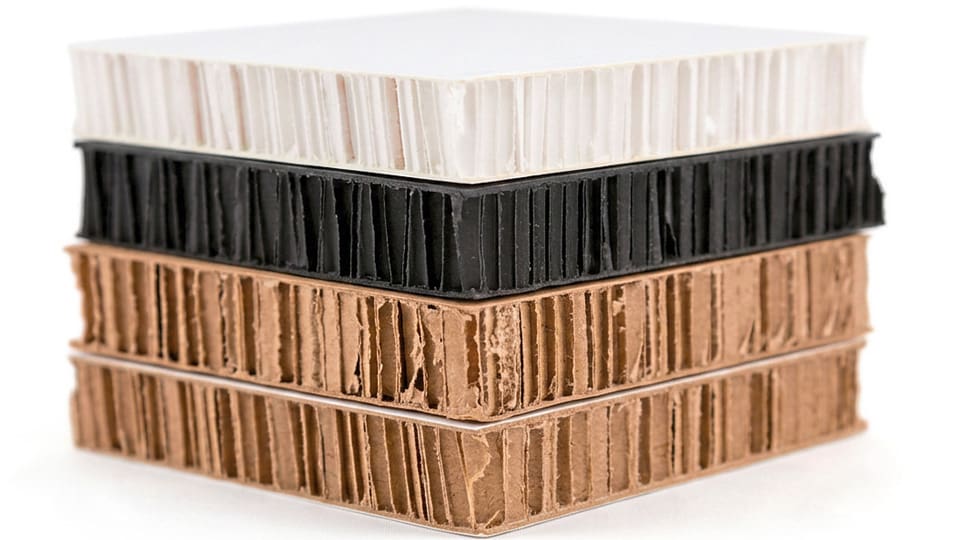
A recent product release from PPB is Re-Board Air, a fibre-based board made in Sweden which PPB says is ideal for 2D and 2.5D applications. “Available in 6mm, 9mm, and 13mm, the board is half the weight of Re-Board Premium making it perfect for fast installation and easy handling. Air has bright white liners on both sides offering excellent printability whilst the tilted inverted corrugated core remains to ensure the board is flat and rigid.”
Another supplier of signage materials is Antalis, a distributor of paper, packaging, and visual communications. Chris Green, director of Visual Communications at the company says the business offers self-adhesive vinyls, printable films, overlaminates, wrapping materials, rigid sign and display boards, banner media, wallcoverings, floor, wall, and window graphics, and sustainable alternatives for POS and retail campaigns.
Also speaking about new innovations, Green says: “One of the biggest areas of innovation is sustainability. We are seeing more development in PVC-free films, recyclable and recycled-content rigid media, fibre-based display boards, and alternative constructions designed to reduce environmental impact without compromising printability or performance. This is likely to remain one of the defining trends in signage materials over the coming years.
“Another important area is adhesive technology. Manufacturers are continuing to improve products that offer easier application, better repositionability, stronger initial tack where needed, and cleaner removability. These advances make a real difference for installers and help sign-makers deliver more reliable results across a wider variety of surfaces.”
Green also highlights changes in architectural and interior applications where demand is being driven by the need for surface finishes that combine aesthetics with functionality. Antalis expects to see continued growth in films that can transform interiors quickly and cost-effectively, especially in commercial, hospitality, retail, and workplace environments.

When it comes to challenges, Green also points to important elements during installation: “One of the most common challenges is achieving a smooth, efficient application on difficult surfaces – whether that is curved panels, textured walls, low-energy plastics, or large-format glazing. Installers want materials that are forgiving, repositionable where needed, and designed to reduce issues such as bubbling, tunnelling, lifting, or shrinkage.”
Print compatibility is major factor Green also highlights when discussing the considerations sign-makers should have when weighing up different materials. “It is essential to choose materials that perform consistently with the intended print technology, whether that is latex, UV, solvent, or eco-solvent. Sign-makers should also consider the overall finish they want to achieve, including colour vibrancy, texture, opacity, and whether a laminate is required for added protection or aesthetic effect.”
A material option that has seen increased popularity in recent years has been textiles, thanks to the desire for adaptable and reusable solutions. Soyang Europe is one supplier of these types of products, offering digitally printable media to the wide-format print, signage, and display industries.
“We offer an extensive portfolio that includes printable and backlit textiles, self-adhesive media, PVC and non-PVC banner materials, flooring and display products,” explains Oliver Mashiter, sales director at Soyang Europe. When explaining how it develops its solutions, Mashiter says: “Sustainability is becoming an increasingly important part of this development process. There is growing demand for alternatives to traditional materials, but these products still need to deliver the print quality, durability, and performance expected by customers.”
Talking more about its textile offerings, Mashiter says that the versatility of textile means it can be used across a host of applications, while developments in textile structures are helping address requirements around print quality, finishing, installation, and appearance. Newer solutions like Nightstar Blackback Inno are generating more customer interest and demonstrating the continued appetite for innovative textile solutions.
“More broadly, customers are looking for materials that strike a balance between performance, sustainability, and commercial value,” says Mashiter, who adds: “It is no longer simply a question of selecting the cheapest material per square metre. Now, customers are increasingly considering how the material performs throughout the entire production and installation process.”
A material may offer an attractive price, but if it creates problems during printing or finishing, or is difficult to source when required, the ‘saving’ can quickly disappear
When asked about the considerations sign-makers should have when weighing up different options, Mashiter emphasises that cost per square metre is important, but is only one part of the overall calculation. Mashiter says that sign-makers and printers should consider the total cost of producing and delivering the finished application, including printing, finishing, installation, and end-of-life options.
“Material selection should be driven by the specific application rather than a one-size-fits-all approach. For example, the requirements for a short-term exhibition graphic can be very different from those of a long-term retail or interior application, and sign-makers should keep this in mind when making their choice.
“Printer and ink compatibility is also key, as is the consistency of the material’s production and its availability. A material may offer an attractive price, but if it creates problems during printing or finishing, or is difficult to source when required, the ‘saving’ can quickly disappear.”
Similar to Soyang Europe, the last company we speak to works across print hardware and materials. CMYUK is a supplier of digital print production equipment as well as roll-to-roll materials for the wide- and superwide-format sectors. The company offers hardware from brands like EFI, Canon, Mimaki, and JWEI, plus textiles from UFABRIK and PONGS.
CMYUK also runs its Sign & Graphics portfolio which offers self-adhesive films, speciality materials, and banner products from DECAL, BIOND, UTACK, UPROTECT, UFABFLX, and Kavalan. Michael Crook, commercial director at CMYUK, comments: “Across both areas, we focus on tried-and-tested materials that balance performance, versatility, cost, and reliable supply, alongside carefully selected alternatives with documented environmental and sustainability credentials. This gives customers access to practical, dependable solutions across a broad range of digital print technologies, applications, and production environments through one trusted supplier.”
UFABRIK continues to be one of CMYUK’s most important and popular textile ranges according to Crook, who says the solution can address around 95% of digital textile applications required by the digital print industry.

“However, our newly launched Sign and Graphics collection has been built around the applications that sign-makers handle every day, says Crook, who adds: “It’s a focused range that simplifies specification, purchasing, and stockholding. New products in this range include BIOND, DECAL, and UFABFLX, which we believe, will make a difference to the everyday production needs of sign-makers.
“Rather than a sign-maker having to specify and stock a different specialist material for every individual application, many of the DECAL and BIOND products can perform across several applications. That means fewer product variants, fewer part numbers, simpler specification, reduced inventory, and less risk of carrying slow-moving stock, while still giving the customer the correct performance for the job.”
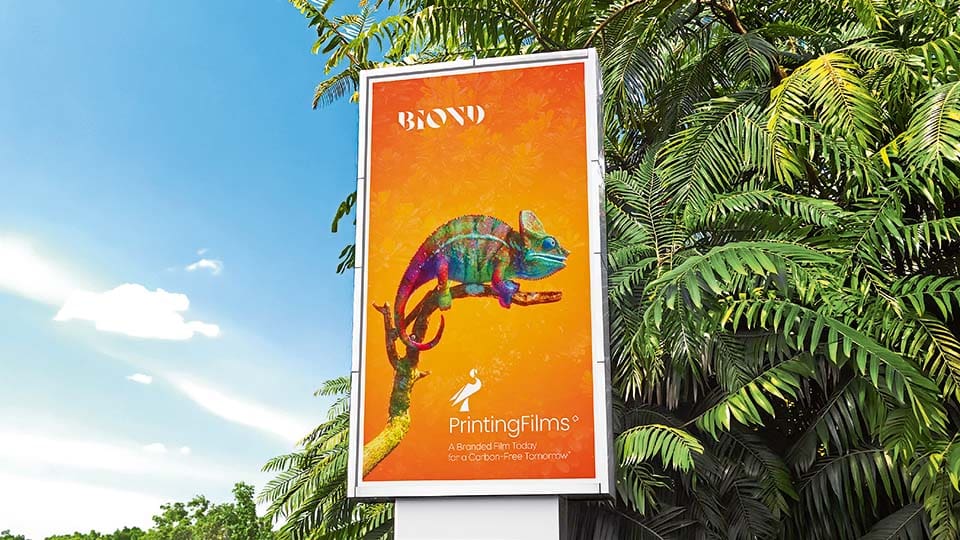
When it comes to environmental credentials, Crook stresses the importance of holding as many alternatives as possible to meet different sustainability requirements. He says Kavalan was developed to provide a PVC-free option and is supported by Life Cycle Assessment (LCA) comparative environmental data. This is also the case for BIOND self-adhesives which use certified bio-based carbon derived from plants. “Ultimately, customers require proven materials, appropriate accreditations, dependable availability, and clear technical information to make informed purchasing decisions,” says Crook.
“Weight matters too. Fitters value UFABRIK textiles, for example, because they are lightweight, easily transported, and can be folded as they are bruise-free. They offer just enough stretch for tensioned graphics applications. Fitters really like PVC-free Kavalan too, as again its much lighter than traditional PVC and just easier to handle.”
Variety, sustainability, and durability have all been stand-out aspects of the materials and considerations mentioned throughout this feature. The materials are being used for a variety of applications like exhibitions, POS displays, and live events. But across everyone we spoke to, it was clear that the materials are just one piece of the puzzle.
Lister says: “The signage industry needs to move beyond judging a product by a single material attribute. Paper is not automatically better than plastic, bio-based does not mean biodegradable, and recyclable does not mean it will be recycled. The real opportunity is to design out unnecessary material, extend useful life, simplify construction, and build a credible recovery plan before production begins.”
Factoid: Textile printing dates back to ancient civilisations, with techniques like block printing being used in China as early as the 3rd century AD. These early methods relied on hand-carved wooden blocks to transfer designs onto fabric surfaces
The companies we have spoken to also stressed that the suppliers you work with are equally as important. “For manufacturers and suppliers, the priority should be solving genuine customer problems through product development. The strongest products will combine performance, ease of use, reliability, commercial value, and sustainability,” says Mashiter.
“Customers need confidence in the company that supplies their materials,” adds Crook, who concludes: “Reliable supply is extremely important. A good supplier should be doing more than taking orders. We see our role as continually assessing the market, bringing genuinely useful new materials to customers, and helping them decide where those products fit within their businesses.
“This also means providing the evidence behind the product. Materials should be tried and tested for their intended applications and supported, where relevant, with technical data sheets, test results, certifications, and compliance documentation. As the market becomes more complex, particularly around environmental claims, the combination of product knowledge, dependable supply, and credible technical information is becoming increasingly important.”