The Power of Partnerships in Sign-Making
Working with other businesses can open doors to new markets, services, and expertise. Here, SignLink examines how building the right partnerships can strengthen day-to-day operations and long-term success.

As exhibitions and trade shows continue to grow and become valuable ways for businesses to generate leads, we take a look at the considerations sign-makers and printers should have when taking on event and exhibition stand work

At the recent FESPA 2026 trade show in Barcelona, one conversation that stood out to me was with an American journalist who was visiting the exhibition for the first time. In our conversation, he highlighted the sheer scale and creativity of some of the stands at the show, something he felt was more glamorous and eye-catching than similar exhibitions in the US.
While it is understandable that many hardware manufacturers and material suppliers are going to want to showcase the capabilities of their products as best they can, I would argue that businesses across live events are trying to stand out now more than ever.
Whether that is through a single feature to attract people to a stand or a solid brand theme, the world of exhibition stands and graphics is getting more creative and vibrant, as people look to not only create experiences but also capture the attention of those already wowed by the possibilities of digital ads and websites.
So, what are some of the considerations of a stand builder, printer, sign-maker, or project manager when dealing with an exhibition job? Here we speak to a range of providers from the exhibitions sector including trade printers, installers, and material suppliers, to get their advice on undertaking exhibition projects.
One company that has realised several solutions for this market in recent years is Venture Banners, a trade-only printer which was established in 2009 to make ordering large-format print simple and accessible to businesses of all sizes. The company produces a range of products including stretch fabric walls, counters, stands, silicone edge graphics (SEG), lightboxes, and traditional exhibition systems.
When asked about what to consider when working on an exhibition or event-based project, Wayne Bodimeade, co-founder and director of Venture Banners, says that every exhibition and event is different. Therefore, it is important to choose products that suit the space, the message, and how the graphics are intended to be used.
Bodimeade adds: “If they need to be transported between events or be reused, lightweight textile displays are a popular option as they’re easy to carry around, washable, and quick to assemble and pack away. Artwork must be carefully considered too as event graphics are often viewed at close range. This means that image quality, scaling, and positioning of information and imagery all needs to be checked to ensure key branding and messaging isn’t lost or partially blocked.”
If they need to be transported between events or be reused, lightweight textile displays are a popular option as they’re easy to carry around, washable, and quick to assemble and pack away
Continuing his advice, Bodimeade also reminds designers, customers, and sign-makers to ensure logos aren’t lost inside a roller banner base, or that important contact information isn’t obscured when graphics are stretched into an SEG frame or around a stretch fabric frame. Due to these many considerations, Venture Banners has decided to create an artwork guide which helps customers avoid common mishaps.
When it comes to working with a trade supplier, Bodimeade says: “A single stand might include SEG stretch displays, roller banners, flooring, counters, and more, all of which need to arrive together and be ready for installation on a fixed deadline […] Finding a large-format supplier that can produce multiple products under one roof also removes the complexity that comes with ordering various products from different places.”
Venture Banners also points out that many exhibitors at this year’s Print Show and Sign Show are using their products and services to create their exhibition materials, which the company says is a reflection of the knowledge and quality technology that customers keep going back for.
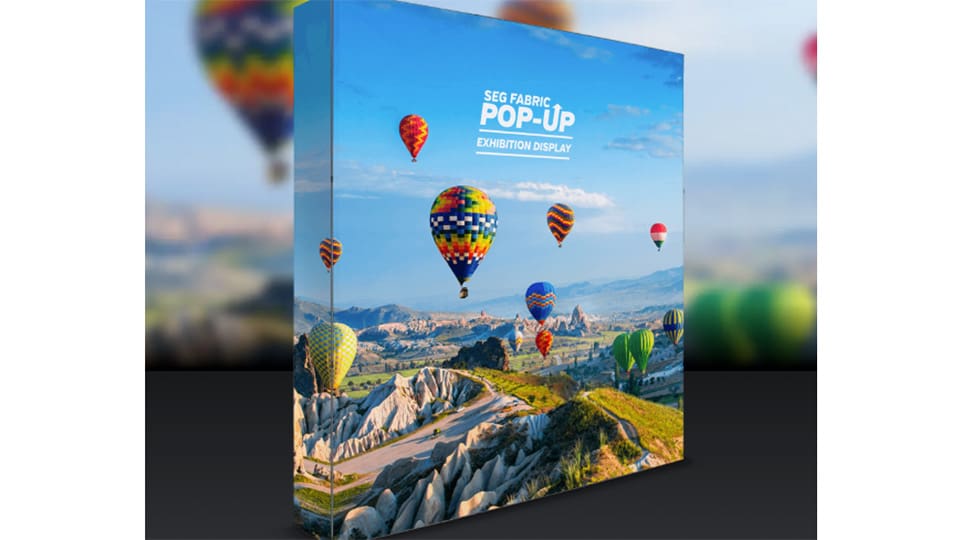
Advising on products, Bodimeade once again emphasises textile displays due to their lightweight and durable properties. “The versatility of textile displays continues to drive their growing popularity for exhibitions,” says Bodimeade, who adds: “Stretch fabric walls, counters, and stands create a seamless, premium finish while remaining lightweight and easy to transport. The fabric graphics can be zipped over the aluminium frame easily by one or two people, making this type of graphic easy to install and uninstall during busy events.
“SEG lightboxes are another popular choice. These offer bright, high-impact back-lit graphics that help brands stand out. Traditional pop-up systems are also always reliable solutions for businesses looking to maximise their presence.”
To see the range of products and services Venture Banners offer, visitors to The Print Show and The Sign Show can find them on Stand P620 at NEC Birmingham between September 29th and October 1st.
Venture Banners emphasises the focus on textiles which have benefits in terms of durability and transport, but also in regard to sustainability. One company that would have seen the impact of an increased focus on sustainability is Antalis. The company is a global distributor of paper, packaging, and visual communication materials and works closely with print service providers (PSPs) and signage companies to find suitable materials for high-quality graphics, including exhibition stands.
Speaking about what Antalis offers, the aptly named Chris Green, director of visual communication at the company, says: “Our role is to help signage producers and display specialists choose the right materials for the application, whether that is lightweight rigid media for stand construction, premium printable surfaces for striking graphics, or more sustainable options that align with clients’ environmental goals. As exhibition spaces continue to evolve, we see strong demand for solutions that balance visual impact, ease of installation, durability, and sustainability.”
Giving his advice on tackling an exhibition or event project, Green says there is a balance to be made between creativity and practicality. As well as considering the purpose of an exhibition stand, Green says that the environment that the stand is going in also needs to be a consideration. “Exhibition halls, retail pop-ups, conferences, and outdoor events all place different demands on graphics and structures,” Green says, adding: “Factors such as lighting, footfall, transport requirements, installation time, venue regulations, and expected lifespan all need to be considered from the outset.
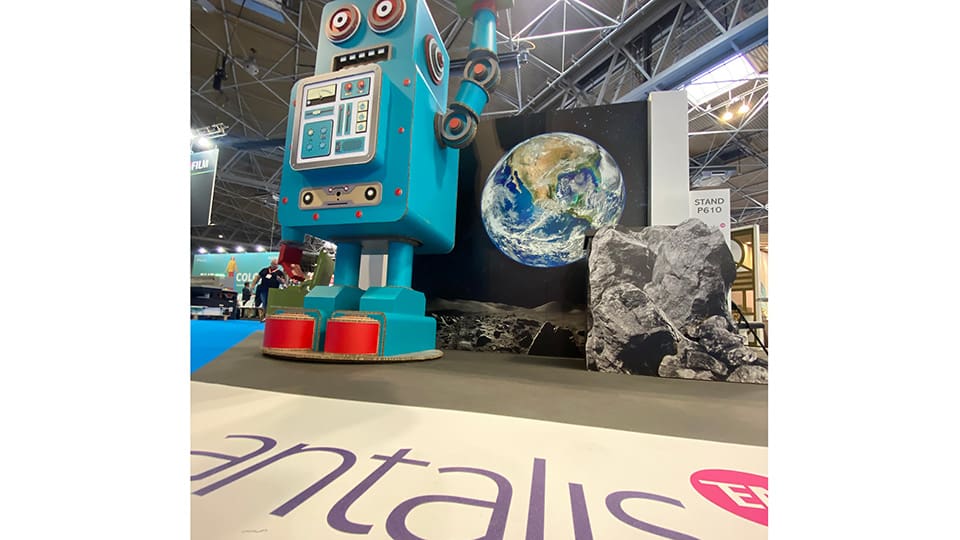
“Portability and ease of installation are also especially important. Many exhibition projects need to be moved, assembled, and dismantled quickly, sometimes by small teams and under tight deadlines. Lightweight materials that are easy to transport and robust enough to withstand repeated use can offer real value.”
As previously mentioned, Green also puts an emphasis on sustainability, as brands are looking for more recyclable, reusable, and lower-impact materials. From this point of view producers need to think not only about how the stand looks, but also about its end-of-life options and whether it can be repurposed for future events.
When considering materials, Green comments: “Some projects require lightweight rigid boards that are easy to handle and install, while others need materials with greater structural strength or premium surface quality for high-end branding. In many cases, the choice of substrate can determine how vibrant the printed graphics appear, how well the material performs under exhibition lighting, and how easy it is to cut, shape, or fabricate.”
“For rigid display panels and stand construction, lightweight fibre boards remain a popular option because they are versatile, easy to fabricate, sustainable, and suitable for a wide range of indoor applications.”
Green points to Antalis’ Xanita Board as a high-performance, engineered fibreboard made from recycled paper with a kraft paper liner which is designed as a lightweight, strong, and more sustainable alternative to traditional exhibition substrates. “Its closed-cell core structure gives it an impressive strength-to-weight ratio, making it particularly well suited to exhibition stand construction, display units, point-of-sale (POS), and event graphics,” adds Green.
Factoid: ISO 20121 is created by the ISO standards organisation to guide organisations in integrating environmental, social, and economic sustainability into event planning and execution
One benefit of using Xanita is its ability to replicate different surfaces, especially as it can be cut, routed, shaped, and fabricated into creative, three-dimensional elements, as well as walls, counters, shelving, furniture, and branded display features.
“Kroma board is another excellent choice for exhibition builds because it combines premium presentation with practical performance and sustainability,” adds Green. “Designed as a PVC-free, wood-pulp alternative to rigid plastic, it offers a bright white, extra-smooth surface on both sides for outstanding print quality. Its lightweight yet rigid construction, along with excellent flatness and dimensional stability, means it performs reliably in changing indoor conditions and is easy to handle, install, and transport for trade shows and event displays. Kroma board is also highly versatile, supporting UV inkjet, screen, latex, and offset printing as well as lamination, die cutting, and digital cutting, making it ideal for custom exhibition panels, POS displays, hanging signs, and branded features.”
The most successful exhibition solutions are those that combine strong design with practical application, choosing materials that deliver the right balance of impact, efficiency, and sustainability
Antalis also highlights other materials suited for large-format print and self-adhesive solutions. This includes the company’s Coala products which have options for self-adhesive vinyls, films, laminates, and display media that can be used for stand graphics, wall coverings, branding panels, and promotional messaging.
Concluding his thoughts, Green says that Antalis’ key recommendation is to approach each project holistically. “The most successful exhibition solutions are those that combine strong design with practical application, choosing materials that deliver the right balance of impact, efficiency, and sustainability.
“As customer expectations continue to evolve, signage companies that can offer informed guidance on material selection, reuse potential, and lower-impact alternatives will be especially well placed to stand out in this market.”
We’ve looked at getting the products for an exhibition project, and we’ve also discussed materials. But what about installation? Look no further than Ipl (Leeds), which has been a trusted silent partner for graphic and signage installations for almost a decade, assisting clients throughout that time with exhibition, event, and trade show set-ups and removals.
Speaking about modern event work, Rachel Nixon, operations manager at the company, says: “An often overlooked part of the exhibition planning process is lead times, not only when considering production, but also for the additional administrative steps that are often overlooked. The complexity of a business’s exhibition plans often dictates key elements such as risk assessments and method statements, as well as any equipment required for the install. This means that speaking with the venue early is essential to understanding any restrictions, thus allowing businesses to plan accordingly.”
Regarding this, Nixon recommends that businesses and customers speak to suppliers as early as possible to discuss the scope of the work. “Depending on the scope of the exhibition plans, a key consideration is crew choice, which is where an installation partner comes into play.
“Large, complicated stands could mean access machinery is required to achieve a safe and quality installation. This means a crew with relevant industry standard certifications is needed. An installation partner will also manage the organisation of necessary access equipment to the site through official channels, an essential step which will help mitigate delays on installation day.”
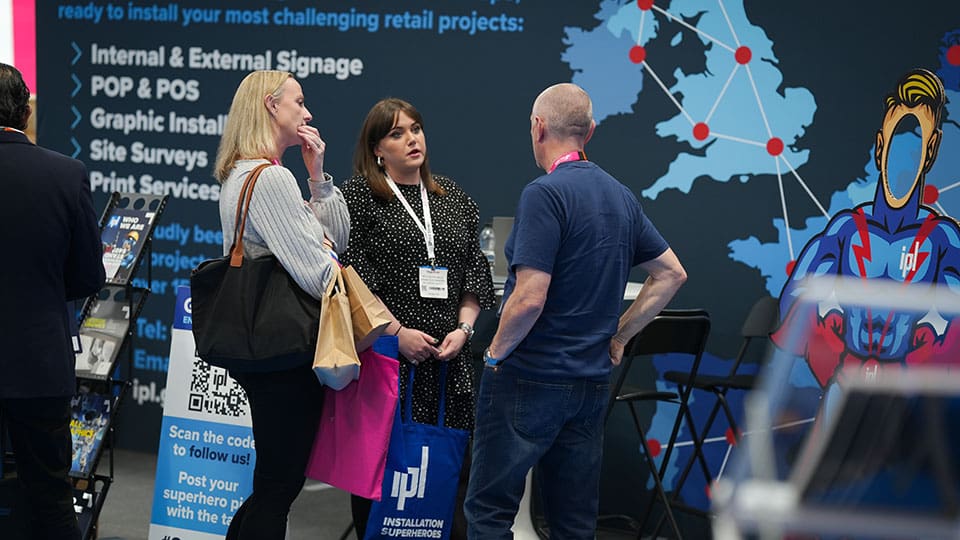
Nixon also highlights order of installation as another aspect that can be overlooked. She advises that questions should be considered such as: “Is there a specific item within the exhibition materials that needs to be installed first?” Nixon also highlights that large backdrops and powered elements should normally take priority to allow for adequate space and to establish power socket access. “Experienced crews can address these factors onsite with very little additional input, allowing for a smooth installation that hits its deadline.”
When it comes to changes seen in the industry, Nixon points to the shortening of expected lead times from exhibiting businesses, which has a knock-on effect on the additional administrative and planning steps that are needed for a safe and successful installation.
“More complicated stands and setups are also becoming more common, with businesses looking to diversify their event offerings and marketing materials to stand out in fast-paced industries,” adds Nixon. “This increasing complexity is also a contributing factor to shrinking client timeframes and is the perfect example of why early planning is essential for top-quality results. Many businesses now also provide AI-generated concept artwork and plans, which have not necessarily been checked by an experienced event organiser, production team, or installation manager. This can cause huge issues with client expectations and is another reason why choosing an experienced and honest supplier is of paramount importance.”
Another trade-only print company with a lot of experience in signage, exhibitions, events, and design is RMC Digital Print, a wide-format printer based in Hull which sees itself as a “secret partner” in providing print and signage solutions.
Speaking about its customers, Nicole Spencer, managing director at RMC, says: “We print the work that goes out carrying their name – so it’s not really our work, it’s theirs. Exhibition is one of our core divisions alongside signage, wayfinding, truck sides, and general wide-format, and it tends to be the one where the pressure and the creativity peak at the same time. We produce roll-fed and panels into the exhibition market. Then our clients will do the stand build using our products.”
Like other contributors, Spencer also emphasises the importance of getting ahead of projects and communicating with partners as early as possible. “Talk to us early and talk to us honestly,” says Spencer, who adds: “The best exhibition jobs happen when a sign company treats their trade supplier as a partner, giving us information about deadlines, budgets, and the artwork situation. When the deadline can’t move, we have to work backwards from that to schedule jobs in. Artwork is often an issue with exhibition work as the end client keeps tweaking it. Sometimes we need to be firm with them as time starts to run out.”
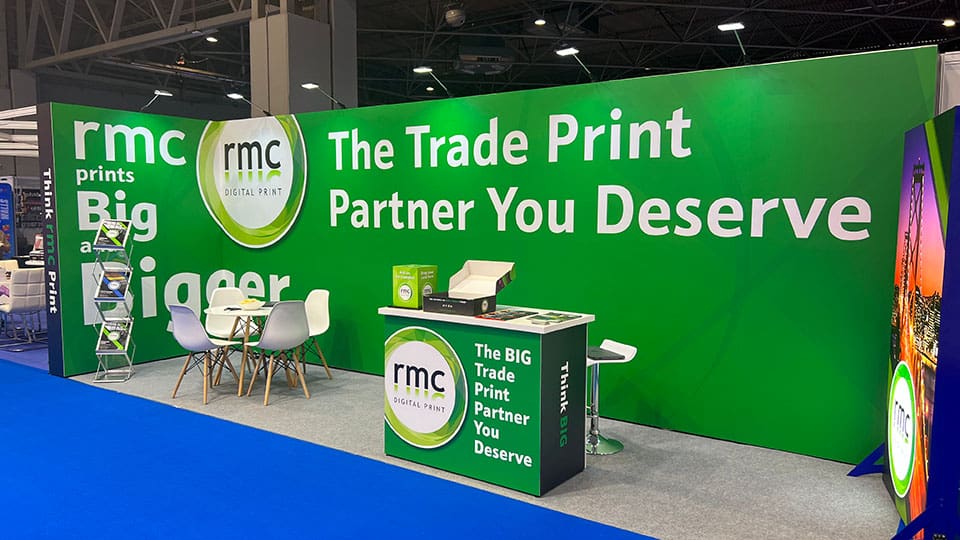
When it comes to timelines, Spencer suggests that businesses need to ensure they see the deadline as immoveable, as an exhibition will open on a set day and time whether a stand is ready or not. Similar to other companies, RMC has seen an increase in the number of companies enquiring about the transportability of graphics, and whether they can be reused or not.
“We’ve recently introduced dye-sublimation into our print portfolio as many exhibition clients were asking for graphics that could be folded and reused. UV textiles need to be stored on a core so aren’t as easy to transport. Therefore, the solution was to buy a new printer to best serve the exhibition market.”
When it comes to the biggest changes Spencer has seen in the exhibition space in recent years, the move towards fabric and dye-sub over rigid and vinyl-heavy builds are the standouts. “More clients are asking what happens to the graphics at end of life and whether there’s a recyclable or lower-impact option. The recent FESPA exhibition in Barcelona was done to ISO 20121 certification for Sustainable Event Management and I can imagine more events will end up working in a similar way so sustainable products will become key. Digital signage is also becoming more popular in stand design, which is worth keeping an eye on.”
Spencer’s last bit of advice is to nurture the relationship with your trade supplier, especially because of the tight deadlines of exhibition work which leave no room for errors. Spencer concludes: “Plan early, communicate often, and treat your supplier as part of the team.”