The Power of Partnerships in Sign-Making
Working with other businesses can open doors to new markets, services, and expertise. Here, SignLink examines how building the right partnerships can strengthen day-to-day operations and long-term success.

Following some recent major kit launches, Jonathan Pert delves into some of the latest breakthroughs in wide-format machinery from HP, Mimaki, and swissQprint

Wide-format technology continues to evolve at a rapid pace, with manufacturers introducing equipment that expands the range of applications available to sign-makers and print providers. Recent releases show advances in areas such as speed, media handling, colour control, and sustainability, reflecting ongoing demand for larger, more flexible, and more environmentally conscious output.
For print and signage businesses assessing their next steps, the current wave of wide-format machine launches offers a clearer view of where the technology is heading, and which features are becoming standard. In this feature, we speak to established manufacturers in the space, who detail some of their latest solutions.
Many of our readers will be aware of the core concept behind the HP Latex line of wide-format print devices, with the presses having received widespread adoption across the sign and graphics industry in recent years.
A core part of the concept is the presses’ water-based Latex inks, which are designed to combine the benefits of solvent and UV inks with a strong environmental profile. The inks use a technology that cures with heat, evaporating the water to leave a durable, plastic-like pigment on the surface while not affecting the recyclability of the substrate. Latex inks are also designed to be non-hazardous and safe for disposal.
HP has recently completed its new Latex lineup with the release of the HP Latex FS70W, which HP has dubbed as “its most productive Latex printer to date.” The press functions as an upgrade to the previous 3X00 series, delivering faster speeds, improved colour quality, and a new six-litre white ink system that supports higher-value applications and unattended overnight printing.
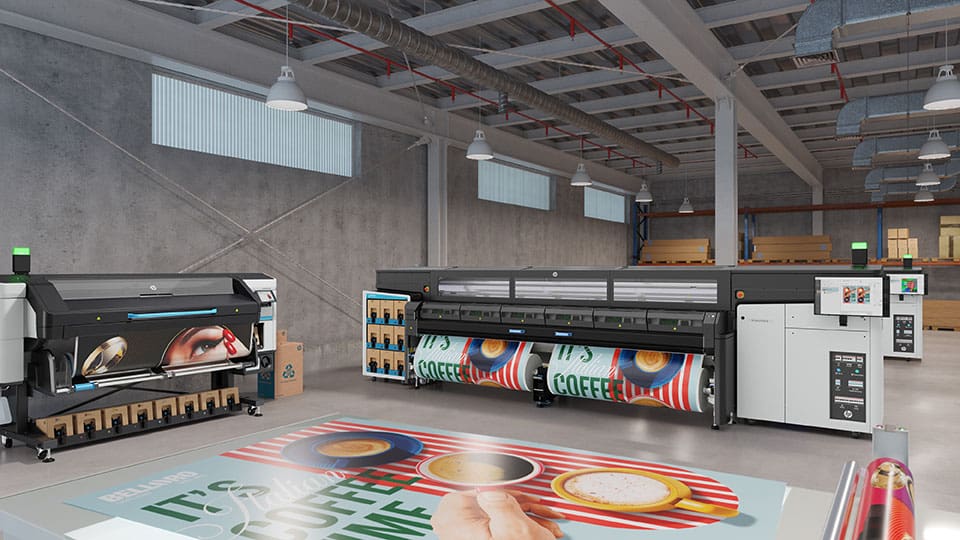
Explaining some of the other features of the FS70, Colin Easton, UK and Ireland large-format print channel manager at HP, says: “The printer is also modular and can be upgraded over time, giving print providers flexibility as their needs grow. In addition, it works seamlessly with workflow technology including the HP PrintOS Production Hub, which simplifies order intake and enables remote monitoring and workflow automation.”
The Latex FS70 W was publicly launched at this year's PRINTING United Expo in Orlando, Florida. At the show, SignLink editor, David Osgar, got the chance to interview Daniel Martinez, senior vice president and division president of HP Large Format Print, immediately following the official unveiling of the machine.
In the video interview, which was released on sister magazine Print Monthly’s YouTube channel, Martinez hinted at further Latex innovations to come, saying: “The FS70 isn’t by any means the last mile – we still have plenty more innovation coming into this platform, and the intent is that anybody who gets on board now will also be able to benefit with all that innovation later next year as well.”
Easton explains the recent changes in the Latex line in more detail, saying: “In the past year, HP has expanded its Latex line to serve print providers of every size. The HP Latex 730 and 830 are ideal for small to medium-sized print shops, while the R530 offers exceptional quality and flexibility for businesses producing both rigid and flexible applications. The FS platform, by comparison, serves larger industrial users that need high-volume productivity and scalability.”
In the past year HP has expanded its Latex line to serve print providers of every size
There has been a big response to this revamp of the Latex line, especially in the UK. In July of 2025, Ultima Displays invested in a range of new Latex equipment at three locations across the UK and Europe, Digital Creative Services became the first UK company to invest in a HP Latex R530 press, the first HP Latex 830W was installed in Ireland at NTI Diatec’s showroom, and Imageco installed a new Latex 800W at its print facility in Leeds.
Easton says: “The UK market has responded extremely well to HP’s latest wide-format advancements. Customers appreciate the boost in speed and efficiency from the FS platform, especially those upgrading existing FS50 and FS60 models with the new Productivity Kit.
The addition of a white ink channel (hence the W in the name of the press) has also received a positive response, according to Easton. He comments: “The new white ink system has also been a hit, opening creative possibilities in décor and signage. Overall, PSPs are telling us HP’s combination of performance and sustainability gives them a real competitive edge.”
At this year’s inaugural edition of The Sign Show, HP showcased both the Latex 830W and the R530, giving visitors a hands-on look at its latest wide-format solutions. Discussing HP’s focus at the event, Easton says: “We focused on quality, flexibility, and the integration of workflow tools like HP PrintOS Production Hub, which helps print providers manage orders and production more efficiently.”
By all accounts, HP’s experience was a positive one, with a number of sales announced following the event including the purchase of a Latex R530 and 830W by Trade Signs UK, a new signage division of Digiprint Group. Easton adds: “Visitors were impressed by the consistency and vibrancy of the output, as well as the sustainable design of the technology. It was a great chance to connect with the industry and hear how our innovations are helping print providers evolve.”
Another wide-format press manufacturer bringing out a variety of new presses is Mimaki, with new upgrades and offerings being announced by the manufacturer with great regularity.
One of these new solutions is the Mimaki TS200-1600, which is designed as an accessible entry point into dye-sublimation printing. The machine received its global launch at The Sign Show this year, with Hybrid Services, the exclusive Mimaki distributor for the UK and Ireland, showcasing its capabilities alongside a deluge of other print solutions at its stand.
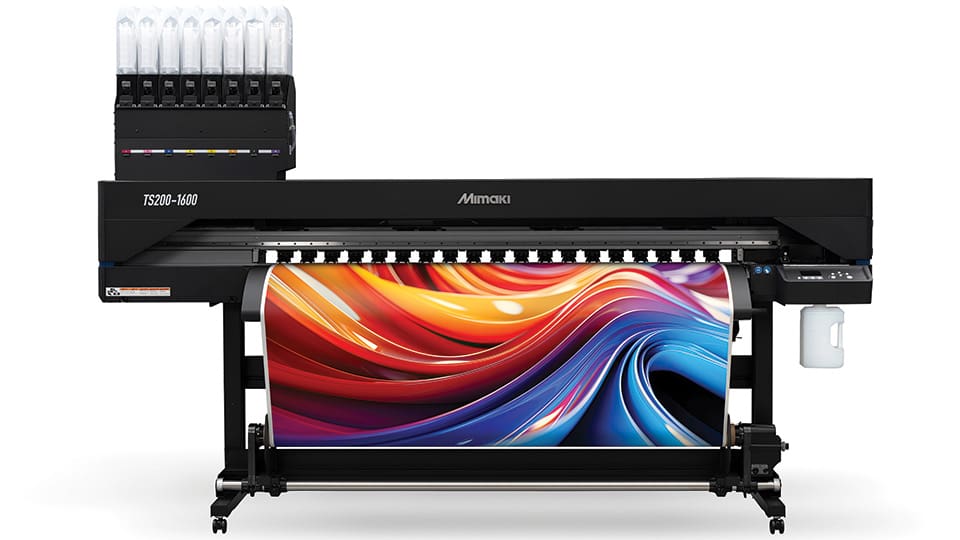
Andy Gregory, sales director at Hybrid Services, explains that the TS200-1600 is built on Mimaki’s 330 print engine, which he dubs as “a proven platform that delivers excellent precision and reliability, and introduces an expanded inkset including orange, violet, and fluorescent options alongside the usual process colours.”
While dye sublimation may not always be front of mind for sign-makers, the machine provides a practical way to broaden application capabilities into areas such as soft signage, promotional items, and interior décor. As Gregory puts it: “For those already producing display work, the TS200 offers a straightforward, cost-effective way to add a complementary revenue stream.”
For those already producing display work, the TS200 offers a straightforward, cost-effective way to add a complementary revenue stream
As with many of Mimaki’s entry-level and mid-market offerings, the emphasis was on making high-quality technology more accessible to a wider customer base, in this case with a focus on dye-sublimation.
Explaining how this concept impacted the development of the TS200-1600, Gregory says: “That meant combining trusted Mimaki engineering with a simplified workflow and low running costs, while retaining the output quality expected from a production printer.
“The expanded colour gamut was also a key development focus, ensuring users can achieve vibrant results across both fabric and coated hard substrates. This gives the TS200-1600 a strong commercial proposition for businesses wanting to diversify their offer without significant additional investment.”
Mimaki has banked on the fact that there is a growing demand for cost-effective solutions that enable print businesses to expand their application range. From the company’s viewpoint, dye-sublimation offers exactly that – the ability to produce everything from soft signage and flags through to promotional products.
Gregory highlights this focus, commenting: “Mimaki recognised that there was a gap for a robust, production-capable printer at an accessible price point. The TS200-1600 fills that space, making it easier for companies to step into sublimation without taking on a major capital project.”
As previously mentioned, it has been a very active year for Mimaki in terms of kit releases, with several other models launched alongside the TS200-1600, designed to give customers options across a range of segments and applications.
For example, the recently released UJV300DTF-75, Mimaki’s first UV DTF printer, is aimed at decorators and promotional product producers who want to apply UV printed graphics to a wide range of surfaces. The Tx330-1800, a hybrid textile printer designed for pigment textile printing of soft signage and décor, was also released in the last year. The JV200-160, which is built on the same platform as the TS200, was launched with the aim of expanding Mimaki’s solvent offering and providing a competitively priced, production-capable printer for the signage and graphics market.
“Taken together,” Gregory states: “they demonstrate Mimaki’s commitment to giving customers more choice and flexibility across a wide spectrum of output types.”
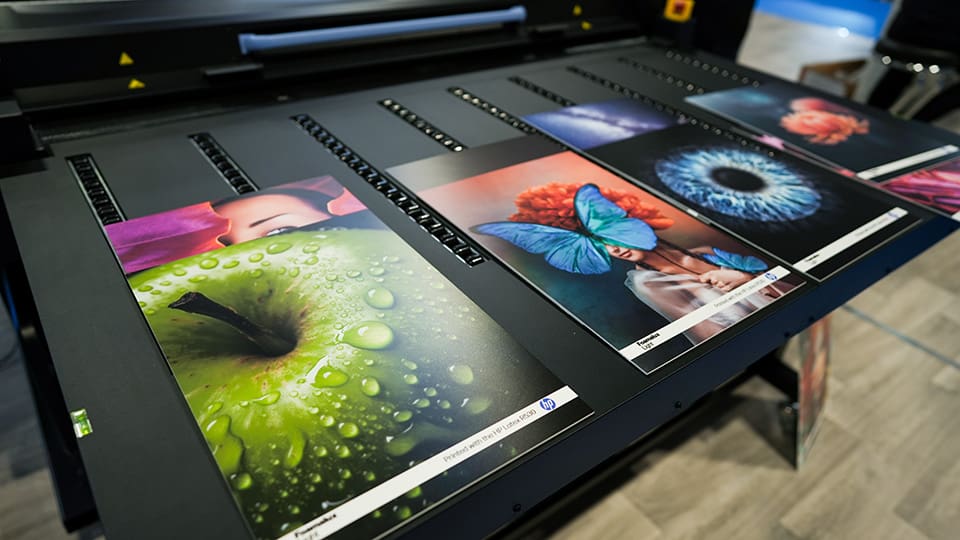
Gregory explains the reaction to the launch of the machine at The Sign Show, saying: “The response exceeded expectations. Visitors were drawn to the price-to-performance ratio – particularly those who could see it as a way to branch into new application areas without overextending their investment. We had excellent conversations with both existing Mimaki customers and sign-makers exploring dye sublimation for the first time.
“There was a clear interest in its ease of operation, versatile colour capabilities, and accessible price point. It set a really positive tone for the TS200’s market introduction.”
Hybrid has a nearly 30-year relationship with Mimaki as its exclusive distributor in the UK and Ireland, which Gregory believes has fostered a deep understanding of the market. According to him, that longstanding connection “allows us to identify emerging trends early, feed them back to the manufacturer, and make sure new products meet the specific needs of our customers.
“It also means that, alongside our reseller partners, we can provide the level of service and support that’s expected in a professional production environment. Having a trusted, locally based distributor ensures that the innovation Mimaki brings to market is matched by strong application knowledge and real-world support on the ground.”
Rounding up our wide-format manufacturers is swissQprint, which once again has released several new machines within the last year. SwissQprint’s Topi 5 and Oryx 5 completed the wide-format manufacturer’s Generation 5 line-up of flatbeds that was initially launched in January 2025. Erskine Stewart, managing director of swissQprint UK, explains that like the other Gen 5 models, these presses offer “increased speed, ten freely configurable colour channels, as well as various add-on options for increased versatility and a rock-solid machine frame.”
Topi 5 is the Swiss manufacturer’s new 3.2×2m flatbed printer, capable of producing prints at up to 126sq m/h. Oryx 5 is its 2.5m-wide counterpart with an output of up to 114sq m/h, 26% more than its predecessor model, the Oryx 4. Both models are tailored, as Stewart puts it, to “users with high quality requirements and small to medium production volumes. Hence, given the full range,” he says, “swissQprint has a solution for every size of business.”
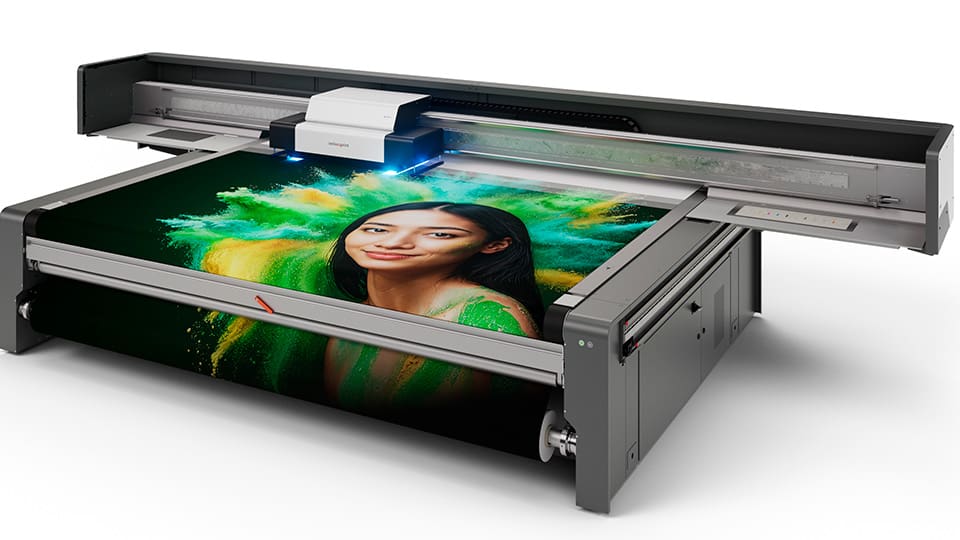
The tenth colour channel was added for the fifth generation of machines in response to customer feedback and was primarily based on the previous addition of UV ‘neon’ inks to swissQprint’s lineup of ink options. SwissQprint users were finding that they wished to add neon channels, but they had already used the nine colour channels that the machines provided, for example with a CMYK, light colours, white, and varnish configuration.
This focus on adapting to customer needs is a core part of swissQprint’s ethos, and the response from customers is of highest focus for Stewart. Speaking about the UK response to the new lineup, he is very positive, saying: “The launch of Generation 5 has truly energised the UK market and marked our most successful year yet. Our customers, who already trust swissQprint for exceptional quality, performance, and reliability, have responded enthusiastically, with many upgrading to benefit from the latest technology.”
The launch of Generation 5 has truly energised the UK market and marked our most successful year yet
Stewart also suggests that the upgrades of the new machines have allowed for a wider number of companies in signage, graphics, and the wider print market to adopt swissQprint technology. He comments: “The new Generation 5 platform has opened the door for many new businesses to adopt swissQprint technology, drawn by its versatility and innovative features that enable them to take their production to the next level.”
Research and development is a continuous process at swissQprint’s headquarters in Switzerland, where more than 30% of the team work to find further improvements that can be released in subsequent models. As Stewart adds: “Our focus is always on refining performance, efficiency, and user experience. As is our tradition, we tend to share details only when new developments are ready for release – ensuring that every announcement is backed by proven results.”
Factoid: Encad’s NovaJet series, which was released in the mid-1990s, is often credited for kickstarting the first boom in wide-format sign-shop inkjet production
In an increasingly competitive landscape, companies like swissQprint exemplify how a long-term vision can sustain innovation. As new models emerge and technologies mature across the sector, one thing is certain: wide-format printing will continue to transform how we communicate visually on a large scale, blending technical precision with artistic expression.
The ongoing collaboration between R&D teams, software developers, and materials specialists ensures that wide-format printing remains not just a tool, but a platform for further creativity and growth. What unites all the manufacturers we spoke to is a commitment to expanding the possibilities of print – offering higher speeds, greater media versatility, longer durability, and more sustainable processes.