The Power of Partnerships in Sign-Making
Working with other businesses can open doors to new markets, services, and expertise. Here, SignLink examines how building the right partnerships can strengthen day-to-day operations and long-term success.

As digital technology continues to evolve and become a big part of many public installations, David Osgar takes a look at the digital products and solutions currently on the market for sign-makers and AV specialists

At last year’s World Out of Home Europe Forum in Milan, Christian Schmalzl, chief executive officer of Ströer Media, highlighted the important role of classic billboards in comparison to digital screens.
Schmalzl observed that “most of the current momentum is digital” but pointed out the unique selling point of classic out-of-home (OOH).
This observation can be felt through the signage and display industries as certain markets pivot in some cases to pure digital solutions or others go for more printed graphics and displays.
While the integration of digital screens and printed graphics can still take place in areas like exhibitions, public attractions, and certain parts of hospitality, the recent changes in print and digital technology mean that specialist companies are required for certain work more and more.
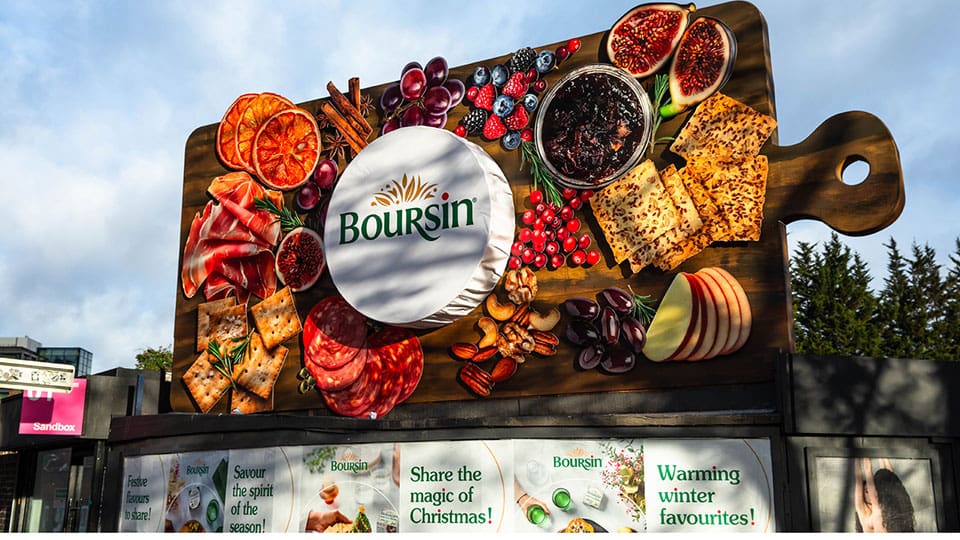
As a wide-ranging and varied industry, signage can come in many forms, so it’s important that businesses that cater to graphic installs, refurbishments, branding projects, OOH advertising, and public events, are aware of the most up-to-date technology they and their suppliers can offer.
Here, we take a look at what products and innovations are on the market, and as Schmalzl said at the World Out of Home Europe Forum, show how print and digital can work “hand in hand”.
With events like CES 2025 and Integrated Systems Europe (ISE) taking place at the beginning of this year, many technology manufacturers have been out in force showcasing their new solutions.
At ISE in Barcelona, Sony demonstrated its Deep Black Non-Glare lineup with its 98BZ53L and BZ40L series. The displays offer highly detailed picture quality, brightness, and contrast which can help to make products and advertisements truly pop.
Sony’s BRAVIA BZ53L for example includes the company’s unique Deep Black Non-Glare Coating which overcomes issues such as bright spot lights often present in retail stores and shopping centres. The screen also has 780 nit brightness, cinematic colour, and a large viewing angle which shows off the screen’s 4K HDR visuals.
Sony says that its high nit brightness can overcome the issues of light-flooded spaces, often present in showrooms and corporate lobbies. The BZ53L’s Full Array Local Dimming boosts peak brightness also boosts the display’s peak brightness to 1500 nits.
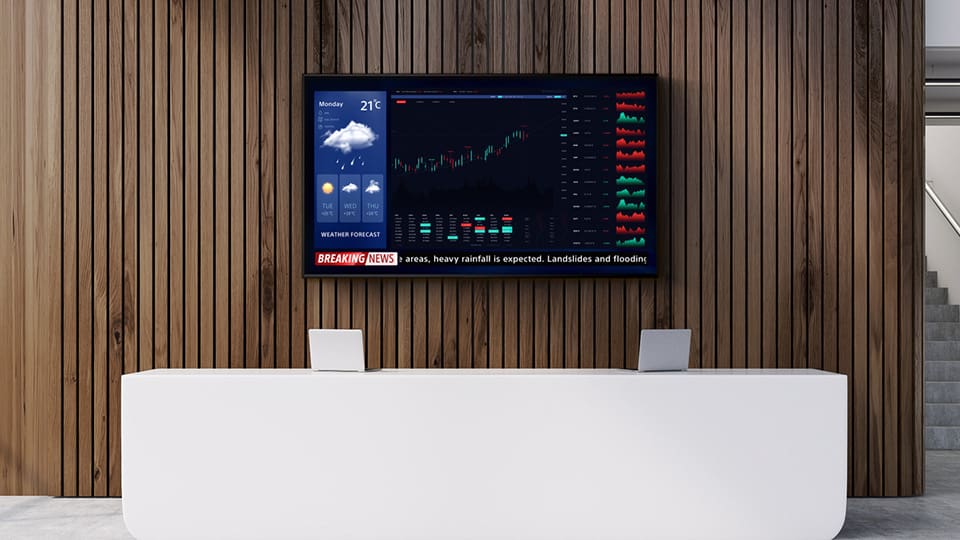
Displays like the BZ53L and BZ40L, the latter of which also offers Deep Black Non-Glare Technology, are “made for professionals” according to Sony.
When it comes to the BZ40L, Sony says the screen has been professionally designed for flexible installation. The BRAVIA range comes supplied with a Wall-Mount Adjuster to give extra flexibility for mounting the display centrally in portrait or landscape orientation.
The professional displays also display the Sony logo discretely on the edge of the display’s bezel so that audiences don’t get distracted from the screens’ content. Sony also highlights the BRAVIA’s ability to run dependably 24 hours a day in various corporate and commercial environments. Special settings for professional use also can make the displays far easier to use.
Speaking about Pro Settings, Sony says: “Pro Settings mode makes doing business even easier, allowing you to customise BRAVIA settings and operating modes to suit the demands of corporate or retail environments. Disable input or remote control functions, schedule on/off times, remove labels, and block buttons to avoid tampering when the screen’s being used in public spaces.”
When it comes to content management software (CMS), Sony works with a variety of partners including Uniguest, NowSignage, and Xibo Digital Signage.
Recently, Blue Billboard, an independent digital out-of-home (DOOH) advertising provider in the South East of England, worked with Xibo and Sony BRAVIA professionals displays to deliver advertising signage across a network of displays in Surrey.
After being commissioned by a local council to install a 25-screens-DOOH network, Blue Billboard implemented the Sony BRAVIA 65BZ35L and 55BZ35L with system-on-a-chip thanks to Xibo and Sony ZTP’s integration.
Also, working with retail solutions provider, Theravada, which delivers interactive kiosks, digital cabinets, and drive thru solutions, was a demonstration of the range of associates and suppliers required to pull-off large scale installations like these.
A big user of both printed graphics and digital technology is the retail sector. But as high street stores continue to fade away, many people are questioning the role of modern-day retail stores.
Recently Sony conducted its State of Retail Technology Report 2024 which it says reveals “great opportunities” for in-store retailers, but a “chasm” between their priorities and consumer expectations.
The survey which spoke to over 1000 respondents across retail technology decision makers and consumer shoppers in Europe, looked at the priorities and preferences of both retailers and cons-umers, which Sony says shows the beginning of a shift to “omnichannel balance between in-store and online shopping”.
33% of respondents said that ecommerce remains a priority for investment, while 32% said that in-store technology was a priority and 50% said non-technology related enhancements was a high priority.
Thorsten Prsybyl, European retail sales manager at Sony Professional Displays and Solutions, says: “Replicating the seamless tech-powered customer journey of ecommerce in store, and making ethical decisions as a brand that align with today’s consumers will be key in a world where fast-fashion and sustainability is being increasingly scrutinised by gen Z shoppers.
“The results indicate that retailers aren’t adapting to the changing demands of consumers fast enough. The danger is that, if they don’t keep up, they risk losing the loyalty of their customers. But alongside this danger, there is equally a great opportunity to be had here. Brands that separate themselves from the pack and invest in improving their store experiences will gain a clear competitive advantage by future-proofing their brand.”
Nikki Blissett, head of marketing at Xibo, adds: “Digital signage is set to play a pivotal role in the retail consumer experience. As retail environments are evolving, digital signage provides consumers with dynamic, personalised content that will not only create a more engaging and immersive experience but has the ability to align the in-store experience with online channels and campaigns.”
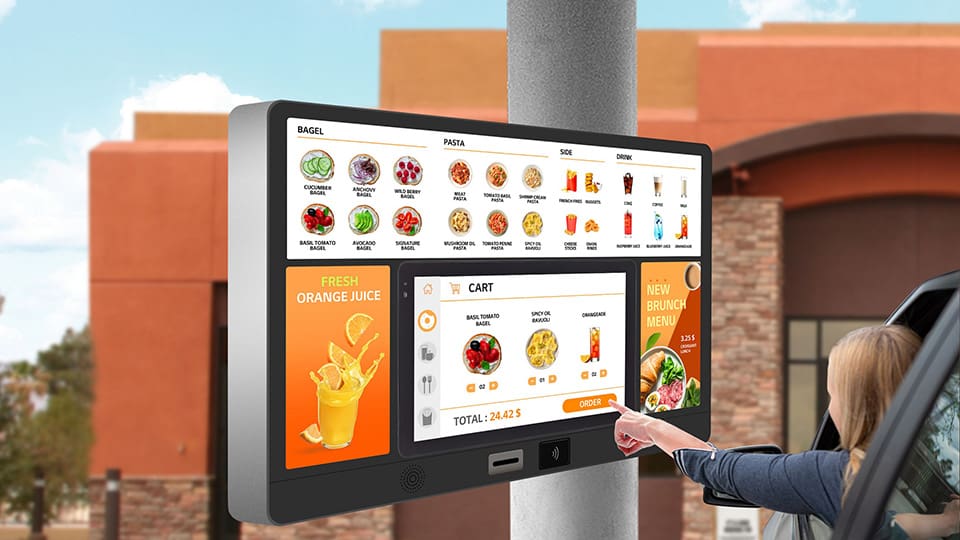
An example of the integration of the ease of online shopping and the physical benefits of in-person shopping can be found in the use of interactive kiosks and drive thru menus.
Last year LG Electronics highlighted and introduced a range of technologies to be used in indoor and outdoor spaces, all with the aim of creating more dynamic and engaging experiences for users and passers-by.
One such technology is its Anti-Discoloration technology for outdoor digital signage which is verified by standards and testing organisation, UL Solutions. The technology has been developed to prevent ‘screen-yellowing’, a common issue for outdoor digital signage products which are exposed to large amounts of sunlight.
Making ethical decisions as a brand that align with today’s consumers will be key in a world where fast-fashion and sustainability is being increasingly scrutinised by Gen Z shoppers
LG says it is the first company to achieve UL verification for its display anti-discoloration characteristic technology for digital signage. For this LG developed a comprehensive testing methodology and defect-evaluation criteria after which UL Solutions independently assessed the product to the criteria in support of LG’s marketing claim. Before this there were no internationally recognised standards or testing methods for measuring a screen’s resistance to screen-yellowing.
“Our UL Verification of products with Anti-Discoloration technology actively reinforces the performance and quality of our digital signage products,” says Paik Ki-mun, senior vice president and head of the Information Display business unit of LG Business Solutions.
Over the past year LG has continued to release new updates to its technology to keep pushing for more impressive visuals. Kinetic LED signage is one technology the company has showcased at numerous events in order to demonstrate the storytelling potential of 3D digital displays.
LG Kinetic LED has been used for artistic exhibits in public spaces as well as in museums, hotel lobbies, and galleries. 240 LED modules display animated patterns that appear to emerge from the screen thanks to 240 engine motors which move delicately back and forth up to 300mm to help visuals come to life.
In order to produce its impressive visuals, LG offers a team of professional designers to provide tailored designs and media art that is individually mapped to kinetic movement that can be produced by a dedicated content production team.
While LG Kinetic LED is a very bespoke and specific type of installation, it’s an example of the big installations that are being implemented at big venues and locations around the world which can be complimented with additional signs and graphics.
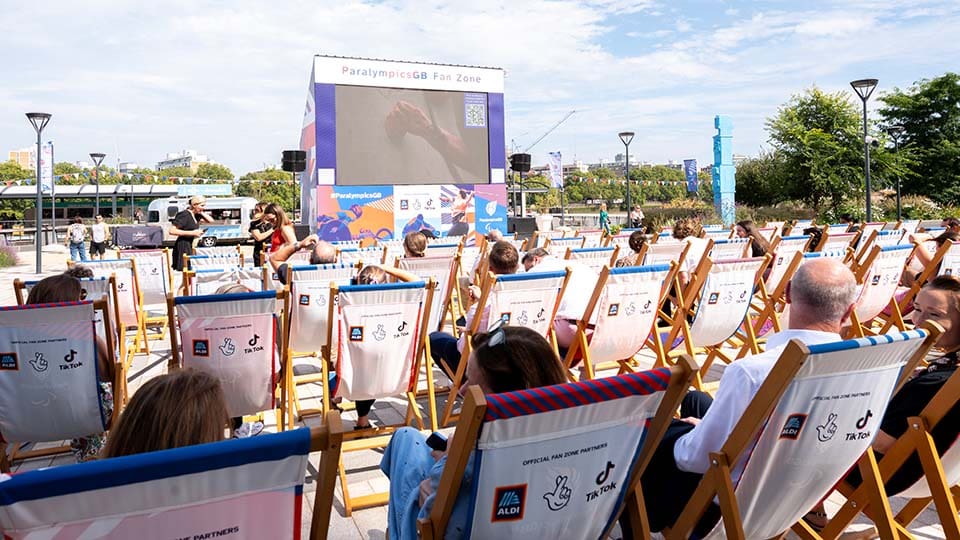
When it comes to large advertising, especially in the world of OOH, digital screens play a big role as they are able to display programmatic advertisements which are tailored to specific areas and populations.
To circle back to Schmalzl’s comments mentioned at the start of this feature, digitalisation is driving the growth of OOH advertising. According to Statista, DOOH represented 63% of outdoor advertising spends in 2022, up from 32% seven years prior. The research has also been highlighted by programmatic buying platform, Displayce, which operates in global locations like London, Bordeaux, Dubai, Milan, and Berlin.
Speaking about the company, Gordon Bonifacio, head of sales for the UK at Displayce, says: “We are a specialist demand-side platform (DSP) that allows media agencies and brands to access a vast inventory of 1.2 million digital screens from over 500 media owners in 80 countries.
“Our proprietary technology is powered by artificial intelligence and enables automated panel-by-panel buying in real time with granular and cookie-free targeting capabilities, optimal campaign impact, and quality measurement.”
OOH media owner, JCDecaux, has held a majority stake in Displayce since 2022, which according to the company has accelerated its developments. With this in mind, and the fact that Displayce was founded in 2014, the company will have witnessed much of the growth in DOOH over the past decade.

Bonifacio explains: “A key driver of this growth is the rise of programmatic DOOH globally, with nearly half of campaigns in 2024 being bought programmatically. This trend highlights the growing demand for more targeted, flexible, and contextual advertising solutions. According to a recent study by VIOOH, programmatic DOOH advertising adoption is expected to increase by 36% in the UK over the coming year.”
Speaking about the appeal of DOOH over other advertising models, Bonifacio says: “Digital out-of-home is one such innovation that offers the potential to capture consumers’ attention directly in the places they frequent daily. This media stands out because it seamlessly integrates into daily life, offering a less intrusive alternative to online ads, where attention is decreasing due to ad saturation.”
In a world in which human attention is more and more sought after, especially due to how integral mobiles phones and smart technology has become in our society, brands and corporations are constantly vying for more people to see them.
Traditional OOH can offer unique and creative ways to engage with the public, whereas DOOH can use intelligent software and algorithms to plan content effectively when needed.
Bonifacio says: “In recent years, DOOH has reached a new level of efficiency thanks to the integration of programmatic technology. Programmatic DOOH allows for precise audience targeting through geographic, interest-based, and demographic data. By understanding audience flows around each screen, advertisers can select the most relevant locations, ensuring effective engagement between brands and consumers.”
Speaking about the advancements in programmatic software, Bonifacio adds: “Solutions like live triggering allow messages to be adapted based on real-time events (e.g. an airport flight update or a sports result), while Dynamic Creative Optimization (DCO) automatically adjusts visuals and messages according to contextual data such as time or location.”
But when it comes to digital technology, it’s hard not to talk about the rise of artificial intelligence, especially now it is being implemented into so much software and brand communications.
At the end of last year, Coca-Cola worked with Ocean Outdoor on its famous Piccadilly Lights residency to display an AI-driven Santa Claus which would interact with passers by with real-time conversations and image generation.
“One of the key innovations [in DOOH] is the use of AI, particularly generative AI,”says Bonifacio, who adds: “Displayce stands out as the first DOOH platform to integrate generative AI with CampaignAI.
“This intelligent assistant transforms a simple client brief into a personalised media plan. It suggests tailored media strategies, identifies relevant audiences, and determines the ideal times and locations for delivering messages. With just a few clicks CampaignAI generates a custom and optimised DOOH strategy.”
As evident in the implementation of AI, digital screens and technology continue to evolve but also combat the pushback from web and print marketing. But as seen throughout this article, all these marketing channels can work together to advocate for the importance of in-person interactions and the possibilities of various technologies and innovations.
Investing in a digital screen side of a signage business may not be an avenue for every business, but finding partners who are experts in this field could be hugely beneficial to expanding your work and job types.