The Power of Partnerships in Sign-Making
Working with other businesses can open doors to new markets, services, and expertise. Here, SignLink examines how building the right partnerships can strengthen day-to-day operations and long-term success.

With interest and demand for metallic signage on the rise, Rob Fletcher takes a closer look at the technologies and techniques involved with this type of work, gaining insight from specialist companies in this segment

Hard-wearing and durable, metallic signage brings with it a number of stand-out advantages for customers across many markets. Suitable for a wide range of sign applications – from wayfinding and branding to decorative and business signage – there is certainly no shortage of variation in this market.
Add in other features such as low maintenance, weather- and UV-resistance, customisation options, and the ability to offer a professional and premium look in certain situations, and it is easy to see why there is a rising demand for this type of signage, with those active in this segment seeing an increased call for their services.
With this in mind, SignLink sits down with several expert companies active within the metal signage market to gain further insight into the key factors driving demand and how they are ensuring they respond to this with quality services and solutions.
Up first to comment is Paul Tomlinson, sales director at EFKA Frame Solutions, who says that there is a growing demand for premium-looking metallic signage, especially in retail, events, and hospitality.
“Combining metallic aluminium profiles with tension fabric graphics has proven especially popular, as it offers a high-end appearance while allowing graphics to be updated quickly and cost-effectively,”
Tomlinson says, adding: “We also see growing interest in integrated LED lighting for both functional and decorative purposes.”
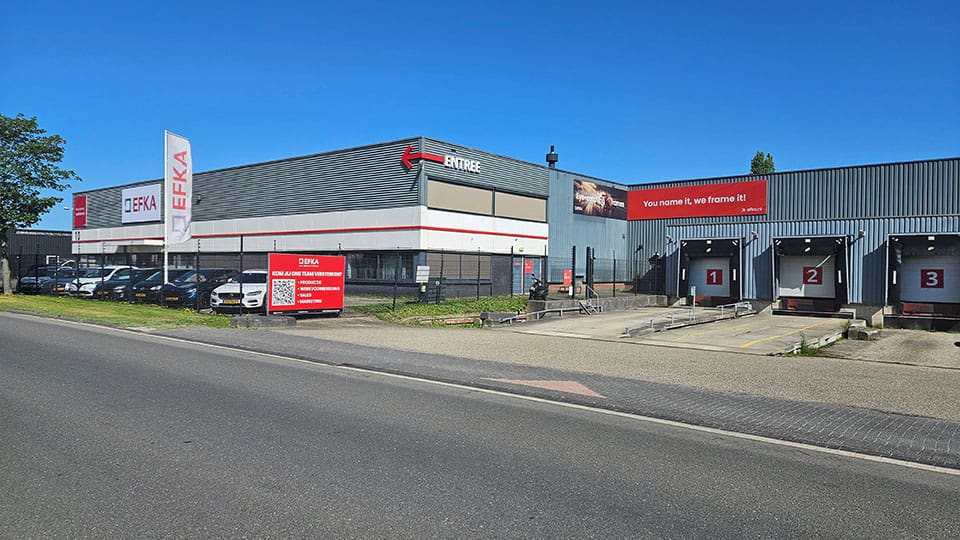
As to what sign-makers should be looking for when selecting metallic materials and solutions to work with, Tomlinson says the “right choice” depends greatly on the application, and it is up to the sign-maker to ensure they have the right technology and materials in place to react to demand and offer a premium service.
“A profile that works perfectly for illuminated indoor signage might not be suitable for a large-scale outdoor signage,” he explains, continuing: “Sign-makers should look for a partner that offers a wide range of profiles tailored to different applications, from slim, elegant designs for retail spaces, to heavy-duty frames for outdoor use.
“Cheaper materials can warp, lose their finish, or have poor tolerances, making tension graphics fit badly. This leads to an unprofessional look and can damage a brand’s image.
Cheaper materials can warp, lose their finish, or have poor tolerances, making tension graphics fit badly
“At EFKA Frame Solutions, we provide dedicated solutions for each setting, ensuring the right combination of strength, finish, and compatibility with tension graphics and LED lighting for every project.”
Looking to the latest metallic signage solutions from EKFA, Tomlinson highlights its outdoor fabric frame, which he says has been designed to bring the premium look of its aluminium profiles to exterior applications. Built for durability and visual impact, he describes this as a “perfect” solution for retail entrances, event spaces, and any external wall that requires a powerful brand message. Visitors to the first-ever edition of The Sign Show, which took place in September at the NEC, were able to view these solutions first-hand.
Another expert within this area is SignFab, whose technical director, Steve Muton, says that metallic signage carries a special weight in the branding world, in that it is bold, professional, and built to last.
“Over the past few years, we’ve seen some exciting shifts in this area, and we’ve been working closely with sign-makers across the country to deliver solutions that meet both creative and practical demands,”
Muton explains, adding: “Right now, we’re seeing a real appetite for premium finishes – brushed, anodised, and coloured metals are in high demand. Gold, copper, and bronze are particularly popular, giving signage a contemporary edge while still maintaining that timeless feel.
“Another strong trend is towards architectural-style signage. Built-up stainless-steel letters, often paired with halo illumination, are proving especially popular with clients looking for a sophisticated look. We’re also finding sustainability is becoming more important. Businesses want signage that not only looks the part but also lasts, with recyclable, long-life metals that align with their environmental goals.”
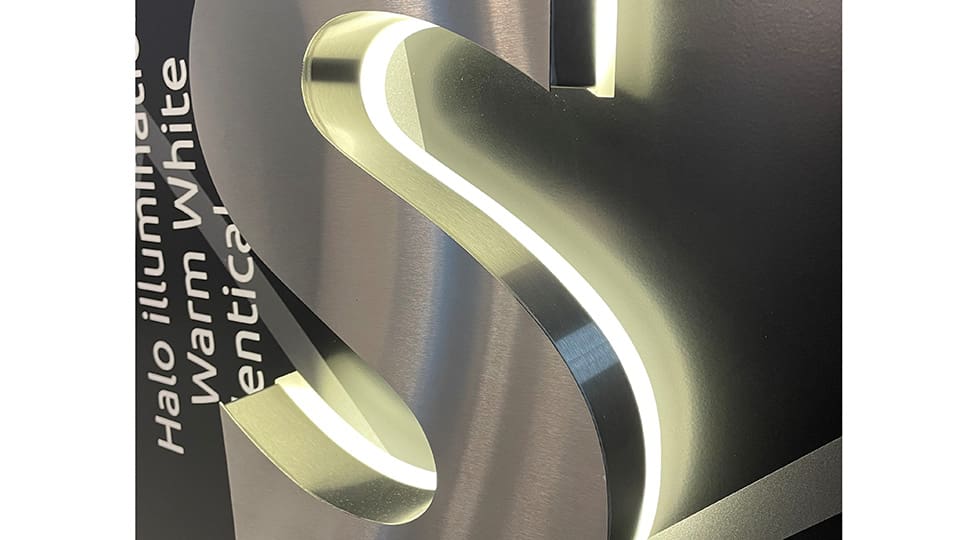
Muton goes on to say that there are several key factors sign-makers should prioritise when selecting metallic materials. These factors include durability, as metals must withstand weathering and maintain their finish over time, as well as consistency of appearance, in that whether brushed, polished, or coated, the finish needs to be uniform.
Other stand-out points include fabrication quality, with materials being easy to cut, weld, and form precisely, in addition to good compatibility with lighting such as LED to enhance the overall effect.
With this, Muton also offers a warning of “going cheap”, saying cutting corners with metals is a “false economy”. He continues: “Cheaper materials might look fine at first, but they tend to tarnish, corrode, or fade much faster. That not only leads to costly replacements but can also harm the reputation of the sign-maker which supplied them.
“Poor-quality metals can also be harder to work with; they warp or scratch easily, and achieving a consistent finish becomes almost impossible. When you consider how signage represents a brand, going cheap is simply too risky. Quality metals protect both your customer’s investment and your reputation.”
In terms of how SignFab can support, some of its most popular options include built-up stainless-steel letters with brushed or polished finishes, with the company only using 316 grade for long life assurance or coated finishes.
Factoid: Around 75% of all aluminium ever produced remains in use today as it is infinitely recyclable. Recycling aluminium saves 95% of the energy needed to produce new aluminium
Other solutions include powder-coated aluminium signage, which Muton says offers vibrant colour with the strength and durability of metal. There is also illuminated metallic signage, which means SignFab combines precision-built metals with the latest LED technology to create eye-catching results day and night. In addition, its eco-friendly options focus on recyclable metals and processes designed to minimise waste.
“We’ve seen these solutions thrive across multiple sectors, from retail and hospitality through to education and corporate spaces,” Muton says, adding: “What they all have in common is the ability to deliver a high-quality finish that stands the test of time.”
Also weighing in on the conversation is Lisa Harvey, sign sales manager at Nova Aluminium. Harvey advises that when working with metal, sign-makers should take the advice of the manufacturer to ensure they get the best possible result.
“We get all manner of requests for signage that just isn’t feasible simple because it is what the end user wants,” Harvey explains, adding: “There are limitations to everything, but there are also alternatives to everything.
“It’s rare that we have to advise a customer that there isn’t a solution to the request that they have received. We love the weird and wonderful, when a customer thinks outside of the box and uses our systems for something we had never even thought of, it’s great!”
On this point, Harvey also warns against the temptation of “going cheap”, saying the hidden cost of this is often far higher than the upfront savings. She explains: “A poorly fabricated or broken sign isn’t just an inconvenience; it sends a loud message that the business behind it doesn’t care about quality. That first impression can turn customers away before they ever walk through the door.
“Worse still, a failing sign can become a safety hazard. Falling panels, sharp edges, or broken parts could injure passers-by. Even if no one gets hurt, a visibly deteriorating sign erodes trust in the brand and forces costly replacements long before a quality sign would have needed them. In short, a cheap sign might save a little money today, but it risks reputation, safety, and your bottom line tomorrow.”
Looking to current demand, Harvey says acrylic boxes still prove popular with many Nova Aluminium customers, and while she believes there will always be a place for them on the high street, flex systems are more common. She says as these become slimmer, the more versatile they are for the high street, adding that Nova’s 75mm fascia frame is testament to this.
Meanwhile, Harvey says internal signage is becoming ever popular, as the options with print make the textile system more appealing, offering endless opportunities. While the frames themselves are rarely seen, this, Harvey says, does not stop Nova from going back to the drawing board to see what improvements can be made.
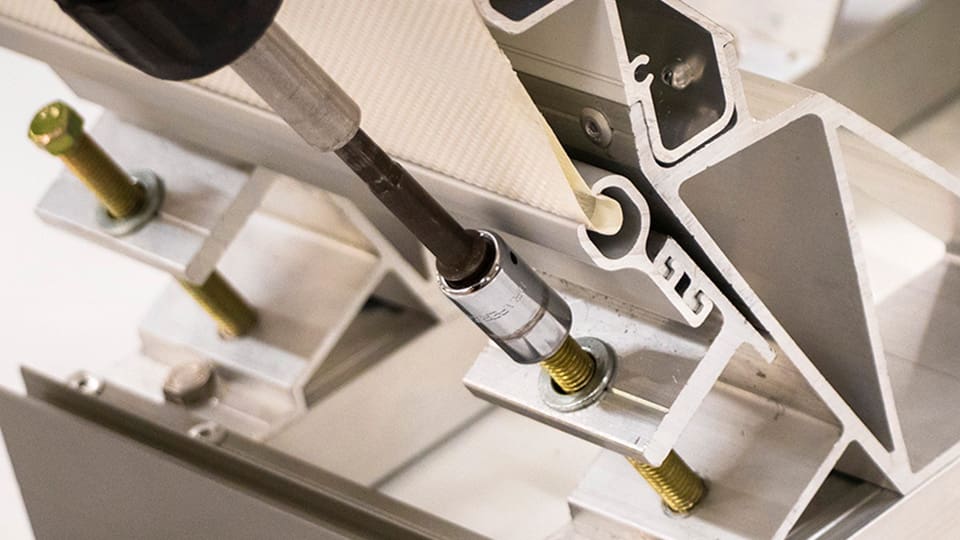
“For example, our latest innovation includes support free fabric boxes, that have a full perimeter fix,” Harvey says, adding: “Not only that, but the reinforcing angles can also be fitted anywhere around the perimeter of the box, bringing an end to awkward installations.”
The final comments come from Garrick Dartnell, marketing manager at Sign Trade Supplies. He also notes rising interest in special effect metallic coatings, offering the example of wood-effect aluminium profiles, though the primary trend is a shift towards broader textures and finishes, giving clients more creative ways to elevate their signage.
“In today’s visually saturated environment, brands need to work harder to stand out, and premium metallic finishes are becoming a popular way to achieve that,” Dartnell explains. He goes on to say that in terms of material, selecting the right metallic product depends on the specific requirements of the project.
“Each sign application, whether structural, decorative, or architectural has unique demands,” he says, continuing: “Understanding each material’s properties allows sign-makers to weigh up the pros and cons effectively, balancing aesthetics, performance, and cost.”
With this, he says the key starting point is to consider the environmental conditions. Signage installed in coastal or high-pollution areas, for example, will need corrosion resistance as a priority, whereas projects in exposed rural or high-wind zones require materials with high tensile strength and rigidity. Factoring in these external pressures early in the design phase ensures long-term durability and reduces costly maintenance.
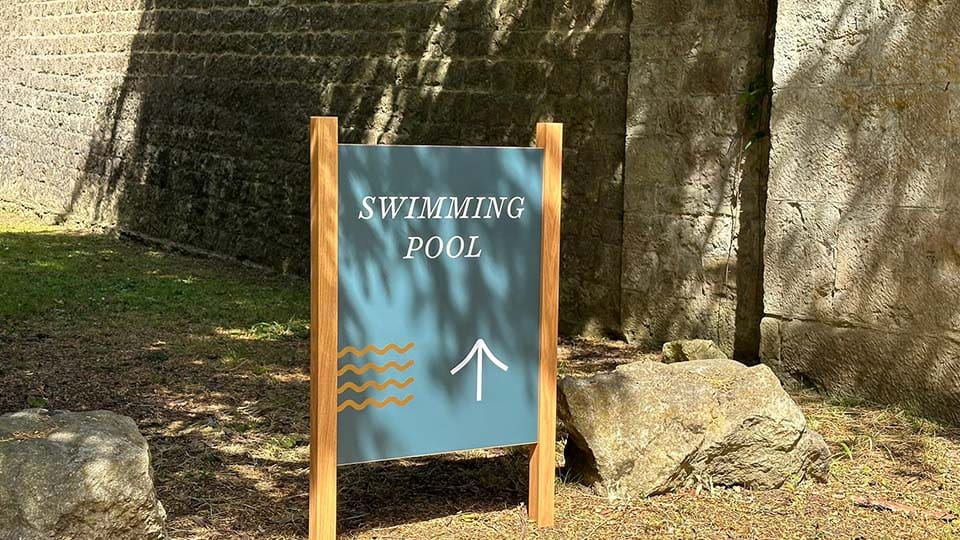
He also advises sign-makers to consider weight-to-strength ratio, particularly for large-format signage or installations where handling and transport are concerns.
“Aluminium remains a leading choice because it combines durability with lightness, making fabrication and installation more efficient. Beyond aluminium, there is growing interest in steel finishes, especially when paired with surface treatments or coatings that enhance their resistance to rust and wear.”
On this point, Dartnell, like other professionals quoted here, warns against going cheap with materials, saying this rarely pays off in the long term. He explains that small cost savings can quickly be outweighed by much larger problems down the line; from reduced durability and premature failure in harsh weather, to increased safety risks and reputational damage when signage does not perform as expected.
“Ultimately, the marginal saving is rarely worth the compromise in quality, and investing in the right materials from the outset is always the smarter, more cost-effective choice.”
So, how can Sign Trade Supplies help? One of its latest and most popular solutions in this area is its aluminium post finials. Cast from solid aluminium and finished with a durable powder coating, Dartnell says these post toppers add a striking accent to any post-and-panel installation.
“Thanks to aluminium’s natural corrosion resistance, they provide a long-lasting fixing that requires minimal maintenance even in challenging outdoor environments,” Dartnell says, adding: “Beyond performance, they also give clients an easy way to elevate the overall look of their signage, adding a premium finishing touch that helps their brand stand out.”
The clear, running theme throughout this piece is to invest in quality. Avoid the temptation of going cheap with materials and only work with reputable suppliers, including those featured here, to ensure you achieve a quality end product.