Jonathan Pert talks to a range of sign-makers and suppliers to discover recent innovations in illuminated signage and the many ways they can enhance your core offerings
Jonathan Pert
August 13, 2025
Over the past decade, illuminated signage has undergone a quiet revolution, driven by advances in lighting technology, smart controls, sustainable materials, and digital integration. From energy-efficient backlit systems to interactive wayfinding solutions, the tools of the trade have become more sophisticated, cost-effective, and tailored to a connected, design-conscious world.
For industry professionals, staying ahead means understanding not only what these technologies can do, but how they’re being deployed across sectors, from retail and hospitality to live events and corporate environments. In this feature, we explore the latest developments transforming illuminated signage, the impact these developments have on design and installation, and what sign-makers and suppliers need to know to remain at the forefront.
Boots on the Ground
To understand how illuminated signage has developed in recent years, it’s important to speak to the sign-makers on the ground who are tasked with installing new displays. Ellis Signs, a signage expert based in the North East, is a strong representative of the ‘boots on the ground’ notion, offering a comprehensive service of signage design, production, and installation for clients across the UK.
Ellis Signs provides a range of illuminated signage solutions including face-illuminated and halo-illuminated letters, illuminated flex face signage, bespoke light boxes, and LED faux-neon offerings. Each offering is custom-made to suit the client’s unique brand identity and environment, with the aim of ensuring maximum visual impact in both day and night settings.
For Jessie Smith, digital marketing manager at Ellis Signs, illumination plays a crucial role in signage because of the range of visual enhancements it can offer. “Illuminated displays have the power to significantly elevate a brand's visibility, recognition, and perceived value,” she says. “In busy environments like shopping centres, high streets, or urban commercial districts, the competition for consumer attention is intense. Illumination ensures that a brand doesn’t just blend into the background, even from a distance or in low-light conditions.”
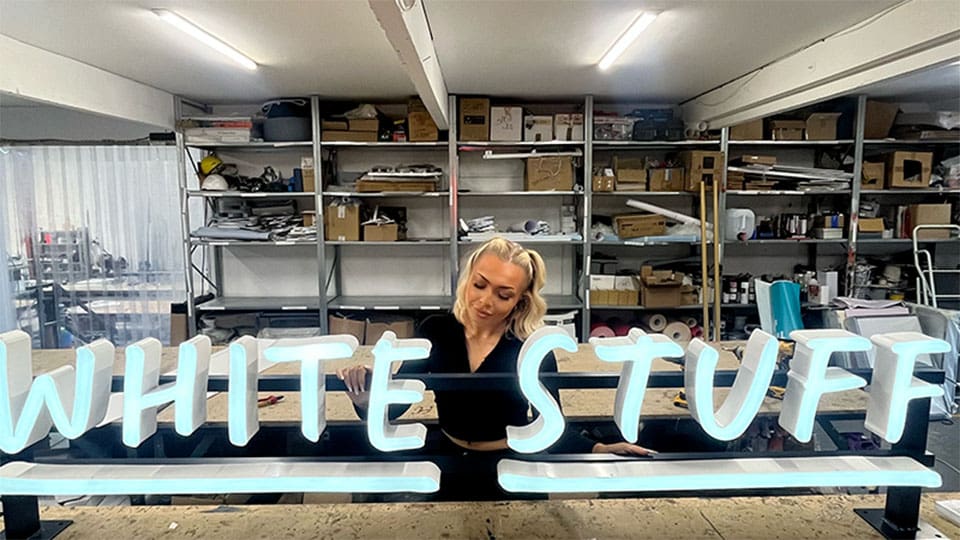
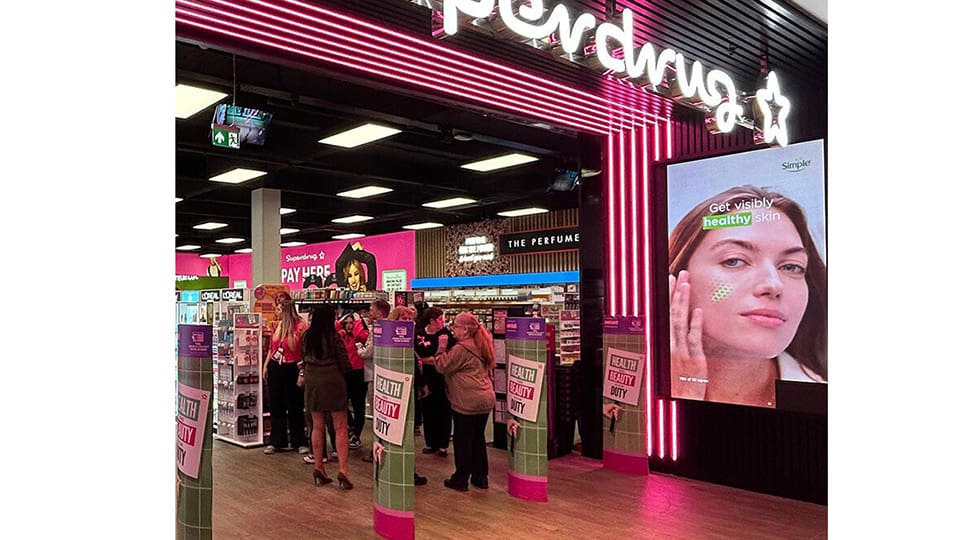
Ellis Signs has created illuminated displays for brands including Superdrug, Accessorize, and White Stuff
Smith reports that one of the most notable developments she has seen in recent years is the widespread adoption of LED technology, largely replacing traditional lighting. Smith comments: “LEDs offer superior brightness, longevity, and energy efficiency, making them a more cost-effective and a more environmentally friendly option.”
LEDs have been calculated to be between 80% and 90% more efficient than traditional incandescent bulbs, as reported by the UK Green Building Council. The move towards LED is seen as part of a wider industry shift toward sustainable signage, with a focus on eco-friendly materials, low-voltage systems, and recyclable components to reduce environmental impact.
Ellis Signs has also seen a particular rise in the popularity of built-up face illuminated letters over recent years. “They offer a sleek and contemporary aesthetic,” Smith explains, “which in-turn enhances brand identity and increases foot traffic.”
Smith asserts that the lighting solution you choose for your customer must suit the specific application, as different environments, purposes, and branding needs can all have an impact. “For example, in retail or hospitality settings, where visual impact and brand personality are key, vibrant and eye-catching solutions like LED faux-neon signs or face-illuminated letters are popular.
Factoid: The first digital multiplex (DMX) program for lighting, DMX512, was released in 1986 as a way to standardise communication between lighting consoles and dimmers
“These options not only enhance visibility but also create a welcoming and memorable atmosphere – especially important in bars, restaurants, salons, and boutique stores where aesthetics play a huge role in customer experience.”
She contrasts this with corporate offices or professional service environments, where lighting tends to be more refined and understated. “Halo-illuminated letters are often preferred in these spaces,” she comments, as “they produce a soft, ambient glow that conveys a sense of sophistication and professionalism without being too bold or overpowering.”
Another key reason for the rise of illuminated signage, in Smith’s view, is the rise of social media and the desire this creates for ‘instagrammable’ spaces that look good in photos. “Many companies, particularly in hospitality and retail, now view signage as part of the overall customer experience,” Smith says, adding: “Illuminated signs are being used as statement pieces by brands designed to encourage customer interaction and sharing online.”
Businesses are increasingly recognising the value of illuminated signage not just for visibility, but as a tool for brand expression and customer engagement
Smith herself is an active user of social media, personally helping to boost the Ellis Signs brand through a range of engaging posts on LinkedIn. She is therefore particularly aware of the power of the online world on physical spaces, and how this can affect the signage that customers will look to commission. As she clearly states: “Businesses are increasingly recognising the value of illuminated signage not just for visibility, but as a tool for brand expression and customer engagement.”
Lighting the Way
The Sign Group is another company uniquely positioned to see the impact of recent innovations in illuminated signage, as a producer of bespoke trade signs for the design, shop-fitting, and display industries throughout Europe.
As Grey Hoole, director of The Sign Group, puts it: “We are a custom sign manufacturer first and last. If a designer dreams it up we will find a way to build it.”
The Sign Group’s solutions range from block acrylic letters and faux-neon under its Neonplus banner, to built-up metal letters, infinity mirror pieces, LED assemblies, and flat-cut shapes. “We do not push one product over another,” Hoole asserts. “We listen to the brief, pick the right mix from the toolbox and build it to suit.”
The Sign Group offers a range of flasher units, RGB controllers, and DMX programs alongside its illuminated signage
According to Hoole, every job that The Sign Group undertakes involving lighting starts with looking at energy use and life span. After that, the focus turns to where the sign sits and who will look at it. Whatever the setting, he has one clear rule to live by: “Get the most visibility per watt and keep the electrician away for as long as possible.”
Hoole offers a range of tips to sign-makers utilising illuminated letters, based on the specific usage. He explains: “High street fascia needs punchy modules that cope with daylight and rain, plus easy access for the maintenance crew. Reception or interior feature walls call for lower brightness and softer diffusion, so staff are not squinting all day. Wayfinding in public spaces relies on even light that people can read quickly without glare or shadows.
“Finally, temporary event builds benefit from lightweight letters and quick connectors so the install goes up in the morning and down the same night.”
As with Smith, Hoole points out that advancements in LED technology have had the most significant impact on illuminated signage. “LED technology has leapt forward,” he says. “Modules we use today push out twice the light for roughly half the power compared with ten years ago, so running costs keep falling.”
Modules we use today push out twice the light for roughly half the power
The Sign Group was part of this change, having developed its Neonplus range of faux-neon offerings into a product that is sold globally. The range is now carbon-certified, UKCA-marked, and BSI-endorsed. Hoole points out that the materials used to make the signage have moved on as well: “Recycled aluminium and reclaimed acrylic are everyday stock, and modern drivers run cooler so the gear lasts longer,” he explains.
Hoole concludes by describing the industry-wide shift towards illuminated signage, which should be a wake-up call to those that are yet to adopt these solutions into their arsenal of offerings. “As energy efficiency has improved, more clients see lighting as standard rather than optional,” he insists.
These days roughly four out of five enquiries that land in my inbox involve some form of illumination
“Longer opening hours and the social media effect have added to the demand. These days, roughly four out of five enquiries that land in my inbox involve some form of illumination, where a decade ago it would have been closer to half.”
Bright Ideas
Very Displays, a trade-only supplier of portable signage solutions, offers a versatile range of illuminated options to its customers. For Kirsty Corcoran, marketing manager at Very Displays, lighting plays a crucial role in enhancing the effectiveness of promotional displays by significantly increasing visibility and impact.
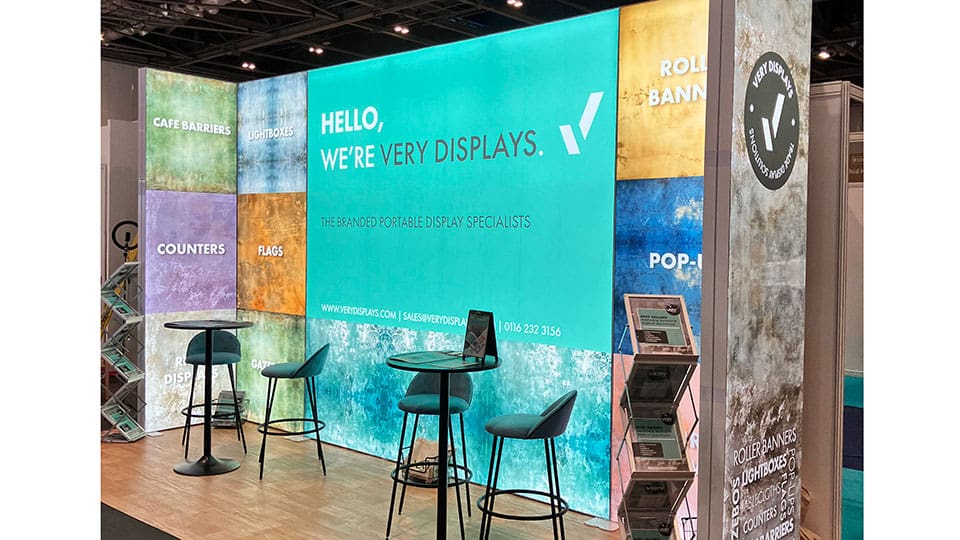
“Illuminated signage stands out in any environment,” she explains, “particularly in settings such as exhibitions, retail spaces, and events, helping to attract more attention and footfall. It also elevates the overall look and feel of a display, adding a professional, high-end finish that enhances brand perception.” Very’s range of illuminated solutions includes its Straight LED Lightboxes, which feature tool-free assembly using numbered ‘push-fit’ elements as well as built-in lighting and transformers, offering a professional illuminated display made with portability in mind.
Very Displays provides a wide range of LED lightboxes to the market
The range also includes a 1m Lightbox Counter, curved shape options, and a range of compatible accessories, allowing for modular configurations tailored to different display needs.
This move towards tool-free, portable lighting solutions is something that Corcoran sees as an industry-wide shift, particularly in the events and exhibition space. “Innovations in fabric technology have played a key role,” she says, “with new materials delivering enhanced vibrancy and brightness. The growing popularity of modular displays has further supported this shift, offering flexible, easy-to-transport setups with a contemporary illuminated edge."
In addition to its LED Lightboxes, Very offers a selection of standalone LED lights, designed to enhance other display systems such as tube walls, pop-ups, and roller banners, adding extra brightness and visibility to a display.
Corcoran goes on to describe how the lighting solution you choose for your display will vary significantly depending on the specific application. “Different environments and objectives require tailored approaches to maximise impact and practicality,” she states. “Choosing the right solution means considering not just the look and feel, but also factors like installation time, environment, energy use, and transport requirements. A well-matched lighting setup ensures the display performs at its best in the desired location.”
A well-matched lighting setup ensures the display performs at its best in the desired location
Very has seen its orders for illuminated signage increase noticeably in just the last 12 months, further indicating a rise in its popularity. Corcoran explains this as being part of an increasing desire for companies to stand out with bold, modern displays. “As companies are looking for ways to stand out and to capture attention in busy environments,” she says, “lighting has become a key feature for enhancing visibility immediately, creating impact, and elevating perceived value.”
Illuminated signage is particularly popular in retail or hospitality settings
Corcoran seconds the opinions of the other contributors who feel that the evolution of illuminated signage is deeply intertwined with innovations in LED technology. Those innovating in the space are using LEDs to make displays cheaper to install and upkeep. Reductions in size reduce the weight and footprint of displays, and technological advancements provide more options in terms of customisation and remote operation.
Corcoran sums this up, saying: “The industry has largely transitioned from halogen to advanced LED lighting systems which are brighter, more energy-efficient, and longer-lasting than ever before, making them ideal for both temporary displays and evolved signage. This enables frameless, modern designs with bold, high-definition visuals.”
Working with other businesses can open doors to new markets, services, and expertise. Here, SignLink examines how building the right partnerships can strengthen day-to-day operations and long-term success.
What is the best approach and strategy for your business: investing in a
new management information system or upgrading your current setup?
Rob Fletcher speaks to a range of suppliers, and finds out more
Architectural wrapping is opening up new revenue opportunities for sign-makers, offering a cost-effective alternative to refurbishment and replacement. SignLink explores the rapid rise of this growing market
Watch our latest video of the week
SignLink gives you the latest video coverage of companies, people, and events from within the signage, graphics, and wide-format print industries.