With modular sign systems still in strong demand, Rob Fletcher speaks with companies in this sector to find out about where opportunities lie for sign-makers and the latest solutions available to them
Rob Fletcher
June 16, 2025
In today’s modern, fast-paced world, we are all on the lookout for ways to make our lives easier. Whether this is asking your Amazon Alexa to set an alarm or installing a fancy boiling water tap instead of filling the kettle – convenience is very much the focus.
This can also be applied to the sign-making sector and the types of applications required by customers. In recent years, the popularity of solutions such as modular sign systems has rocketed, primarily due to their flexibility and ease of updating, with the latter also helping save on costs.
In this feature, we speak with several companies involved with modular sign systems to get more insight into the market, including where sign companies should be targeting and the latest solutions available to them.
Versatile and Adaptable
Up first to comment is Sarah Gray, head of marketing at Signbox, who says users can simply replace individual slats on modular sign systems rather than entire signs, making it a cost-effective and sustainable solution.
“Its modular format also allows for full customisation to align with brand identity, delivering both form and function,” she says, adding: “This adaptability makes it ideal for wayfinding in offices, hospitals, universities, and other dynamic environments where clear, updatable signage is essential.”
As to where sign companies should be looking for new work, Gray recommends focusing on sectors that require adaptable, future-proof signage solutions, particularly universities, educational campuses, hospitality venues, and mixed-use office developments. She explains that these environments demand signage that can be updated quickly and cost-effectively, making modular sign systems a “perfect fit”.
“The trend towards seamless, integrated wayfinding experiences is also growing,” she says, continuing: “At Signbox, we frequently supply modular sign system wall directories complemented by ceiling-suspended and projecting signs to create a cohesive system. As spaces become more dynamic and multifunctional, the demand for versatile signage that supports both functionality and brand consistency continue to rise across these key sectors.”
As workplaces, campuses, and public spaces become more dynamic, there’s a growing demand for signage that can be easily updated without the need for full replacement
Looking to where the market could be heading, Gray says sign-makers need to be aware of several key trends in relation to greater flexibility, sustainability, and integration with digital technologies.
“As workplaces, campuses, and public spaces become more dynamic, there’s a growing demand for signage that can be easily updated without the need for full replacement,” Gray explains, adding: “Customisation and brand alignment remain key, but clients are also looking for environmentally conscious solutions using recyclable materials and durable systems that minimise waste.
“There’s also a shift towards combining traditional modular systems with digital elements, offering real-time updates and improved user experience. The future lies in adaptable, intelligent signage that evolves alongside the spaces it serves.”
Cost Effective
Also in this market is Sign Trade Supplies, which has a range of options on offer. Garrick Dartnell, who oversees marketing at the company, says demand for modular signage is on the rise, due to businesses looking for sign solutions that can be turned around quickly, maintain the aesthetics of custom signage but delivered in a cost efficient package.
“Modular systems lay their hand to this type of requirement perfectly by minimising set up and labour costs, being flexible in assembly and following modern design trends.
“Due to the growing skills shortage in the sign industry, I can see more sign companies utilising the speed and efficiencies of modular sign systems to their advantage. This will allow businesses to keep up with market demand and stay on trend as the systems innovate, as well as focus on their client satisfaction and faster turnaround of projects.”
Advising sign companies as to where work may be available, he suggests industries that are “sign dense”, such as house build sites that require a range of sign systems over a large scale of projects. On top of this, he says sign-makers should also consider hospitality venues such as vineyards, golf courses, and hotels, as well as public sector organisations like educational campuses and healthcare facilities.
Sign Trade Supplies recently announced its new KOPA Post & Panel modular sign system
“All of these examples are well suited to consistent modular sign systems that can adapt and provide modern aesthetics, more than just functional signage,” he says.
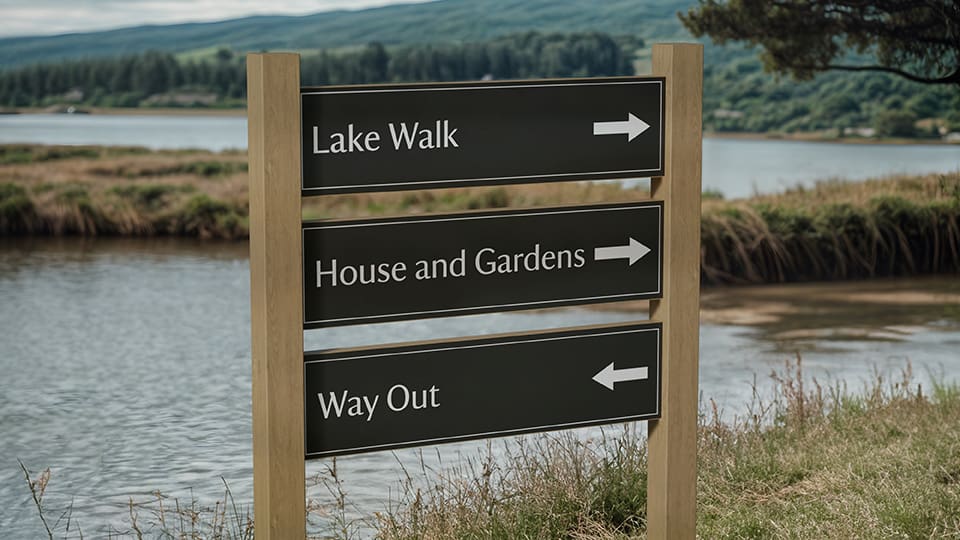
So, how can Sign Trade Supplies help? The company recently announced its new KOPA Post & Panel, which Dartnell says has been developed with the small to medium sign-maker in mind.
“We took the initial pain points from our customer base (difficulty in logistics, production time, quoting, and complex assembly) and created the KOPA system,” he says, continuing: “The idea is to provide maximum flexibility for exterior wayfinding signage that can be configured online with instant pricing. We have put the quoting control in the hands of the sign-maker.
“The system is also available in multiple finishes including Decro wood effect providing access to premium options with no MOQ. Our unique flat pack design not only improves safe delivery rates but also allows sign-makers to use their own 3mm thick ACM or aluminium panels in the system, reducing production time restraints. “
Evolving Messages
Elsewhere, Ultima Displays can also assist with modular signage. European marketing manager Anndi Sheppard says modular solutions are quickly becoming the norm in the display market, driven by the growing demand for flexibility, scalability, and sustainability.
“End users are no longer looking for one-off solutions; they want systems that can evolve with their needs, whether it’s adding new components, updating graphics, or reconfiguring layouts for different spaces,” Sheppard says.
End users are no longer looking for one-off solutions; they want systems that can evolve with their needs, whether it’s adding new components, updating graphics, or reconfiguring layouts for different spaces
“We’re seeing increasing interest in fabric displays, lightboxes, and other modular elements that can be seamlessly integrated over time. This shift reflects a more strategic approach to display investment; one that prioritises long-term value, reusability, and visual impact across multiple activations.”
With this, Sheppard says brands with evolving messages continue to drive strong demand in the display sector. For these companies, she says offline visibility remains a critical part of their marketing strategy, especially when paired with digital campaigns. She recommends sign companies capitalise on this by offering flexible, scalable solutions that allow for rapid message changes, modular reusability, and customisation at speed.
“The real opportunity lies in supporting brands across multiple touchpoints, from exhibitions and retail pop-ups to roadshows and corporate events,” she says, adding: “Providing a full-service offering, such as one that Ultima Displays offers, including design, print, collate and pack, installation, marketing, and storage will give sign companies the added value their customers need.”
Ultima Displays says modular solutions are quickly becoming the norm in the display market
Ultima Displays provides a full white-label, trade-only supply of modular display hardware and print solutions designed specifically for sign-makers. This, Sheppard says, allows trade partners to expand their offering to existing clients, without the need to invest in additional in-house resources.
“Our modular systems are easy to promote, versatile in application, and ideal for clients looking for scalable, reconfigurable solutions,” Sheppard explains, continuing: “We work closely with our trade partners to deliver both custom and standard high-volume projects across multiple sectors and destinations in the UK and throughout Europe."
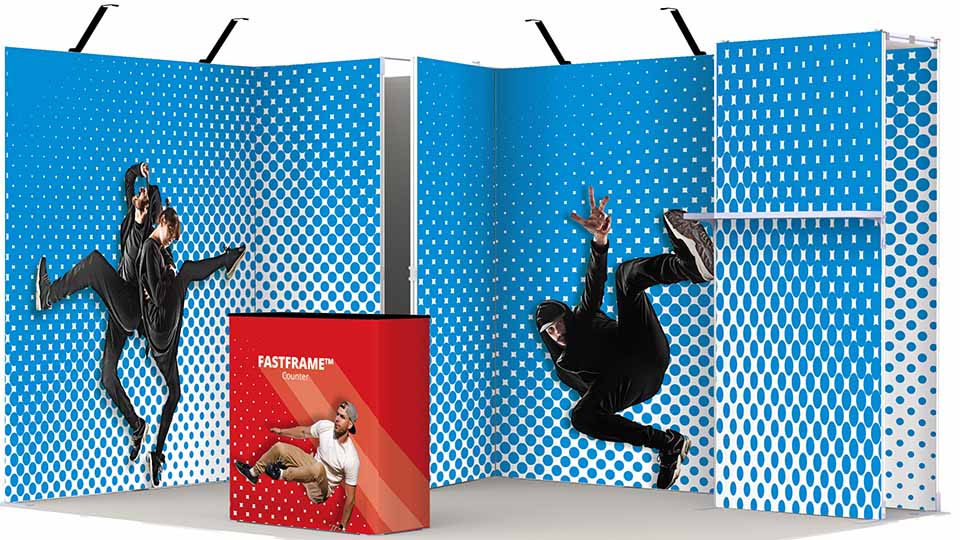
As far as products go, Sheppard says FASTFRAME is the product that is proving to be a favourite with customers seeking a creative display solution that is flexible, reconfigurable, sustainable, and cost effective. The company has recently introduced new additions to the FASTFRAME range such as a Door Mount Kit, Shelf Kit, TV Screen Mount Kit, and Wheeled Bag for easy transport.
Immersive Solutions
Also weighing in is Scott Bennett, who leads marketing at Guardian Display, which is heavily involved in the exhibition industry. Bennett says the current level of demand for modular signage and exhibition stands is “very high”.
“The modular signage and exhibition display market is constantly evolving, and this is evident with the establishment of more and more exhibitions and shows both in the UK and abroad,” Bennett comments, adding: “Exhibitors want immersive, video-enabled stands that can update messaging in real-time.
Guardian Display can offer hybrid solutions that combine impactful print with immersive digital content “The line between traditional signage and digital content is blurring. There’s a growing push toward LED integration, interactive screens, and dynamic motion graphics – particularly with modular systems like Aluvision’s LED tiles, which are becoming more accessible and more in demand.”
Guardian Display is seeing a rise in demand for modular signage and exhibition stands
According to Bennett, Aluvision offers a highly professional presentation solution for SMEs and large brands alike. He continues that Aluvision LED tiles offer seamless compatibility with existing frames, meaning brands can combine dynamic digital content with sleek, modular hardware.
“This product offers excellent speed and flexibility, which is important because shorter planning lead times have become the norm,” Bennett says, adding: “We see a clear demand for reconfigurable display systems with a fast turnaround.
“For exhibitors who are looking for more engaging and flexible displays to showcase video, animation, and live data in real-time, Guardian can offer plug-and-play LED systems that bring a wow factor while maintaining modular versatility.”
Factoid:Modular sign systems can be used for applications such as single panel door signs, wall mounted directories, wayfinding and directional signage, desktop signs, and Braille and tactile signage
Bennett also flags the increasing importance of sustainability with modular signage, saying this is no longer seen as something that is “nice to have”, but instead a “must-have”. He continues that clients are asking for reusable, recyclable, and eco-friendly materials, as well as ways to extend the lifecycle of their signage systems.
“We have to make sure that our solutions meet the current demand for sustainability,” he says, adding: “There’s a clear shift towards reusable and eco-conscious materials, that make durable signage a smart investment.
“More companies are embracing reusable design concepts – using fewer materials and reducing waste. Guardian’s modular display and signage solutions are built to last and be reconfigured, helping reduce costs and carbon footprints throughout the cycle.”
Modular sign systems are an effective solution across indoor and outdoor settings
The key takeaway from this piece is that modular sign systems are very much in demand, and are showing no signs of slowing down. This is further supported by news last summer of large-format trade printer RMC Digital Print purchasing the modular sign system division of Workshop2 Limited.
Workshop2 Limited designs and markets both signage and display products. The strategic acquisition marked the permanent cessation of the HB Modular Sign System marketing, sales manufacturing, and supply by Workshop2 Limited. This includes the stock of material, machinery, and the right to use and market the MSS product under the brand name ‘HB Modular Sign System’.
With more companies utilising modular signs, the challenge for sign-makers now is to not only identify areas where they can access new work and customers, but also how they can work with their clients to make use of new technologies and produce even more innovative signage that will stand out to those passing by.
Working with other businesses can open doors to new markets, services, and expertise. Here, SignLink examines how building the right partnerships can strengthen day-to-day operations and long-term success.
What is the best approach and strategy for your business: investing in a
new management information system or upgrading your current setup?
Rob Fletcher speaks to a range of suppliers, and finds out more
Architectural wrapping is opening up new revenue opportunities for sign-makers, offering a cost-effective alternative to refurbishment and replacement. SignLink explores the rapid rise of this growing market
Watch our latest video of the week
SignLink gives you the latest video coverage of companies, people, and events from within the signage, graphics, and wide-format print industries.