Ensuring signage stands out in the modern world is hugely important for sign-makers and brands alike. So, how can the latest sign fabrication techniques and technologies help strengthen the impact of sign applications?
Rob Fletcher
June 10, 2024
Firstlite LED Systems offers a range of products, tools, and solutions tailored to the needs of sign fabricators
If there is one thing we have learned from the market in recent years it is that standing still is not an option for sign-makers looking to grow their business and succeed in the long term. To ensure your business goes from strength to strength, you need to evolve your offering and deliver innovative work and services to customers.
One highly effective way of doing this is taking advantage of the latest advancements in both technologies and techniques, especially when it comes to sign fabrication. From LED lighting to energy efficient power setups, all this can have an impact on how a sign performs and how it is received both by the customer and passers-by.
With this in mind, SignLink speaks with several businesses from across the sign fabrication market to find out more about their latest offerings, what sign-makers can do to ensure their signage applications are having the maximum impact, and how to futureproof this area of the market to ensure ongoing success.
Bright Ideas
Starting with Firstlite LED Systems, a leading supplier of LED modules to the UK sign market. Managing director Megan Woodcock says lighting, and in particular LEDs, should be part of any conversation about sign fabrication, explaining that it is an important part of an overall sign project but also often overlooked.
Firstlite says lighting should be part of any conversation about sign fabrication
“The trends for signage that affect illumination are different around the world,” Woodcock says, adding: “For example, in the US, there's a preference for large, bold signage with deep returns, while in the UK, the trend is towards slimline boxes and shallow letters. This streamlined approach poses significant challenges when it comes to lighting that could cause some unwanted surprises if not properly considered, such as spotting.”
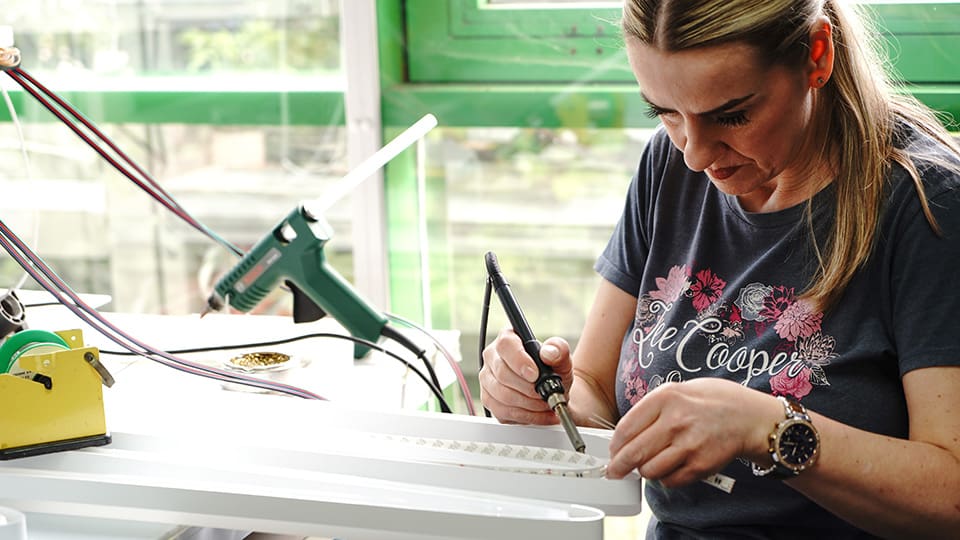
Woodcock goes on to say that Firstlite offers products specifically designed for these thinner and more streamlined signs. She explains that they are easy to install, energy efficient, and offer a consistent solid light, even in the thinnest of boxes, trays, or letters, offering an effective solution to sign-makers of all shapes and sizes.
The focus is likely to remain on energy efficiency with a shift towards solar power technology
“The focus is likely to remain on energy efficiency, with a shift towards solar power technology,” Woodcock says, continuing: “Integrating sensors into sign designs could potentially harness solar energy alongside LED lighting, further reducing energy costs. LEDs can deliver the lower wattage solutions that would work well with solar, and this would need to be discussed with a solar power expert.”
Woodcock says another key consideration for sign-makers, particularly when it comes to illumination, is the local area. Planning rules vary council by council and cover issues like illumination levels at night, with some councils restricting the number of candelas per square metre for illuminated signs, often making it tricky for sign-makers to ensure that they are keeping in line with differing rules and regulations.
Firstlite managing director Megan Woodcock says the focus for sign lighting will remain on energy efficiency
To help with this issue, Firstlite provides dimmers for the signs so that they can be managed to stay within the rules. Dimmers can be operated by handheld remote controls or via an app on a smartphone and can be set to dim automatically to ensure they stay within the rules. This system also allows users to change colours by simply using a colour change module instead of a standard cool or warm white option.
Aside from physical solutions, Firstlite offers sign-makers support, consultancy, and training, with Woodcock focusing on the latter as one of its key offerings.
“We provide training both at our facilities and on-site for sign-makers and their staff,” she explains, adding: “Whether it’s learning how to use products effectively or understanding the latest trends in sign fabrication, we’re here to help.
“Additionally, we offer expert advice and guidance to customers. If a sign-maker is looking to create a specific type of sign, we can advise them on various aspects, such as return depth, colour selection, and face material options. Our goal is to ensure that their signs not only look great but also perform optimally with our LED solutions.
“In terms of product development, we continuously innovate to meet the evolving needs of the sign industry. Ultimately, we aim to empower sign-makers with the tools and knowledge they need to create stunning, high-quality signage that meets their customers’ expectations and stands out in the market.”
Partnering Up
Elsewhere in this sector is SignFab, whose chairman, Carl Hodgson, warns that as is the case with almost all types of manufacturing, the market is going through an unstable period. He explains that the increasing costs involved and constricting labour market are making it very difficult for many companies to survive, let alone prosper.
SignFab uses 316 marine-grade on all stainless steel fabrications and letters
“We have made conscious efforts to increase our capacity, reduce lead times, and help our clients have an advantage in their marketplace with our additional offerings such as 316 grade stainless steel used throughout as opposed to 304 with no premium price, structural calculations included in the costs on our totems as examples,” Hodgson says.
“Since Brexit the threat of European rivals seems to have diminished, however other influences on the economy have also meant inflation and raw material cost increases have meant sales prices have had to increase significantly.
“We have countered cost rises by purchasing our materials and resources in different formats and on larger scales. Our aim is to ensure we remain competitive while increasing the durability and product quality we manufacture and supply.”
We have made conscious efforts to increase our capacity, reduce lead times, and help our clients have an advantage in their marketplace
As to where the market may be heading, Hodgson comments that when speaking to clients, SignFab is noticing an increasing trend for sign companies to cut back on their overheads by reducing production space, in-house manufacturing, and stock. Another trend is that sign companies are outsourcing finished products from trade manufacturers rather than producing themselves.
However, he goes on to say that if you have a strong sales team and customer base, then why not cut back on the manufacturing overhead, and instead buy and sell on from reliable trade supplier networks? “Reduced overheads, total flexibility on capacity means far higher profit levels,” Hodgson says, adding: “Everyone should be looking for a market advantage. Find your point of difference. That starts by taking a view on your own outlays and overheads, it can sometimes be very obvious that some areas of the business are not profitable – tackle or remove those and concentrate on what you are good at.”
As to what SignFab can offer to companies looking to move ahead in the market, Hodgson says SignFab delivers a broad trade supply service, with the idea of supplying clients with a one-stop-shop and team that can support their signage needs.
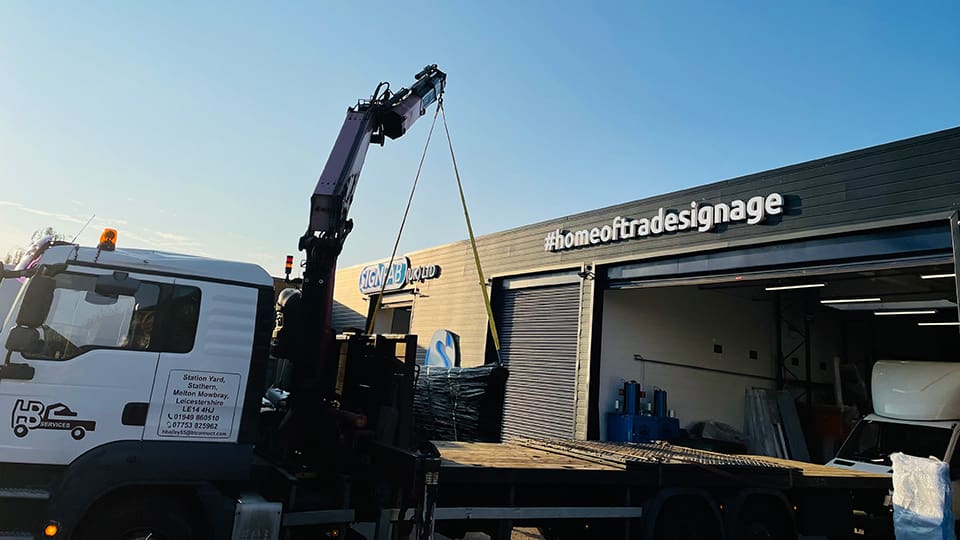
SignFab has been supporting clients in the industry since 2001
“Our two factories have up-to-date manufacturing equipment in the industry,” Hodgson says, adding: “From the workhorses of three laser cutting machines, three routers, 4,000mm capacity brake presses, and guillotines, through to having a huge team of experienced and CE/UKCA qualified fabricators.”
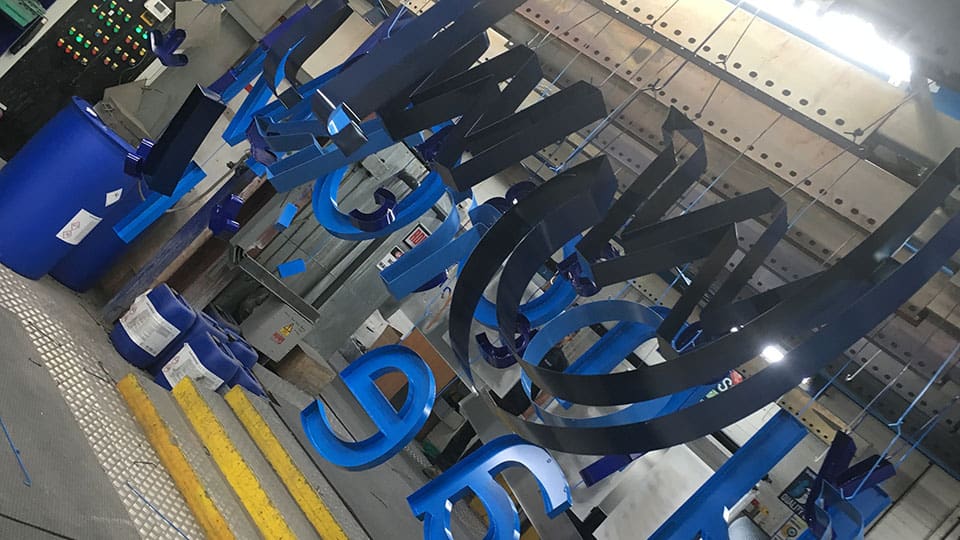
New to SignFab is an eight-stage powder and paint line, which Hodgson says allows for high-quality finishing, offering over 700 stock colours and a wet paint mixing system. In addition, the company only uses 316 marine-grade on all stainless steel fabrications and letters, so all external signage can be installed at any UK location, including coastal areas.
“The production team is in regular contact with all customers,” Hodgson explains, adding: “To make sure they have agreed production slots and delivery dates, supported by a comprehensive after-sales service means all our customers and their end clients have the reassurance of our ongoing three-year warranty.”
Building for the Future
Circling back to what Hodgson says about a reduced labour market, the onus is now on sign-makers and other companies in the industry to do whatever they can to bring in new talent, especially when it comes to skilled work such as sign fabrication.
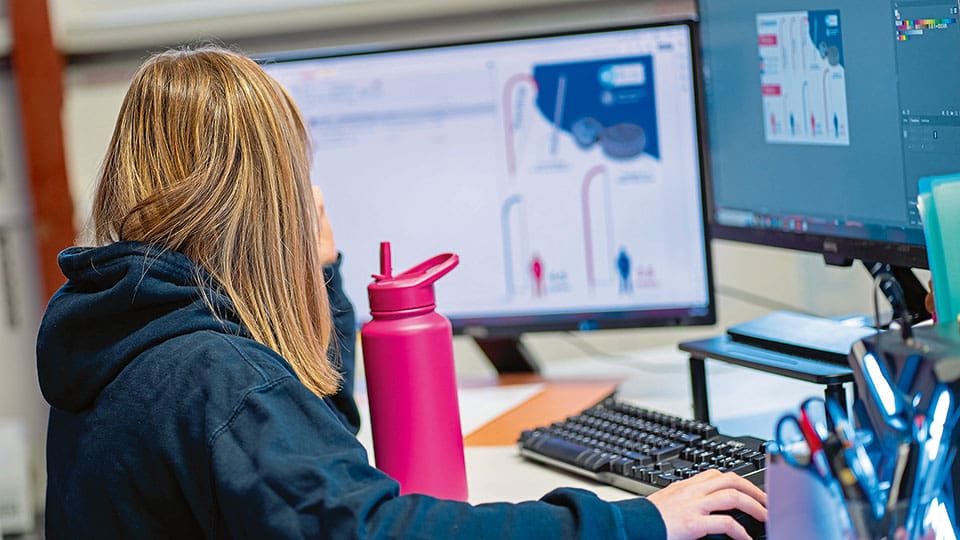
One company to have done exactly this is FASTSIGNS St Albans, which last year elected to grow its team by bringing in a Level 3 Signage Technician apprentice. The 24-month program is tailored to the requirements of the industry and covers the design, manufacture, fabrication, and installation of signage. As part of the program, Charlie Gordon has been taking on tasks including preparing signage illustrations, designing, and using machinery, as well as familiarising himself with new equipment and tools such as Computer Aided Design (CAD).
Lee Simpson, franchisee of FASTSIGNS St Albans, says drawing new talent is critical to the future success of sign-making businesses, ensuring the next line of workers are well-skilled in specialist work, including sign fabrication.
“The world of signage has changed much in the last two years and, as such, we’ve noticed a real uptick in interest from the younger workforce, in particular, to get involved in the industry,” Simpson says, adding: “We’re eager to show newcomers like Charlie the ropes of the industry, right through from signage assembly and production, to installation.
“I started out as an apprentice, and I truly believe that was a remarkable beginning to my career, and a useful learning curve.”
John Davies, managing director of FASTSIGNS UK is also backing the scheme, adding: “Over recent years, we’ve been able to facilitate a supportive culture that encourages growth and good leadership in each centre. FASTSIGNS acts as a greenhouse for talent by employing apprentices.
Factoid: Planning rules for lighting on signage varies by council. For example, some councils restrict the number of candelas per square metre for illuminated signs
“It’s important for us to be supportive and pass on skills to those who are longing to develop. Bringing new people into the industry and honing their skills is vital to drive economic competitiveness and supports the industry as a whole. It’s our priority to follow this approach and fill our franchises with young, budding talent.”
Much has been said and written about the struggles and issues facing sign businesses, and while this may be true in some ways, there are steps they can take to ensure continuing success when it comes to sign fabrication and the future of the industry.
Working with respected suppliers and manufacturers to ensure you are making the most of the latest developments in the market is a good first step; being able to offer customers a new level of signage will help you stand out in the market.
If you need additional support, perhaps consider working with an established business that can help you grow your own offering and deliver high-quality work to customers, while maintaining control over your finances.
Then there is the commitment to harnessing new talent and developing new ideas; this is critical to not only the success of sign-makers, but also their long-term survival prospects.
Working with other businesses can open doors to new markets, services, and expertise. Here, SignLink examines how building the right partnerships can strengthen day-to-day operations and long-term success.
What is the best approach and strategy for your business: investing in a
new management information system or upgrading your current setup?
Rob Fletcher speaks to a range of suppliers, and finds out more
Architectural wrapping is opening up new revenue opportunities for sign-makers, offering a cost-effective alternative to refurbishment and replacement. SignLink explores the rapid rise of this growing market
Watch our latest video of the week
SignLink gives you the latest video coverage of companies, people, and events from within the signage, graphics, and wide-format print industries.