Printing Beyond the Flat Surface
What opportunities are emerging for sign-makers as direct-to-object printing technology becomes more capable and accessible? Rob Fletcher sits down with several key names in the market to find out


Speaking with specialists from Very Displays and Kongsberg PCS, we explore how the latest hardware and finishing technologies can help POS display producers to respond to shifting retail demands

The physical retail landscape continues to move at a fast pace, and the demands placed on point-of-sale (POS) marketing must shift with it. Today’s high streets and exhibition floors demand more agility, adaptability, sustainability, and personalisation, forcing print and signage professionals to adapt their approach and output – and for manufacturers to produce technologies that can make these output goals into a reality. The POS market is no longer defined merely by what looks good on the shop floor, but by how efficiently and adaptably a display solution can perform in a highly volatile retail environment – which can present print and signage professionals with either a logistical challenge or a commercial opportunity.
To understand how these market shifts translate into practical production strategies, we spoke with two industry experts, Very Displays and Kongsberg PCS, to gain perspectives from both the manufacturers of the display hardware itself and the kind of finishing technologies required to produce it.
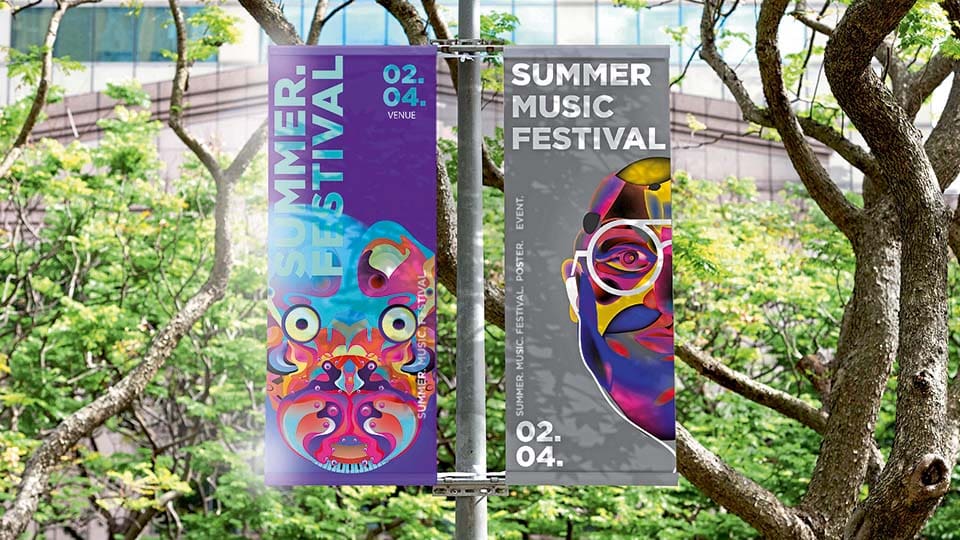
Very Displays offers the trade a wide range of portable and promotional display solutions designed for retail, events, exhibitions, and other POS environments. Its range includes a variety of desktop point-of-purchase (POP) display products, as well as roller banners, fabric displays, LED lightboxes, wall signage, pavement signs, flags, and counters.
As Kirsty Corcoran, marketing manager for Very Displays, explains: “A key focus for us is providing resellers with practical, high-quality solutions that can meet a wide variety of customer requirements. Many of our products are designed to be portable, reusable, and easy to install, while still delivering the visual impact expected in busy retail and promotional environments.”
Corcoran explains that the best POS solutions need to work as well in practice as they do visually. As she says: “A display may look fantastic, but if it is difficult to transport, install, or reuse, it can quickly become impractical for the end user. The display also needs to stand up to the high-footfall location it’s likely to be used in.”
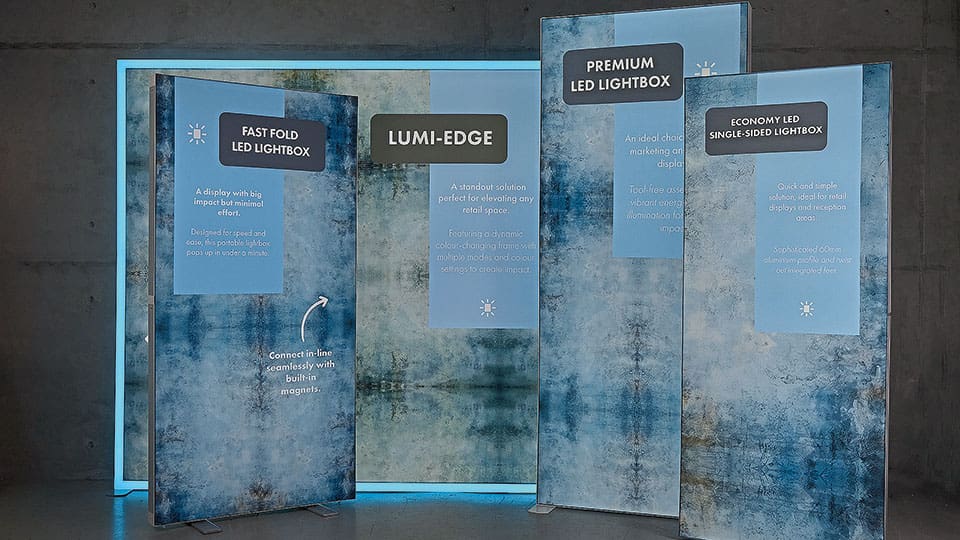
With this in mind, many of Very’s products are designed around portability and ease of assembly while using durable hardware, with several of its products also coming in a heavy-duty option. Fabric graphics and replaceable print panels also allow customers to refresh their messaging while continuing to reuse the same hardware. As Corcoran puts it: “This combination helps create displays that deliver a professional finish while remaining practical for the environment they are being used in.”
The reusability of POS display solutions is something that Very feels will become increasingly desirable to customers and clients, with the future of POS focusing on versatile display systems that can be used across multiple campaigns.
Corcoran explains: “We expect reusability and flexibility to continue becoming increasingly important. Businesses are looking for display solutions that offer a longer lifespan and can be adapted for different campaigns, promotions, and environments rather than being used just once.
“Modular and reusable systems will therefore continue to grow in popularity, allowing the hardware to be retained while graphics can be updated as required. We also expect illuminated displays to remain a key area of growth, as businesses continue to look for ways to create greater impact in busy environments.”
Our software has been specifically developed to apply cutting sequences to suit individual material properties
According to Corcoran, Very is seeing particularly strong demand for portable display solutions that combine high visual impact with ease of use. LED lightboxes remain particularly popular, as businesses look for ways to make their messaging stand out in increasingly competitive retail and exhibition environments.
She adds: “We are also seeing continued demand for fabric display solutions, including backwalls and counters, thanks to their premium appearance, portability, and reusable nature. Products that can be easily transported, installed, and stored are particularly attractive to businesses looking for practical solutions without compromising on appearance.”
These modular, portable solutions are growing in popularity because they directly address the needs of modern POS displays – particularly in fast-paced brick-and-mortar settings where frontline staff often need to assemble the displays themselves without specialist tools. Illumination from LED lightboxes can boost product visibility by cutting through ambient store lighting, while reusable fabric graphics can fold flat, reducing distribution and shipping costs across retail estates while avoiding the creasing or tearing that can damage traditional paper or PVC materials during transit and installation. This combination can protect retail margins while allowing brands to execute rapid, synchronised promotional updates across their entire store estate.
As with any visual market, the trends and desires of the POS display market are constantly shifting, reflecting the desires of both retailers and consumers alike. In order to keep up with these trends, print presses, finishing equipment, and cutting systems all have to keep their fingers on the pulse, bringing out solutions that will provide exactly what these modern shoppers and retail brands are looking for.
Kongsberg Precision Cutting Systems (PCS), an international manufacturer of high-precision digital cutting tables and CNC machines, has noticed a number of these trends in recent years, which have influenced the technology solutions that they have brought to market.
According to Marcel van Garling, product manager at Kongsberg PCS, there has been “a shift from plastics and foams to more sustainable paper‑based materials across both packaging and displays”, which has been “largely driven by customer demand and evolving environmental considerations.” This has further widened the amount of materials that modern cutting systems need to work with in order to be advantageous to print and graphics specialists.

Kongsberg PCS continuously develops its tooling, blades, and software in line with these shifting material trends. Van Garling explains: “Kongsberg PCS has a large variety of dedicated tools with matching blades and bits for all sorts of materials. These tools, combined with our proprietary motion control systems, enable the cutting tables to achieve excellent cut quality, accuracy, and productivity.
“With over 60 years’ experience, we have deep knowledge of how complex materials perform when processed with our tools and blades, and our software has been specifically developed to apply cutting sequences to suit individual material properties.”
Kongsberg’s software can not only help combat the growing use of alternative substrates, but is designed to respond to the increasing market desire for shorter runs and regionalised campaign messaging within advertising campaigns. The company’s automated systems and design software, such as its i-cut Production Console (iPC), have been developed to make job changeovers quick and easy, ensuring that productivity can remain high and output is not bottlenecked by stacked short runs.
Explaining how this technology links to the hardware of the cutters, van Garling says: “Quick tool change with automatic tool identification, tooling presets, and flawless imports of most file formats ensures a very short set up time between jobs and ultimately increases productivity.
“In addition, our digital cutting portfolio is designed to have similar competence. This means that users are able to change the toolhead quickly and completely transform the use of their machine. In turn, this enables them to diversify their application range without any further major financial investment. This advantage is unmatched in the industry and reinforces our commitment to designing machines without compromise, and with customers front of mind.”
Products that can be easily transported, installed, and stored are particularly attractive to businesses looking for practical solutions without compromising on appearance
The streamlining capabilities of Kongsberg solutions extend beyond the tooling and the software, with its cutters providing a range of automation features such as robotic material feeders and advanced camera systems. Describing these automation solutions, van Garling continues: “Our automated systems ensure production flow remains uninterrupted, while our easy‑access pallet‑to‑pallet automation and accurate job‑estimation software provide stable output and enable companies to plan their workflow efficiently.
“For printed materials, our unique Under Side Camera (part of our iPC software) registers design and registration marks without production pausing and our automated production modes keep the table cutting continuously. This saves valuable seconds between sheets and makes production more predictable.”
Factoid: A study from the Journal of Business and Retail Management Research (JBRMR) showed that products placed in POS displays saw a sales lift ranging from 80% to 478% depending on product type
For POS producers, these features can directly solve some of the biggest issues they face when producing complex, multi-layered retail displays. With displays often made of thick and heavy materials like rigid corrugated cardboard, fully automated pallet-to-pallet systems can handle the heavy lifting by automatically feeding raw material onto the cutting table and stacking the cut displays onto a pallet.
Many POS displays are also printed on both sides or require complex creasing, V-notches, and structural scores on the back of the board so they can fold into 3D stands. Kongsberg’s Under Side Camera can scan the printed artwork from underneath the table while the sheet faces down, with the machine automatically registering the design before cutting and creasing from the reverse side without pausing.
As van Garling explains, Kongsberg’s VariAngle tool can further help with these V-notched designs. He comments: “Previously, intricate structural designs have been limited by the absence of true variable‑angle or V‑notch cutting, as most cutting machines can only cater to fixed angles or rely on manually adjusted and difficult tools, which slow down production.
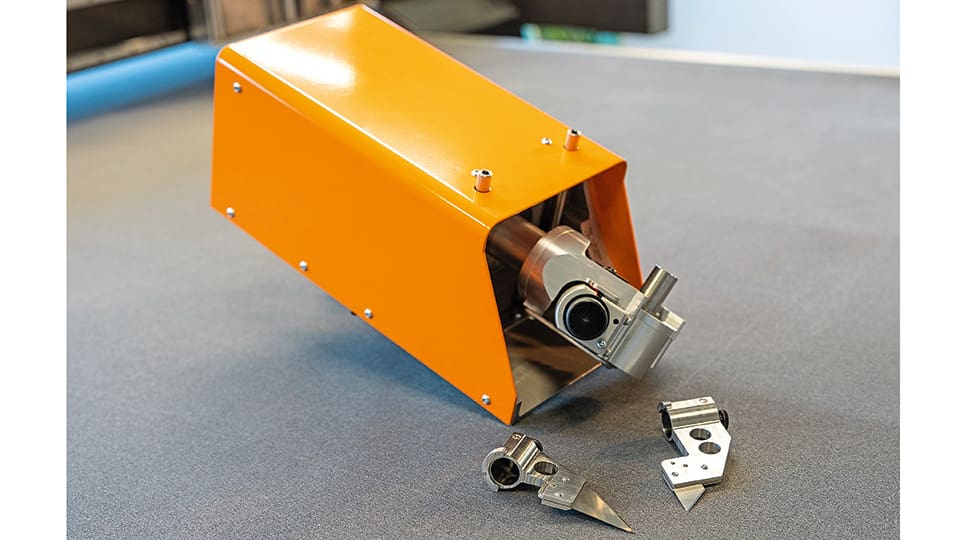
“Our proprietary VariAngle tool, compatible with the C and X-series, overcomes this challenge by enabling any angle from 0 to 60 degrees. This allows designers to say yes to jobs that were previously out of reach. The software-driven tool requires no manual setup, allowing cut angles to be embedded directly in the job file and automatically adjusted during production. As a result, shapes that were once impossible to produce at scale can now be delivered accurately, efficiently, and without effort.”
Whether the focus is on streamlining production, automating previously manual work, working with a wider substrate set, or opening the door to more complex design philosophies, solutions like Kongsberg’s digital cutting systems aim to provide the best toolkit they can to POS manufacturers, so that they can respond to a market that is asking for more complex, eye-catching, and personalised displays.
Navigating the future of the POS market ultimately requires print providers to balance two equally demanding variables: the structural and material properties of the display hardware itself, and the raw efficiency of the production and finishing lines that create it. As retail environments continue to demand faster campaign turnarounds and more agile rollouts, the industry’s reliance on highly efficient and reliable production technologies will only increase.
Shapes that were once impossible to produce at scale can now be delivered accurately, efficiently, and without effort
While the retail sector itself remains notoriously difficult to predict, the sector’s growing demand for efficient, reliable, and environmentally conscious visual communication ensures that POS will remain a highly competitive driver for the wide-format print industry.