What opportunities are emerging for sign-makers as direct-to-object printing technology becomes more capable and accessible? Rob Fletcher sits down with several key names in the market to find out
Rob Fletcher
November 17, 2026
Direct-to-object (DTO) printing has opened another avenue for sign businesses looking to move beyond traditional flat substrates. Rather than producing graphics onto sheets or rolls before applying them to a finished product, these systems allow users to print directly onto three-dimensional objects, creating opportunities across a growing range of applications.
For sign-makers, the appeal is not simply the ability to print onto unusual shapes. DTO print technology can help businesses offer more personalised products, branded items, and specialist applications, while potentially reducing the number of production stages involved. From promotional products and packaging to interior applications and bespoke signage, the technology can bring print closer to the finished object.
As manufacturers continue to develop their systems, improvements in print quality, automation, ink technology, and object handling are helping to broaden the range of applications available. With customers increasingly seeking personalised and short-run products, DTO printing could provide sign-makers with another way to diversify their offering and create new revenue streams.
New Capabilities
Inkcups is a name that is synonymous with DTO print, having been involved in this sector for more than 25 years. Sarah Fenna, sales manager for the UK and Ireland, says the company has seen a shift towards “premium, retail-quality” items that people want to keep and reuse, as well as strong demand for print-on-demand, custom, and personalised products.
This, she says, is particularly prevalent in promotional products, gifting, and packaging, as well as for experiential marketing as brands seek to elevate both in-store and unboxing experiences.
“The result of this is the need for more complex, full-colour designs across a wider range of applications,” she says, adding: “Signage companies are diversifying and broadening their offerings to meet these requirements.
“Personalised gifts and promotional products remain two of the strongest markets today, with drinkware continuing to be a major growth area. Brands are increasingly using varied shapes and designs to differentiate themselves and while this adds complexity for print service providers (PSPs), it is also in applications such as this where DTO printing comes into its own.
Personalised gifts and promotional products remain two of the strongest markets today, with drinkware continuing to be a major growth area
“The technology supports print-on-demand production, full-colour, and 360° designs on cylindrical objects, and decoration of uneven or complex shapes that traditional inkjet printing can struggle to accommodate, without having to carry large inventories of pre-decorated stock.”
Fenna offers some guidance for those in the market for new DTO machinery. She says choosing the right printer starts with understanding the applications the business wants to target, alongside expected volumes, run lengths, and the flexibility required between different products.
She continues that requirements can vary significantly between businesses decorating reusable bottles and cups, corporate gifts such as pens and notebooks, and personalised consumer products including mugs and wine glasses. On top of this, floorspace, workflow, substrate compatibility, operator training, and quality expectations are key considerations.
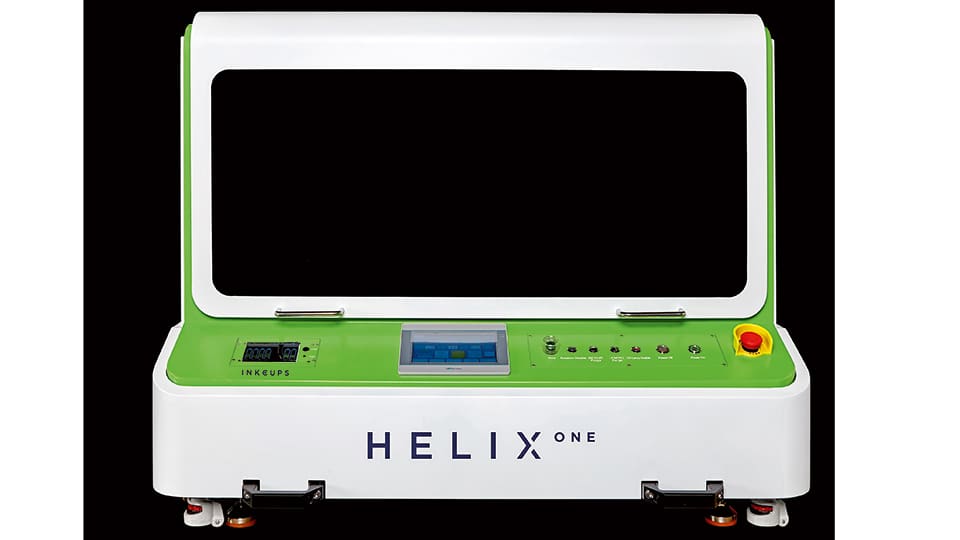
In June, Inkcups expanded high throw technology capabilities to cylindrical DTO printing with the Helix High Throw
As to how Inkcups can help, she recommends the X5-T High Throw flatbed UV digital printer, which, as its name may suggest, features High Throw technology. Launched in 2025, Fenna says the machine significantly increased the ink throw distance between the printhead and substrate to deliver high-quality, accurate prints on contoured, rounded, slightly curved, and irregularly shaped objects.
“In June 2026, we expanded this capability to cylindrical DTO printing with the Helix High Throw, opening up the possibility of decorating larger-diameter products and even more complex cylindrical items with full-colour 360° wrapped designs,” she says.
Care and Investment
Next, Neil Cook, head of strategic marketing at Xaar, says the DTO market is being shaped by the continued shift from analogue decoration towards fully digital manufacturing, as brands and manufacturers look for greater flexibility, shorter production runs, more SKUs and increased opportunities for mass customisation.
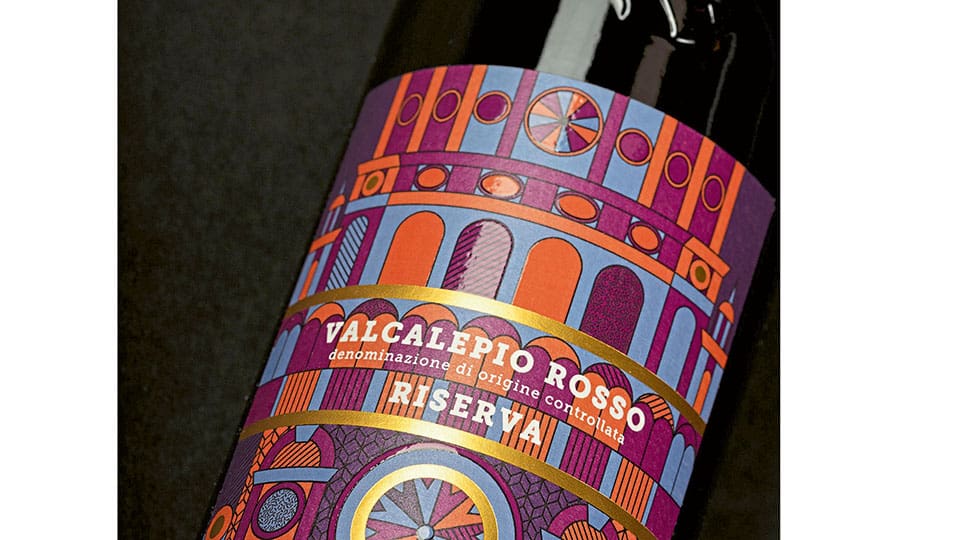
“Demand is particularly strong for direct decoration of glass, plastic, and metal containers, where brands want a premium look and feel without relying on labels or sleeves,” he says.
Demand is particularly strong for direct decoration of glass, plastic, and metal containers, where brands want a premium look and feel without relying on labels or sleeves
While Cook says he understands the level of excitement over this demand, he urges those sign businesses considering a move into the sector or bolstering their current setup to take care with a new investment.
On this, he says a common mistake is underestimating the importance of fluid compatibility, process development, and partner expertise, all of which he says can have a major impact on whether an inkjet system performs reliably in production.
“One of the most important considerations is printhead technology, particularly its ability to handle the required inks and fluids while maintaining consistent drop placement, print quality, and performance across complex surfaces,” Cook says, adding: “Selecting a partner with proven industrial inkjet experience is therefore essential, especially in DTO applications where substrate shape, surface type, and production conditions can vary significantly.”
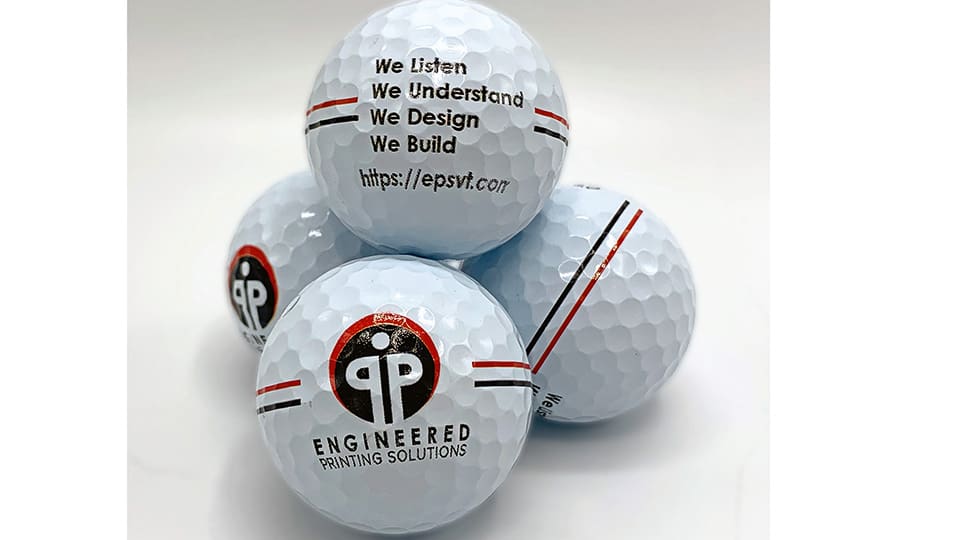
EPS has reported a growing demand for more flexibility in DTO printing
Cook says Xaar’s printhead technologies, including TF Technology, High Laydown Technology, and the ability to jet higher-viscosity fluids through Ultra High Viscosity Technology, help maintain stable jetting, support thicker layers and textures, and enable the use of more demanding decorative and functional fluids.
“This is particularly important in direct-to-shape and product decoration, where accurate droplet placement, robust operation, and fluid flexibility are essential to achieving high-quality results on curved, shaped, or challenging surfaces,” he adds.
Application-First Approach
Elsewhere, Boris Liberman, engineering and technology leader at Engineered Printing Solution (EPS), agrees the DTO market has matured significantly over the past few years. He says one of the biggest trends is the move toward production-scale digital printing.
“Manufacturers want systems that can deliver consistent quality, high uptime, and seamless integration with existing production workflows,” he says, adding: “As a result, conversations have shifted away from print engines alone and toward complete solutions that include material handling, robotics, vision systems, pre-treatment, and curing.
“We’re also seeing growing demand for more flexibility. Brand owners and converters need to manage more SKUs, shorter product lifecycles, and increased customisation without sacrificing productivity. DTO print helps address these challenges by reducing changeovers, inventory and supply chain complexity.”
For those seeking to take advantage of increasing demand and pondering new investment, Liberman advises looking first at the application rather than the printing technology. He sets out how different products, shapes, materials, production volumes, and quality requirements demand different approaches.
Rather than asking ‘What can I print on?’ the question really should be ‘What else can I print on?’
“There is no single solution that fits every application and so we encourage manufacturers to evaluate their entire production process,” he says, continuing: “The printer is of course only one part of the workflow; surface pretreatment, product presentation, curing, inspection, and automation all have a significant impact on final performance.
“A successful DTO installation therefore is typically the result of a well-engineered system rather than a standalone machine purchase.”
From an EPS point of view, Liberman says the company has taken this application-first approach, working with customers to evaluate the product, substrate, production volumes, and business objectives before recommending the most appropriate solution, whether that involves digital inkjet, pad printing, or a combination of both.
“Our latest systems also place a strong emphasis on pretreatment and process control, which are often critical factors in achieving consistent adhesion and print quality across challenging substrates,” he says, adding: “By integrating technologies such as flame, plasma, and other pretreatment methods into the production workflow, we help customers achieve reliable, repeatable results in real-world manufacturing environments.”
Versatility of Applications
Further advice comes from Andy Gregory, sales director at Hybrid Services, the exclusive distributor for Mimaki in the UK and Ireland. He says DTO continues to move at pace and has, for some time, included far more than simply promotional printed items as key outputs.
“At Hybrid, we’re now seeing an increased number of Mimaki UJF printers installed in manufacturing setups, where print forms just one part of a much larger process,” he says, adding: “The ability to customise designs, personalise content, and handle shorter, on-demand print runs remains the same, but with very different end uses.
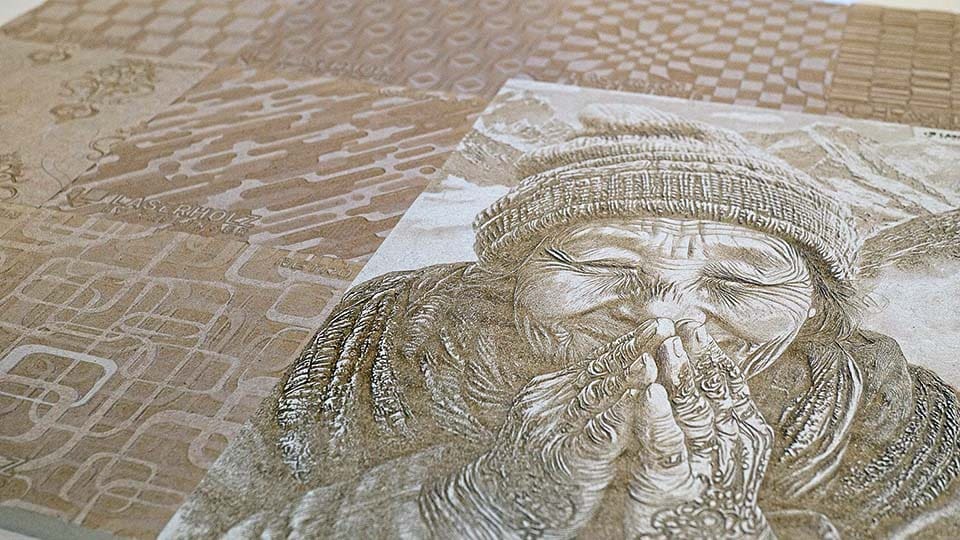
“On a creative front, the use of Mimaki’s clear ink as both a design tool and a practical embellishment is becoming more popular – and easier. Mimaki’s latest RasterLink RIP software includes efficient ways to add textures, patterns, and even Braille, allowing accessible signage, packaging prototypes with accessible labelling, and other tactile requirements to be digitally created.”
Xaar highlights the importance of fluid compatibility when investing in new DTO kit
Going into more detail on Mimaki’s solutions, Gregory highlights ‘LD’ technology in the latest UJF DTO printers as a feature that sets these machines apart. He says this allows for significantly contoured or angled objects to be printed, thus expanding the capabilities of the printer.
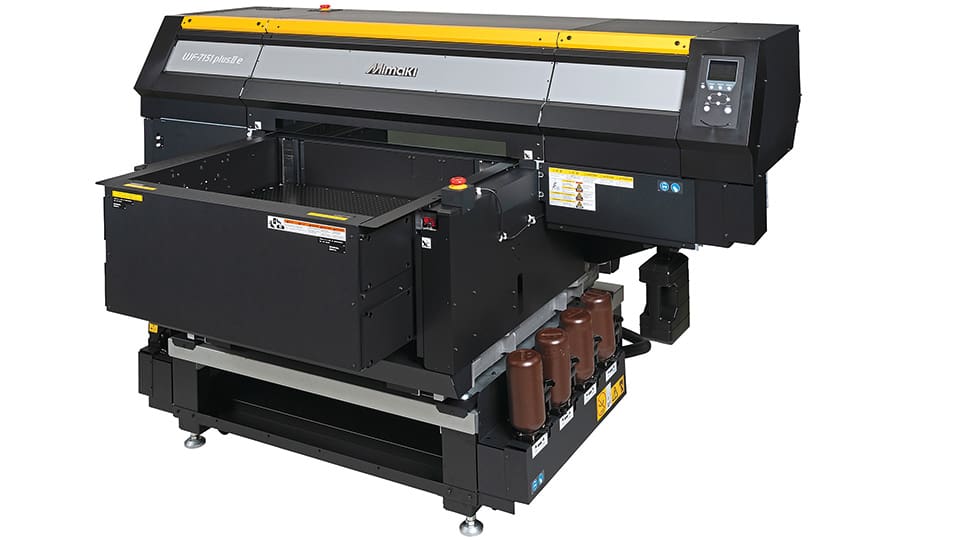
“For example, the recently released Mimaki UJF-7151plusII e model enables printing onto objects with a distance of up to 10mm from the print head to the print surface,” he adds.
He also highlights the ‘Kebab’ option, a rotary attachment that allows a flatbed printer to be quickly converted into one that can complete a print around the full circumference of a cylindrical object such as a bottle or can. Mimaki’s newest Kebab HS will even print to tapered items, including glassware and shaped packaging.
Factoid: Cylindrical DTO systems coordinate the movement of the object with the print process, allowing graphics to be applied around curved surfaces
“For a company investing in DTO hardware for the very first time, the sheer versatility of applications is an important consideration,” Gregory says, continuing: “Rather than asking ‘What can I print on?’ the question really should be ‘What else can I print on?’ Extending product offerings and exploring new ways to serve existing customers is an excellent way to maximise an investment, and for forward thinking print businesses, those answers should naturally lead to very successful returns.
“Mimaki UJF A3 and A2 flatbed UV printers have a reputation for being very simple to use and maintain, even in demanding, high production settings. They’re also equally well equipped for use in studios and office environments – and we have a larger number of customers who have started businesses from home offices using the same equipment that would be found in much larger, more industrial enterprises.”
Continued Growth
Rounding off the discussion is Phil Kneale, director of Graphtec GB, which counts Mutoh among its manufacturer partners. Kneale picks out personalisation, short-run production, and rapid turnaround as major drivers in the DTO sector, with customers wanting to print directly onto a wider range of products.
However, with this varied demand comes the importance of investing properly in kit that can handle different materials. Kneale says: “A common mistake is choosing a printer based primarily on headline speed or price without matching its capabilities to actual and projected production needs.”
The Mimaki UJF-7151plusII e can print onto objects with a distance of up to 10mm from the print head to the print surface
On this, Kneale says that Mutoh has focused on greater versatility, ease of operation, and production reliability. For example, the latest XpertJet 461UF supports objects up to 70mm thick, or nearly 150mm with the table removed, and offers CMYK, white, and varnish options. On top of this, its UV-LED local-dimming technology enables different gloss effects while improving productivity and reducing banding and layer misalignment.
“We expect continued growth in personalised and on-demand products, alongside greater automation, easier workflows, and broader substrate compatibility,” he says, continuing: “Improvements in UV-LED inks, colour, and texture capabilities, and more environmentally conscious printing technologies should also help DTO printing move into new applications and higher-volume production.”
The opportunity presented by DTO printing is becoming harder for sign-makers to ignore. As technology continues to improve, businesses can move beyond traditional flat substrates and explore new applications, from personalised products and promotional items to packaging, drinkware, and more complex industrial uses.
As environmental requirements become the norm, and more materials solve different installation challenges, we speak to experts in signage materials who give their advice to businesses who work with different substrates day-to-day
Speaking with specialists from Very Displays and Kongsberg PCS, we explore how the latest hardware and finishing technologies can help POS display producers to respond to shifting retail demands
How can investment in new etching and engraving equipment help sign-makers expand their offering and create more distinctive, high-value applications? Rob Fletcher speaks to several key manufacturers and suppliers to find out more.
Watch our latest video of the week
SignLink gives you the latest video coverage of companies, people, and events from within the signage, graphics, and wide-format print industries.