Adventures in Sign Painting: Berlin’s Buchstabenmuseum
Sam Roberts looks at a rather different point of interest in Berlin. Celebrating its 20th anniversary, the Buchstabenmuseum preserves lettering and signage from time gone by
Guest Writer
June 16, 2025
The homogenisation of high streets is a well-documented, and increasingly global, phenomenon. But have you ever wondered what happens to the signs on family-run, independent shops when the chains move in? More often than not they are tossed aside as part of the corporate facelift, but if they’re lucky they might end up under a railway arch in Berlin’s Mitte neighbourhood. Located between the city’s Tiergarten park and the Spree river, this is the home of the Buchstabenmuseum (letter museum), which is on a mission to preserve the graphic history and culture that is being lost, shop by shop, in Berlin and beyond.
Seizing the Initiative
The Buchstabenmuseum is one of a number of initiatives across Europe that aim to rescue, collect, and preserve the lettering and typographic heritage found on shop signs of all kinds. From Lisbon’s Letreiro Galeria to Vienna’s Stadtschrift, these initiatives are typically volunteer-led and run with little or no external funding. Berlin’s Buchstabenmuseum is no exception, but in spite of these challenges, it has been active for 20 years now and boasts a public-facing exhibition space.
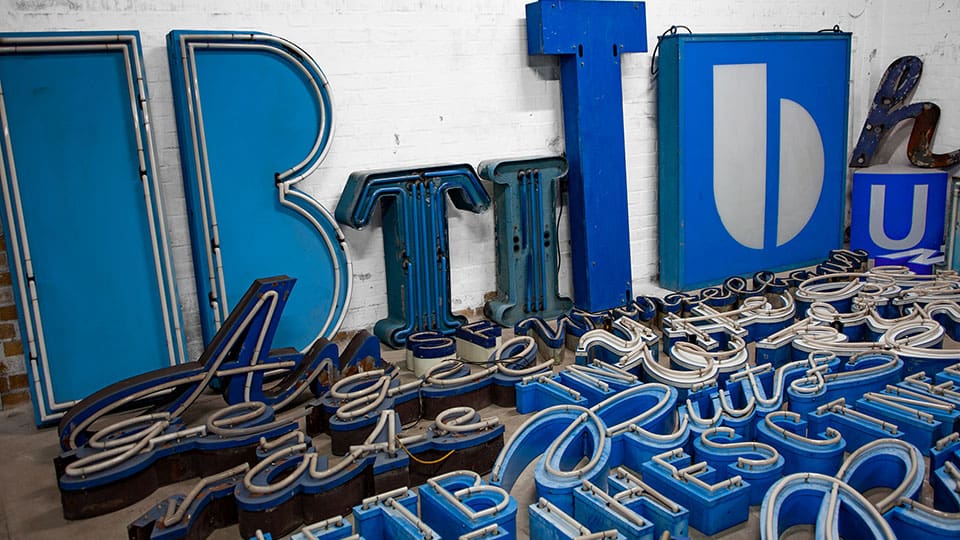
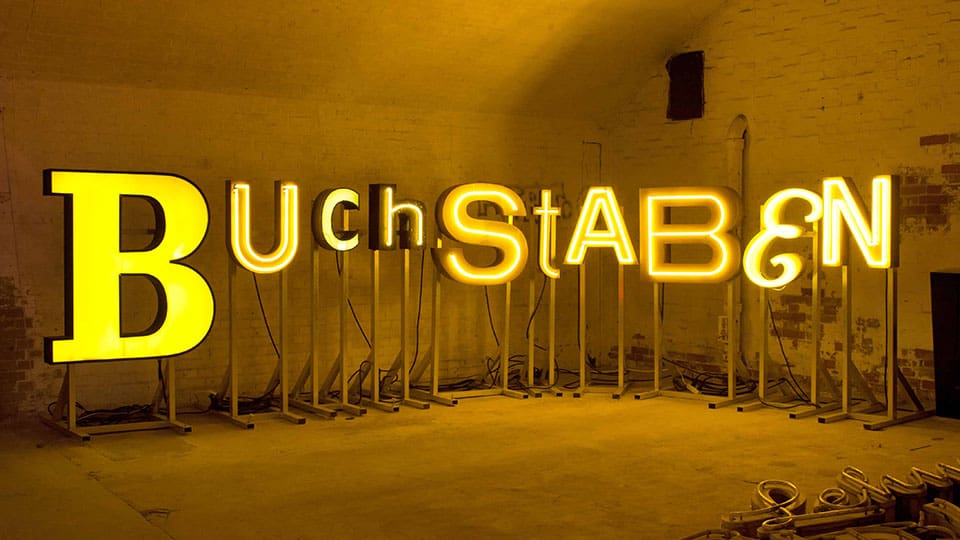
Colour is used to group many of the objects on display, bringing harmony to the arrays of diverse letterforms
The letters and signs at the Buchstabenmuseum were initially the private collection of graphic and brand designer Barbara Dechant. Originally from Vienna, Dechant’s fascination with letters started at an early age, notably their abstracted forms outside of what can be read. She started collecting objects of typographic interest as a teenager and, after her move to Berlin in 1996, continued to rescue letters and signs whenever she saw them discarded or being allowed to fall into disrepair.
Dechant’s collection grew, and she joked with her friend Anja Schulze that they should start a museum. This quickly escalated, and in 2005 they formed a non-profit with the objective of making the artefacts more accessible to the public, and to use them for educational activities. This mission was realised three years later when the museum first opened its doors in 2008.
A Neverending Mission
The museum’s reception was overwhelmingly positive and, in addition to the general public, it attracted the attention of professionals and academics in the wider realms of type design, graphic design, and architecture. Press associated with the opening, and subsequently, created more leads for Dechant and Schulze to follow up, as they quickly became magnets for news of threatened and abandoned signs. Many of these were subsequently rescued with the help of their volunteer network in Berlin, elsewhere in Germany, and even from much further afield.
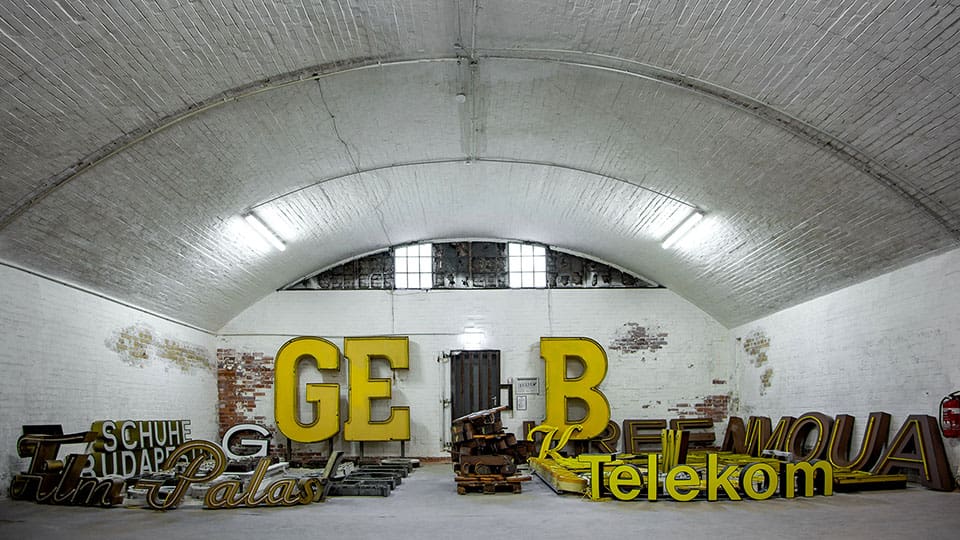
Since 2016, the Buchstabenmuseum has been housed in railway arches in Berlin’s Mitte district
Once displayed in the museum, the signs and letters are much more than just visual novelties. Narrative texts cover topics that include the businesses they once advertised, their design, and typographic elements, and the processes used in their fabrication. Providing this context enriches the exhibits and conveys their importance within wider historical and cultural narratives.
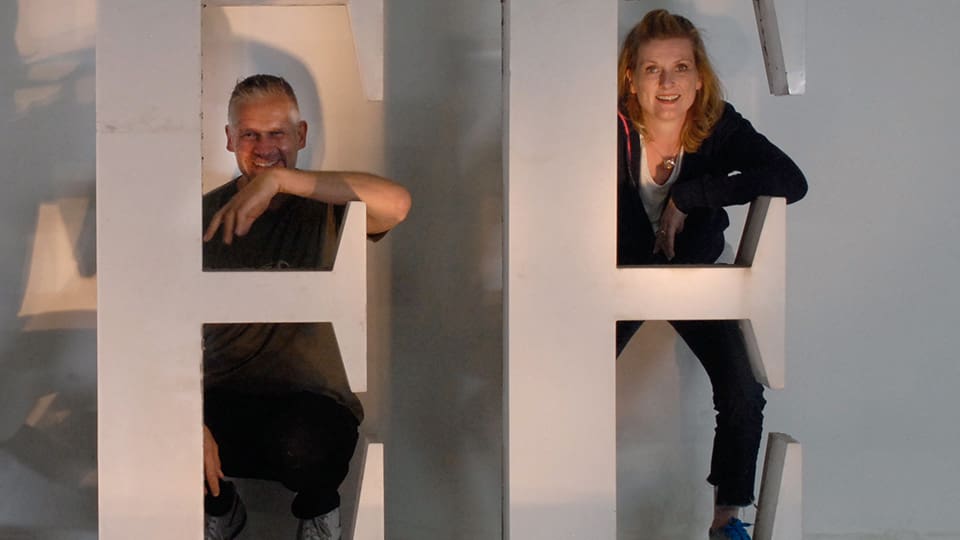
Museum founder and director Barbara Dechant [right]
For local visitors the signs often evoke memories of particular shops, a reminder of the important role that smaller and family-run businesses play within communities. This is what is being destroyed as homogenisation sweeps the globe, and part of the museum’s mission is making sure that it isn’t lost completely.
Moving Up (and Under) in the World
As the museum’s collection grew, so did the need for more space to house it all. After four temporary spaces, the current location under the railway arches in Hansaviertel became home in 2016. Its cavernous spaces provide the perfect canvas for the diverse letterforms and complete signs that they house. One of these arches groups the artefacts by colour – green, blue, white, and yellow – with many letters bathing in the warm glow of their illuminated neighbours.
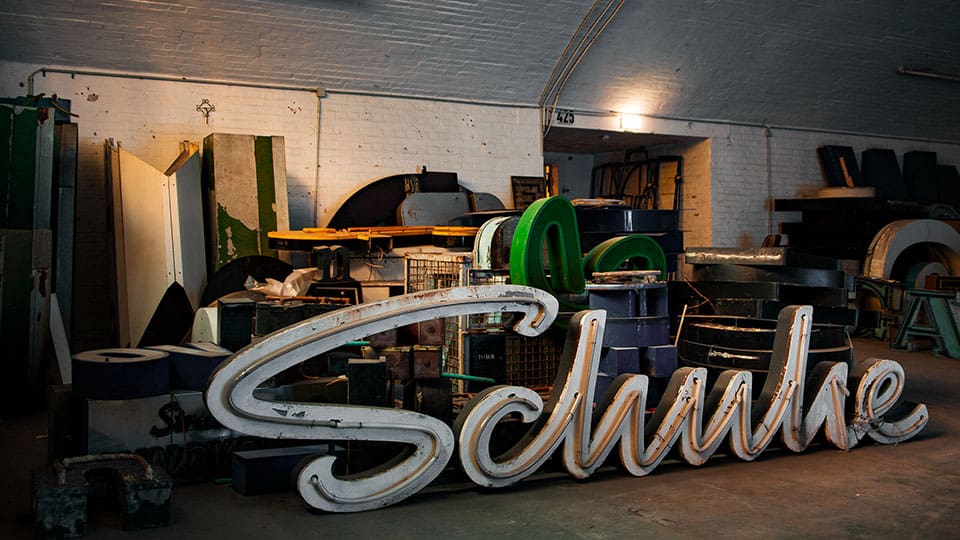
The script letters on this sign once adorned a shop in northwest Berlin, simply stating what was available inside: schuhe (shoes). The sign is constructed from metal, with a white front and brown metal body, while the white-coated neon tubes are mounted to these with metal supports
The collection now comprises well over 3,000 objects, and the museum has operated an in-house neon shop since 2022. The shop carries out repair work on items from the collection and delivers educational demonstrations and workshops that help attendees understand the craft techniques involved in the production of neon signs. It is also a core part of the museum’s revenue stream as the pandemic resulted in Dechant losing her job, with the silver lining being that she is now focused entirely on the museum and a range of consulting and sign fabrication work that is carried out under its banner.
Making the Pilgrimage
One of the curious facets of the museum is that the majority of its visitors are from outside Berlin, with many coming from overseas. This has been aided by regular articles in travel and trade publications, where the museum is presented as a hidden gem.
This medley of letters once served businesses as diverse as a Berlin bank, a Chinese restaurant, a furniture store, and a corset shop
However, as more and more locals become aware of its existence, the conversations about the letterforms themselves are increasingly being supplemented by those about the memories triggered by the displays. While the original shops may be long gone, these memories are preserved through the humble medium of the letters that once spelled their names.
Sam Roberts is the editor and publisher of BLAG (Better Letters Magazine), the world's only print and online publication dedicated to sign painting. He has written numerous books and articles on the craft and its history and first became interested in the topic via the fading ‘ghost’ signs around London. SignLink subscribers can sign up with a special discount to the publication via bl.ag/signlink. Find more about Roberts and his work via: bl.ag ghostsigns.co.uk
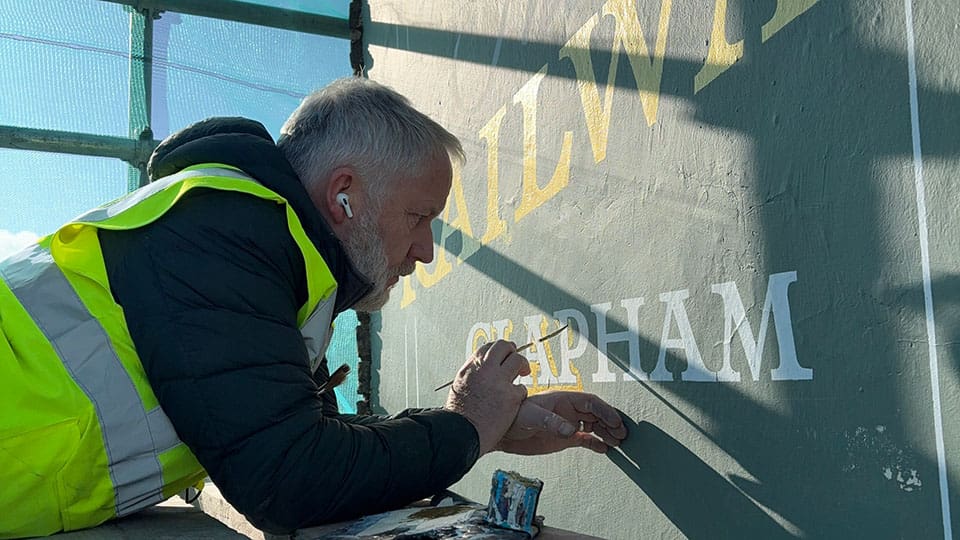
With a career spanning many facets of sign-making, Signmode has taken David Mearns back to where it all started with no regrets. Ahead of Mearns’ return to The Sign Show, Sam Roberts speaks to this traditional signwriter
As 2025 comes to an end, we look ahead to the new year with advice from several voices from across the print and signage industries, who give their thoughts and advice on what to keep in mind for your business in 2026
SignLink speaks to Linda Edwards from the BSGA following the launch of the new SICCS Provisional Card for commercial signage installers, which is designed to provide compliant site access
Watch our latest video of the week
SignLink gives you the latest video coverage of companies, people, and events from within the signage, graphics, and wide-format print industries.