The Power of Partnerships in Sign-Making
Working with other businesses can open doors to new markets, services, and expertise. Here, SignLink examines how building the right partnerships can strengthen day-to-day operations and long-term success.

With garment print still proving a popular growth market, Rob Fletcher takes a closer look at some of the latest technology on offer in this sector, analysing how these machines can help your business access new opportunities

Garment printing has proven to be one of the stand-out growth areas for the industry in recent years. Both manufacturers and suppliers have been waxing lyrical about the many opportunities within this market, encouraging those who are not yet in this sector to consider making the move to take advantage of demand.
However, as is the case with moving into any new area, it is not quite as simple as throwing some money at a new machine and diving straight into production. Sign-makers and wide-format printers should first consider where the demand lies among their existing customers, as well as what other clients they should be looking to target.
Here, we speak with several leading manufacturers in the garment print market to find out more about the areas that offer the most opportunities and what sort of equipment sign and related companies should be looking at to make the most of demand.
First up to comment is Colin Marsh, managing director of Resolute. According to Marsh, garment printing remains a “strong and reliable” growth area for printers and sign-makers, particularly as diversification becomes essential for long-term business growth and success.
“Many customers are already sourcing printed garments elsewhere, which means the demand is proven and the opportunity is there,” he says, continuing: “By bringing garment printing in-house, businesses can increase their market share, shorten turnaround times, and retain more control over quality and margins.
Many customers are already sourcing printed garments elsewhere, which means the demand is proven and the opportunity is there
“Technologies like direct-to-film (DTF) printing have lowered the barrier to entry, removing the need for specialist skill sets or large production runs. This makes garment print accessible, scalable, and highly profitable. For print businesses looking to future-proof their offering, garment decoration is no longer an add-on, it is a logical extension of services they are already offering.”
With this, Marsh goes on to say that demand is highest in online retail and short-run personalisation, where speed, flexibility, and visual impact directly influence buying decisions. He says custom garments for ecommerce brands, creators, events, and promotions consistently command higher margins due to perceived value.
“Personalised names, numbers, and limited designs allow printers to charge more without increasing production complexity,” he says, adding: “Corporate uniform is another fast-growing area, driven by branding consistency and ongoing repeat orders. Workwear, hospitality, and service industries all require durable, high-quality decoration delivered reliably.
“Printers which can offer fast sampling, consistent colour, and scalable production are well placed to win this work. The key is targeting applications where flexibility and turnaround matter more than ultra-high volumes.”
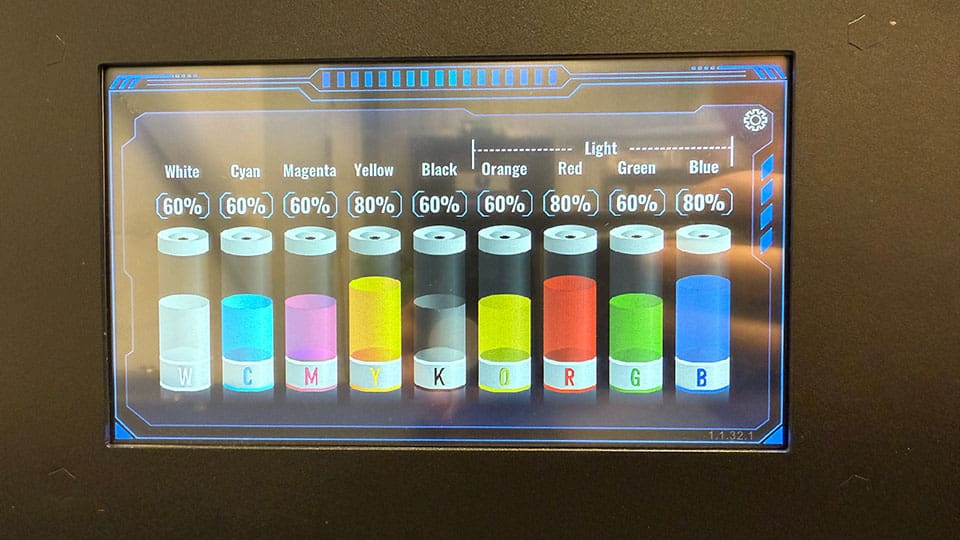
Switching attention to technology and investment, Marsh says a quality printer is defined by consistency, reliability, and intelligent ink management. In DTF printing, he says a circulation and stirring system is critical, even when using low-sediment inks, as it prevents pigment separation and ensures stable colour output. This directly impacts print quality, maintenance cycles, and long-term running costs, with Marsh saying advanced systems should continue protecting ink integrity even when the printer is idle.
Before modern screen and digital printing, designs were printed onto fabric using wooden blocks carved by hand
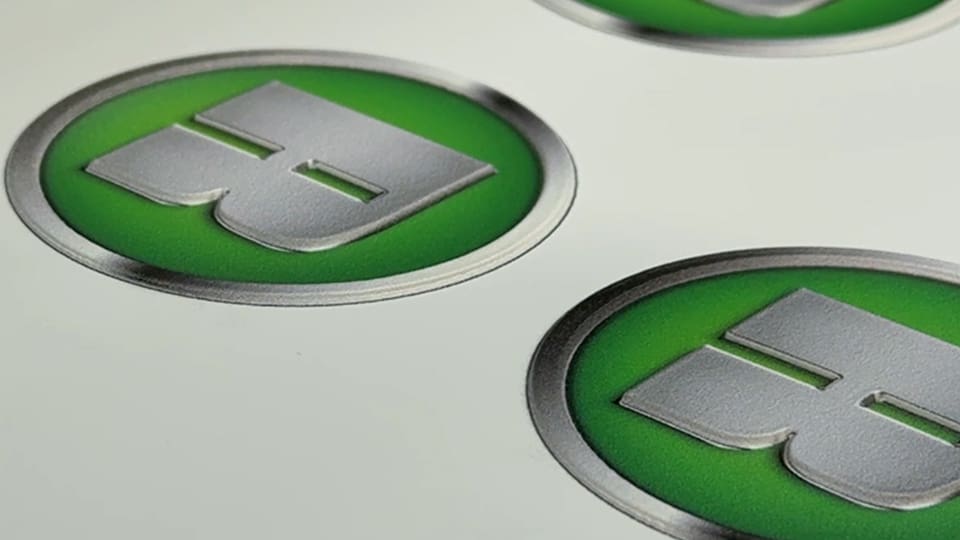
“3D patch printing is currently one of the most in-demand DTF applications, offering a modern alternative to traditional silicone patches,” Marsh says, adding: “It delivers texture, depth, and impact without tooling or setup fees, making it ideal for short runs and variable data. Multi-colour designs can be produced easily, opening creative possibilities that were previously impractical or expensive.
“Faux embroidery is another popular application, produced on the same 3D system using a different substrate. This gives the visual effect of stitching with the speed and flexibility of print. For brands and decorators, these solutions combine premium aesthetics with commercial efficiency, allowing them to upsell high-value finishes while keeping production simple and scalable.”
Next up is Phil McMullin, head of sales for Epson UK, who says that both customisation and personalisation are still a growth business and the demand for unique garments is a big part of this. As for where specific demand lies, McMullin says while in the past, this was mainly for the decoration of cotton garments, as the range of man-made technical fabrics has expanded, this has extended to clothing used for practical purposes.
“Printing technology has also evolved so that it is now possible to mark up almost any kind of garment,” he says, continuing: “For those companies working in the B2B market all kinds of branded workwear is in demand. This can involve significant amounts of a garment being printed or more likely just the addition of company logos on various parts of a garment, for instance the sleeve.
Printing technology has also evolved so that it is now possible to mark up almost any kind of garment
“Historically, the garment decoration market has been served mostly by small scale manufacturers taking various components from different sources and creating printing equipment targeted at the smaller producer. As the market has grown and bigger producers have stepped in to fill the increased demand, so have the more well-known manufacturers, such as Epson, starting to design and build printers for this customer base.”
Looking at investment in new machinery, McMullin says those businesses stepping into the garment printing market for the first time should look at Epson’s entry-level hybrid systems such as the SureColor F1000 or slightly bigger F2200. He explains that both printers offer the ability to easily print onto natural and man-made fabrics without changing ink.
Drilling down into the details of the two machines, the SureColor F1000 is a desktop hybrid direct-to-garment (DTG) and DTF printer. According to Epson, it is the only printer of its type to include white ink, enabling it to print directly onto dark garments and film.
As for the SureColor F2220, also a hybrid DTG and DTF solution, Epson says that it has been developed for businesses demanding accuracy, speed, and the ability to produce customers’ complex designs on a variety of garments.
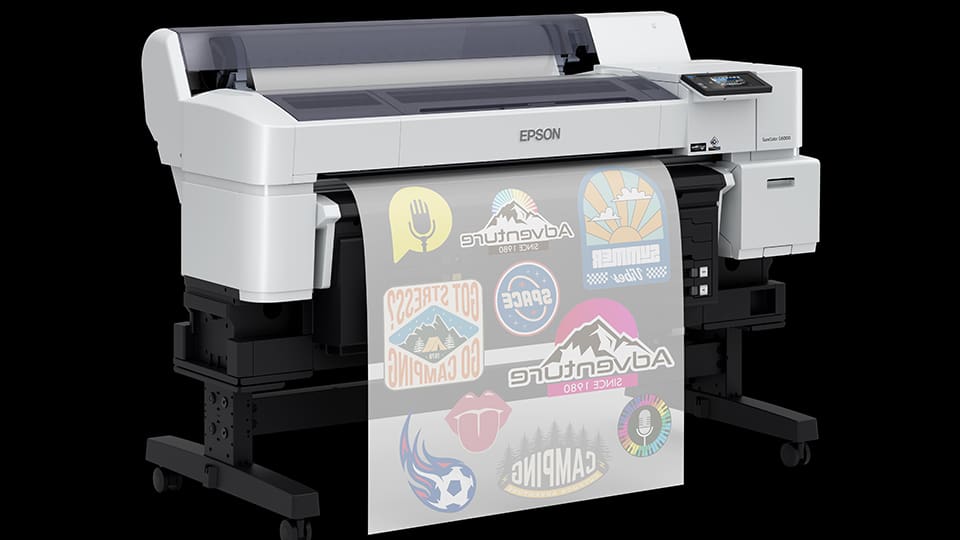
Finally, for those looking to upgrade an existing DTF system, McMullin points to the new SureColor G6000, which he says offers “exceptional” image quality and productivity, while volume DTG companies may consider the SureColor F3000 for industrial scale output.
Also weighing in is Rob Goleniowski, regional general manager of the UK, Ireland, Scandinavia, and Baltics at Roland DG EMEA. He says garment printing remains a strong growth area, particularly as demand shifts toward short-run, customised, and on-demand apparel.
“Technologies such as DTF have significantly lowered barriers to entry whilst expanding the range of applications printers can profitably produce,” Goleniowski says, continuing: “DTF enables high-quality, durable prints without the setup time, waste, or volume requirements of traditional screen printing.
“It also removes many of the limitations associated with DTG, such as fabric restrictions and pre-treatment steps. As a result, garment printing has become a natural diversification path for sign-makers and commercial print providers looking to add higher-margin, repeatable revenue streams without radically changing their workflow.”
Technologies such as DTF have significantly lowered barriers to entry whilst expanding the range of applications printers can profitably produce
Looking at the wider market and considering where the opportunities may lie for both those that are moving into the garment print sector for the first time and other companies that have already established a presence in this segment, Goleniowski notes a growing demand beyond traditional T-shirts. He explains that with DTF, both print and sign companies can confidently produce graphics for a wide range of fabrics and products, including tote bags, workwear, accessories, and even footwear.
“This opens up new opportunities for printshops to support customers who want consistent branding across multiple garment types, without the complexity or limitations of older printing methods,” he adds.
Leading on from this, Goleniowski addresses the all-important topic of investment in new machinery, offering guidance on what to look out for when splashing out on a new piece of kit for garment printing. He says a quality machine is defined by consistency, durability, and reliability just as much as by speed or print resolution, and those in the market for a new printer should keep this in mind.
“From a production perspective, the most important factors are how well the system maintains colour accuracy, how durable the finished print is after repeated washing and wear, and how reliably the machine performs over time,” he explains.
“In DTF printing, ink chemistry, white ink stability, and precise layering are critical, as these directly affect adhesion, stretch resistance, and long-term print quality. Just as important are automated maintenance features that reduce downtime and ensure repeatable results, particularly for businesses running high-volume or time-sensitive jobs.”
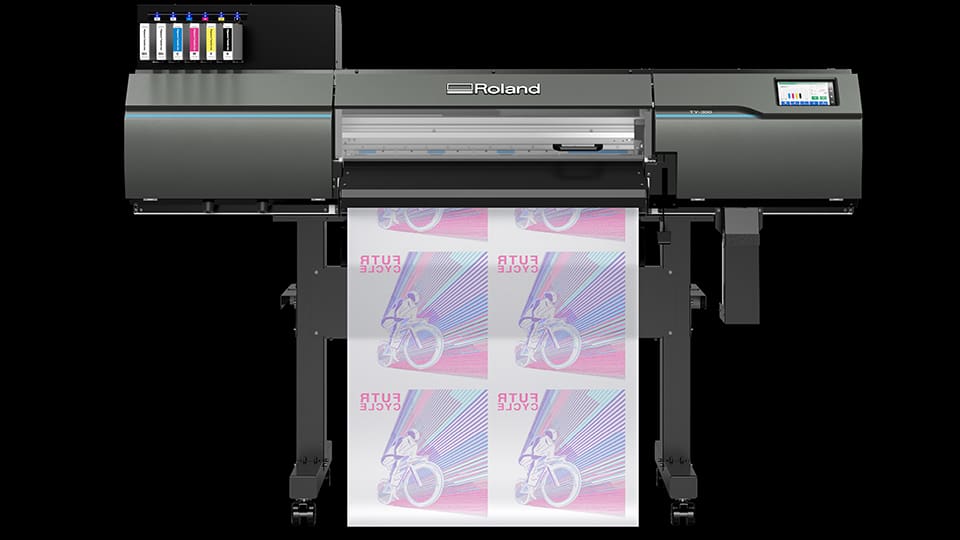
So, what does Roland DG have on offer in terms of garment print solutions? Goleniowski has little hesitation in pointing to the TY-300 DTF printer, which he bills as the manufacturer’s most popular machine for garment and textile customisation. Key statistics for the printer include CMYK plus white printing at speeds of 10.9sq m/hr – and up to 17.48sq m/gr when running in high-speed mode. The machine also comes supplied with Roland DG’s specialist software solutions including VersaWorks RIP and the Roland DG Connect App for remote monitoring.
“The TY-300 delivers high-resolution output with excellent colour vibrancy and fine detail, whilst also offering production speeds that allow businesses to scale efficiently,” explains Goleniowski, adding: “It uses OEKO-TEX ECO PASSPORT certified inks and features advanced white ink circulation and automatic maintenance systems, which help ensure consistent output and reduce operator intervention.
“When combined with approved shaker and heater units and our RIP and monitoring software, it forms a complete, production-ready DTF workflow that enables printers to deliver reliable, durable garment graphics across a wide range of applications.”
From speaking with those at the forefront of garment print technology, it is clear that there is still room for further expansion within this market, with plenty of opportunities for both newcomers and those that have been active in the segment for some time. Trends may be on the change, with more customers now looking to short-run, customised apparel, and it is down to the sign company or wide-format printer to ensure they are well equipped with the right sort of machinery to deal with this evolving demand.