The Power of Partnerships in Sign-Making
Working with other businesses can open doors to new markets, services, and expertise. Here, SignLink examines how building the right partnerships can strengthen day-to-day operations and long-term success.

From hand-cut lettering to laser-sharp precision, the tools behind great sign-making have always shaped how messages are seen. We explore the essential tools that turn ideas into eye-catching applications

If the old adage “a good workman never blames his tools” is accurate, then would “a good workman praises his tools” when a job goes well also be true? When it comes to creating signage applications, using not only the right tools but also high-quality products is of huge importance if you want a certain level of outcome.
Whether you are cutting vinyl or carving letters, the tools that sign-makers choose will very much shape the story the sign tells. Cutting corners (no pun intended) with cheap, low-quality tools to save a few pounds during production will almost certainly come back to haunt you later on in the project.
In this feature, SignLink sits down with a selection of tool providers in the UK market to find out more about what makes a high-quality tool and gains an insight into some of the latest solutions available to sign-making companies.
Liam Hodson, managing director of LKH Tools, is very much of the belief that to ensure a quality finish, then you need sign-making tools to match. He says low grade tools can have several hidden costs, which should all be considered when looking at the total economy.
“Mass produced tools, where quality control is not regulated, will give the end user a host of problems each time they change to a new tool,” Hodson says, continuing: “Adjustments to the feed rate and depth have to be constantly made to account for variations in the tool diameter, cutting edge sharpness, or coating variance.
Mass produced tools, where quality control is not regulated, will give the end user a host of problems each time they change to a new tool
"These mass-produced tools also tend to be generic tools, which are being manufactured then used on a number of materials. This will not give the best results, and the machine operator must guess which settings to use. In addition, there will be trial-and-error processes that the operator must go through each time a new tool is needed, with the cost of having to re-cut materials or quality issues also being factors in the overall purchase cost.”
Hodson goes on to say the quality of the carbide that the tool is made from makes a “huge” difference in how long the tool lasts. He explains lower quality tools have issues not only with variances from the manufacturing process but also in the quality of the tungsten-carbide used. This leads to tools being inconsistent when comparing the cut meterage and cut finish.
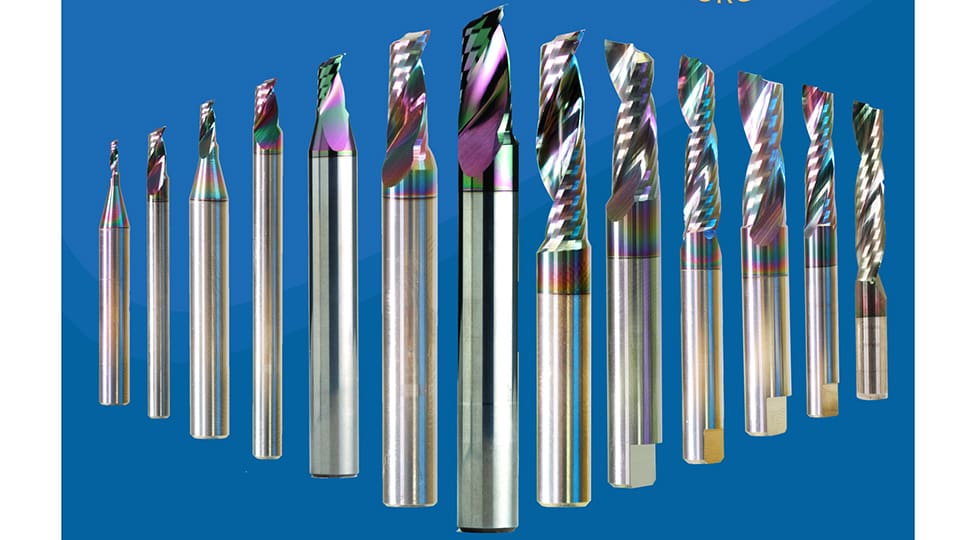
“Routing tools being manufactured, poorly ground, low-quality single fluted spiral tools can often be unbalanced and if used over a prolonged period of time, lead to a spindle failure,” Hodson warns, continuing: “Unbalanced tools will also produce a poor cut quality, excessive noise, and vibration.
“To speed up the tool manufacturing process on low quality tools, a coarse grinding wheel is used from start to finish rather than being finished with a fine polish wheel. While this produces a low-quality tool quickly, it also produces a rough surface finish on the tool and cutting edge when inspected under magnification.
“In contrast, the Crown Norge tools have many stages of grinding using different grit wheels before a final polishing wheel is used. This takes much longer to manufacture but the results speak for themselves when the tool is used by the router operator. Recalibration of the wheel is also important for maintaining accuracy. To save time on low-cost tools, the wheel may only be inspected and dressed infrequently.”
Having established the dangers of lower quality cutting tools, Hodson goes on to offer advice on how to establish what to look for in high-quality solutions. Focusing on the Crown Norge range of tools, manufactured in Switzerland out of the highest-grade European carbide, Hodson affirms that strict quality control measures are in place to ensure each tool is the same as the last one used.
“This gives operators peace of mind, knowing nothing needs to be adjusted when changing over a worn tool,” he says, continuing: “The sound of the tool while cutting is generally a good indication of how well the tool is performing. The Crown Norge balanced range of tools allows for spindle speeds of up to 60,000 RPM. These tools are incredibly quiet while cutting materials and produce an exceptional cut finish.”
Factoid: Before computers, sign-makers spaced letters by eye using a tool called a pounce pattern, a perforated paper stencil dusted with chalk to transfer layouts accurately onto a surface
Specific tools from Crown Norge are available for specific materials designed to increase the number of metres cut and give the best finish possible. For materials such as aluminium, Hodson says SUPERIOR and DLC coatings extend the tool life and allow for faster feed rates while cutting the aluminium dry. LKH Tools can also provide the correct cutting data for each tool, matched to the material and the machine it is being used on.
The MP SUPERIOR coated tool was introduced by Crown Norge at FESPA 2018, with Hodson going as far as to say that the coated tool “revolutionised” how aluminium was processed on a CNC router.
“Over seven years on and this tool still sets the benchmark for performance, tool life, and cut quality in cutting aluminium dry, HPL, brass, and ACM,” Hodson says, adding: “The coating is unique to Crown Norge and although many competitors now have similar looking coatings, they are generally thinner and in comparisons over cut meterage, and are generally much shorter in tool life.”
Also offering advice on sign-making tools is Scott Bale, sign media sales at Dorotape. Bale says while there is temptation to reduce costs and save money when it comes to tools, he warns opting for low-cost sign-making tools often proves to be a false economy.
“While budget tools may look similar to premium alternatives, they rarely match the same durability, precision, or reliability. Cheap tools wear out quickly, lose sharpness, or fail under regular use, leading to poor finishes, damaged materials, and even safety hazards if blades snap or handles break.”
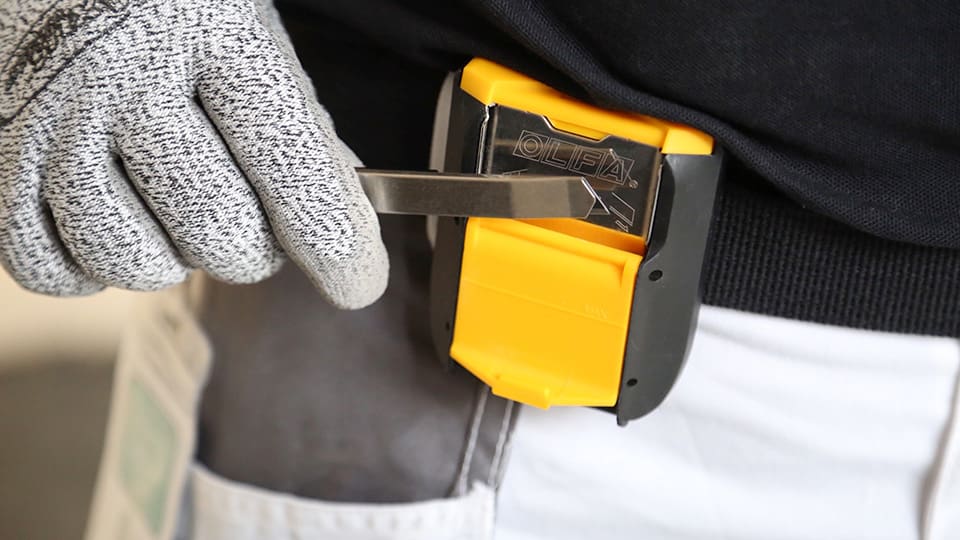
Bale adds: “More critically, a broken tool can halt a job mid-installation, causing delays, frustration, and dissatisfied customers. In a fast-paced, deadline-driven industry, downtime from tool failure can cost far more than the initial savings.”
As to how sign-makers can go about identifying a quality tool and ensure they are investing in a solution that will allow them to achieve a level of outcome that matches not only their own high standard but also the expectations of the customer, he says that quality tools are defined by reliability, performance, and trust in the brand behind them.
“Sign-makers should choose tools from manufacturers with proven expertise and a strong reputation in the industry,” Bale says, adding: “These brands use high-grade materials and strict quality controls to ensure tools withstand daily professional use. A good tool feels solid, performs consistently, and lasts over time.
“While cheap imitations may mimic the look of premium tools, they often compromise on material quality, sharpness, and ergonomics. Trusted brands understand that professionals rely on their tools to deliver flawless results every time.”
Dorotape is primarily focused on the supply of materials, specifically self-adhesive films from major global brands including ASLAN, Poli-Tape, Fedrigoni (Ritrama), Nekoosa (R-Tape), Kernow, Neschen, Kernow, and Cover Styl. However, with the company having extensive knowledge of various application types, it is in a position to advise on the type of tools its customers should be working with.
“We recommend tools from industry-leading brands that professionals trust,” Bale explains, adding: “Japanese-made OLFA knives and blades are renowned for exceptional sharpness, precision, and longevity, reducing the need for frequent replacements. Similarly, Swann Morton blades, crafted in the UK from Sheffield Steel, remain a staple for clean, accurate cuts.
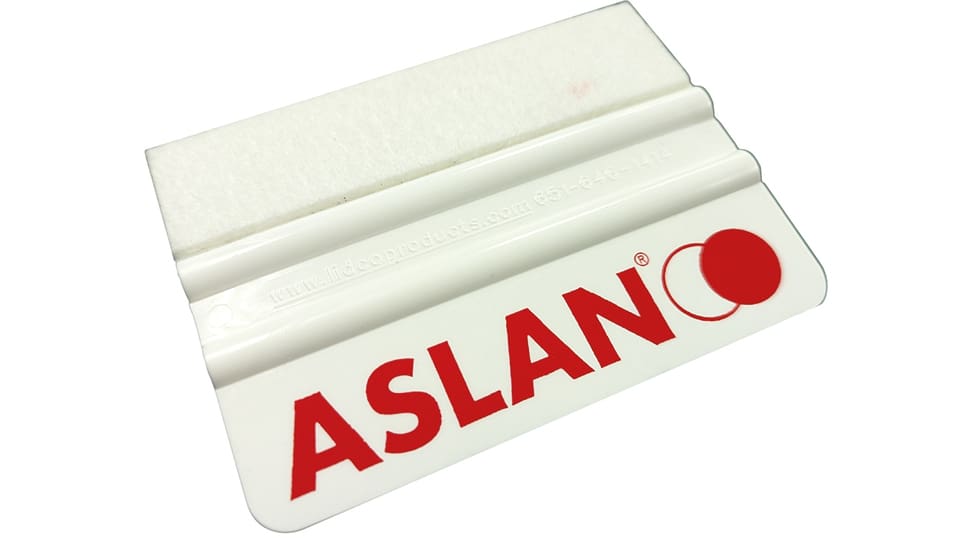
For application tools, Bale has little hesitation in pointing to ASLAN felt-edge squeegees as a “top choice” for sign-makers and similar companies. He says their dual design of a felt edge for delicate work and bare plastic for robust tasks offers versatility and cost-effectiveness. Finally, for glass and window applications, he says a Blue Max squeegee paired with the Fusion handle “delivers superior control, comfort, and streak-free finishes”, making it a go-to solution for professionals.
Ultimately, tool choice will come down to the individual sign-maker. Some may be restricted by costs, while others may have their favourite when it comes to the brand that they want to work with. However, having spoken with two experts from this area of the market, the one thing that is clear is that sign-makers and related companies should look to work with the highest quality tools available to them if they are to avoid longer-term issues.
Opting for cheaper tools may lead to some, small savings in the first instance but if you step back and look at the process as a whole, you will soon realise the risks you face by taking this approach. Low-quality tools may result in a below-par finish, which could in turn leave your customer dissatisfied and you facing a costly and time-consuming repeat job. This could even mean the loss of a client that will go in search of a company that can deliver quality at the first time of asking.
Bale of Dorotape offers some wise words of advice to conclude this feature. Essentially, he accepts that everyone want to save money but when it comes to essential tools for sign-making, this can backfire and cost companies a whole lot more in the longer run.
A cheap knife or squeegee might seem like a smart saving, but if it breaks mid-job, it creates stress, delays, and extra costs, especially without a backup
“A cheap knife or squeegee might seem like a smart saving, but if it breaks mid-job, it creates stress, delays, and extra costs, especially without a backup,” explains Bale, concluding: “Investing in reliable, well-made tools, means fewer interruptions, better results, and peace of mind. In the long run, choosing trusted brands isn’t just smarter, it’s more economical.”
For further advice and guidance on tool choice, speak with your usual supplier and tap into their expert minds to identify the best solutions for your business.