The Power of Partnerships in Sign-Making
Working with other businesses can open doors to new markets, services, and expertise. Here, SignLink examines how building the right partnerships can strengthen day-to-day operations and long-term success.

An important part of production for many sign companies and wide-format printers, Rob Fletcher casts an eye over the flatbed vinyl cutter market and analyses the benefits of businesses upgrading their kit

Printers and sign-makers can have the highest quality printing machines in place, but if they do not have the finishing kit to match, then they run the risk of undoing all their hard print work with sub-standard finishing.
Flatbed vinyl cutters are among the most popular finishing technologies in the signage and wide-format print markets, providing users with a flexible solution to finish a wide range of applications. With new solutions coming to market at a solid rate, the onus is on companies to ensure they are running the highest quality equipment that offers the latest technological features.
In this article, we speak with some of the key manufacturers in this sector to find out more about their freshest offerings and how print and signage companies can reduce turnaround time and overall costs by switching to a newer model of cutter.
First up is Vivid Laminating Technologies, a brand that has become synonymous with finishing in the wide-format market. Commercial director Lewis Evans explains that quality flatbed cutters are essential in modern print finishing as they combine versatility with precision.
“These systems can handle both flexible and rigid materials, such as cardboard, acrylic, and textiles, while also performing tasks like routing, engraving, and polishing,” Evans explains, continuing: “This makes them indispensable for applications in signage, packaging, and custom products.
“High-quality flatbed cutters ensure consistent accuracy, allowing printers to produce intricate designs and maintain high-volume output, which is crucial for meeting tight deadlines and delivering professional results.”
Factoid: Unlike roll-fed cutters, which pull vinyl from a continuous roll, flatbed cutters hold material flat on a vacuum table, allowing them to handle thicker, rigid, or non-flexible materials
Evans goes on to issue a warning over underinvestment, saying not committing enough to flatbed cutting equipment can lead to significant risks for business. For example, he says slower systems or those with limited capabilities can create bottlenecks in production workflows, while inconsistent cutting accuracy may lead to material waste, reprints, and dissatisfied customers.
High-quality flatbed cutters ensure consistent accuracy, allowing printers to produce intricate designs and maintain high-volume output
He continues: “Shops using substandard equipment may also struggle to handle diverse materials or complex designs, limiting their business opportunities. Additionally, frequent maintenance and unexpected breakdowns can increase operational costs, undermining any savings from cheaper machinery.”
With this in mind, Evans offers some expert words of advice on what to look for if you are in the market for a new flatbed vinyl cutter. Above all, buyers should focus on the versatility, precision, automation, speed, and reliable support associated with the machine. He adds that systems capable of handling a wide range of substrates, deliver accurate cuts, and automate tasks such as depth adjustments, help streamline operations and reduce errors.
“Efficiency is critical, especially in high-volume production, and responsive customer service ensures downtime is minimised,” Evans says, adding: “The VeloBlade Nexus from Vivid is an excellent example of a solution that meets these criteria. Its modular system accommodates different materials and applications, while features like automatic cut depth setting, and a rotating bed maximise both productivity and flexibility.”
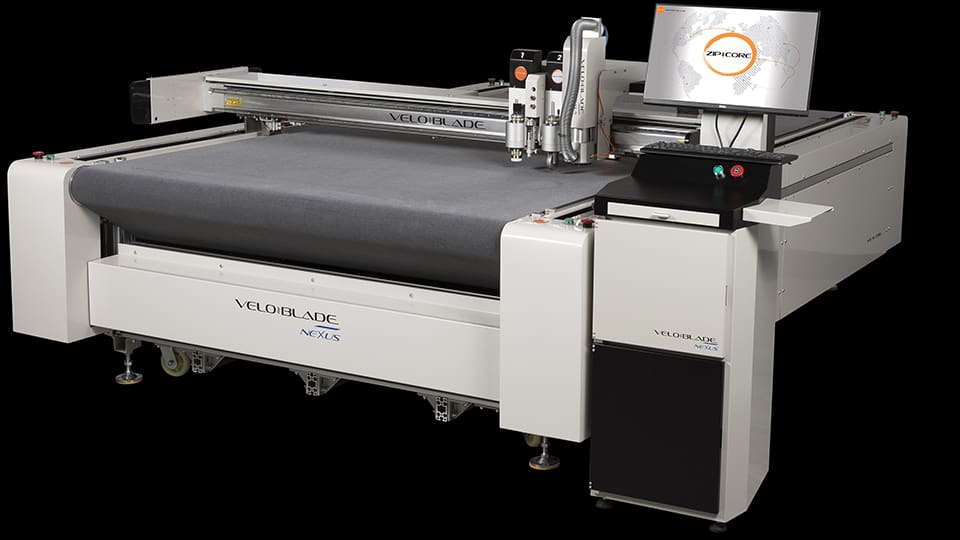
The VeloBlade Nexus, which is also available through approved partner Soyang Hardware, is offered in three core bed sizes: 3,000mm x 1,600mm, 2,500mm x 1,600mm, and 1,800mm x 1,600mm. Running with a digital die cutter multi-tool system, it offers features such as an automatic tool changer and an automatic cut depth setting for easier operation, as well as the ability to cut, crease, and perforate in a single pass.
“Supporting printers effectively means more than just providing equipment,” Evans says, continuing: “Comprehensive training ensures operators can fully leverage the cutter’s capabilities, while tailored solutions address the unique needs and scale of each print shop.
“Ongoing customer support helps resolve issues quickly, and compatibility with existing printing and finishing systems allows for seamless integration into current workflows. By combining quality equipment like the VeloBlade Nexus with training and support, printers can improve efficiency, reduce costs, and expand their service offerings.”
Another name in this market is Zünd. John Kerr, sales and marketing director at Zund UK, says quality flatbed cutters are essential for ensuring precision, reliability, and efficiency in digital cutting workflows.
“In today’s competitive graphics and packaging industries, customers are demanding fast turnaround times and consistently perfect results,” Kerr comments, continuing: “A high-quality Zünd cutter guarantees clean, accurate cuts across a wide variety of materials – from vinyl or cardboard, to aluminium or acrylic — all without compromising productivity.
“Beyond the cutting performance itself, a robust, modular system design ensures long-term value, and future scalability as customers' needs evolve.”
Beyond the cutting performance itself, a robust, modular design ensures long-term value and future scalability as customer needs evolve
Building on this, Kerr picks out some of the other features printers and sign-makers should be looking for in a new, reliable flatbed vinyl cutter, explaining that precision, versatility and automation are hugely important when selecting your machine.
“A truly professional solution should integrate seamlessly with digital printing and finishing workflows, allowing for consistent results and minimal manual intervention,” Kerr explains, adding: “Features like advanced registration, intelligent tool management, and connectivity to workflow software are critical. Zünd cutters combine modular tooling, intuitive software, and scalable automation options to deliver maximum flexibility and productivity – no matter the application or production volume.
“For us, service is so much more than a promise – it’s a way of life – one that permeates everything we do at our company. We have over 40 years of experience in this industry which reflects us being an established brand.”
On this point of working with well-known and respected manufacturers and suppliers, Kerr issues a warning on opting for the “cheaper” choice, saying that this can come back to bite companies in the long run.
“Underinvesting in cutting technology leads to production bottlenecks, wasted material, and inconsistent quality,” he says, continuing: “Cheap or low-precision cutters can create alignment issues, poor edge quality, and downtime due to unreliable hardware or limited automation options. Over time, this not only affects output but also erodes customer confidence.
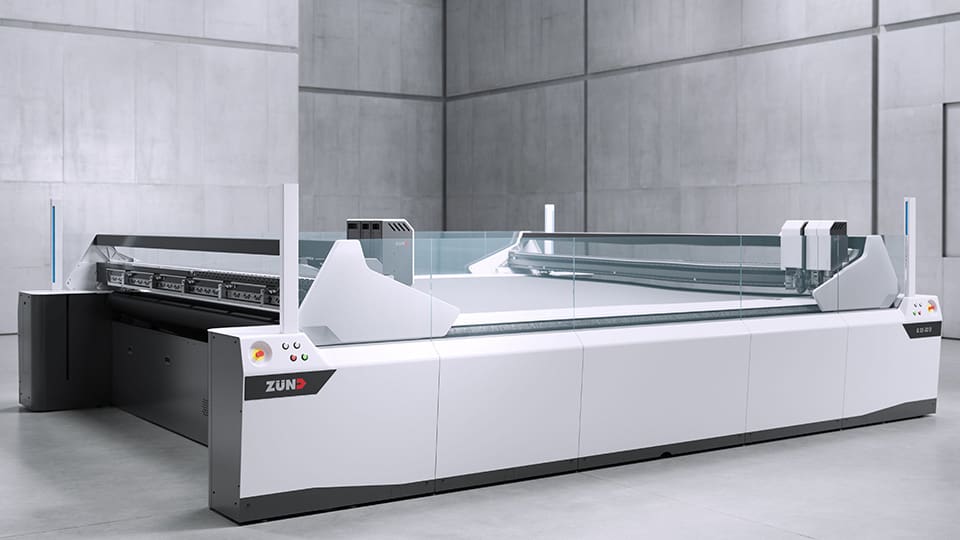
“With a Zünd cutter, users benefit from exceptional reliability and an open, upgradeable platform that protects their investment for many years to come, this avoiding the costly consequences of short-term savings.
“Zünd supports printers through end-to-end digital cutting solutions tailored to their needs. From initial consultation and workflow integration to on-site training and global service, we help customers optimise their entire production process.”
Kerr goes on to say how modular systems from Zünd can be configured for a wide range of materials and applications, ensuring future-proof adaptability. He adds when combined with Zünd’s advanced software ecosystem and automation solutions, such as robotic material handling or digital workflow integration, this enables printers to achieve greater efficiency, accuracy, and profitability.
Kerr adds: “We work closely with our customers to develop individual, bespoke solutions that help them overcome their challenges. This begins with us thoroughly testing every conceivable material our customers send us. This enables us to configure the exact solution that meets their needs.”
Concluding our short but sweet round-up of manufacturers in this market is Hybrid Services, the exclusive distributor for Mimaki in both the UK and Ireland. Mimaki counts the Mimaki CFX Series as its primary offering, with Andrew Edwards, partner sales manager for sign and graphics at Hybrid Services, saying this gives sign-makers the confidence to work quickly and accurately across a wide variety of rigid and flexible media.
“With the option to run multiple tools, intelligent camera systems, and fast cutting speeds, it helps keep production flowing and ensures every graphic comes off the table ready to go,” he says.
“The CFX has been designed to give sign-makers a single platform that can handle everything from creasing and routing to V-cutting and through-cutting thicker boards. With multiple tool heads and up to 30kg of downward pressure, it comfortably deals with a wide range of sign-making substrates.”
Looking at investment in general, Edwards says that in sign-making, as the cutter is often the final stage of production, and plays a crucial role in determining the overall quality of the finished job, choice of equipment is of paramount importance. He explains that no matter how good the print looks, it only takes an imprecise or inconsistent cut to undermine the end result – with the cutting machine having a huge influence on final output.
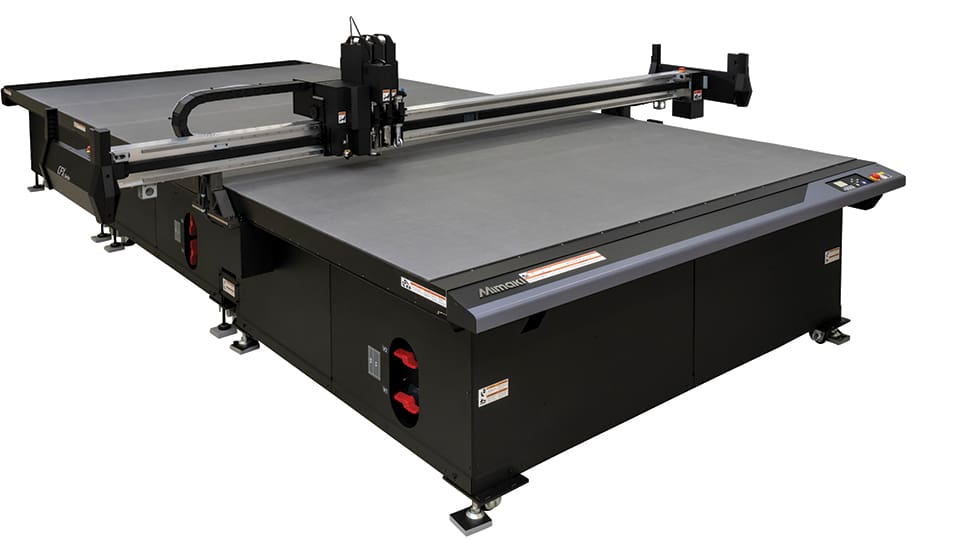
“When investing in a flatbed cutter, versatility, accuracy, and workflow integration should be front of mind,” Edwards says, continuing: “Cutting is one of those areas where the impact of a poor choice quickly shows.
“If a machine cannot handle different substrates, struggles with complex shapes or slows down production, it creates bottlenecks that will affect everything else. You risk wasting material, losing time on reworks, and limiting the types of jobs that you can take on. In a competitive market, that can cost far more in lost opportunity than the initial investment would have.”
In addition to machine choice, Edwards says software is equally important. He notes how the CFX comes with cutting software that integrates with Mimaki’s RasterLink RIP, which he says makes it easy to line up printed graphics, optimise cutting paths, and reduced manual handling.
“That means less time setting up and more time producing work,” Edwards says, adding: “Additionally, software companies including Arden and OptiScout offer powerful, feature-rich workflow solutions tailored to the CFX Series. A cutter that performs well on both the hardware and software side makes a real difference to throughput and finish quality.”
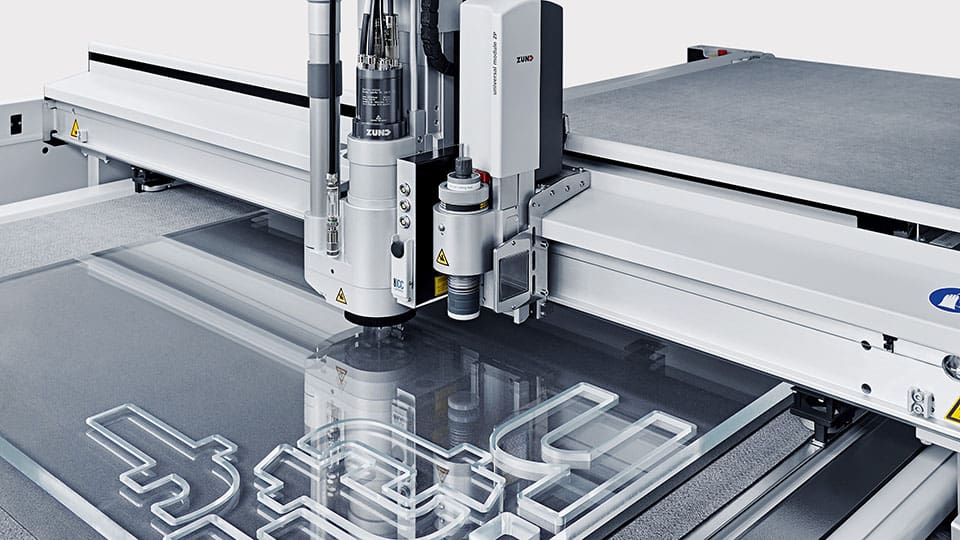
For further support, Hybrid Services offers customers expert advice to ensure their CFX configuration is tailored to their exact applications. The company offer demonstrations, installation, full training, and ongoing technical support, which Edwards says allows sign-makers to hit the ground running.
“Because the range is scalable and tool sets are flexible, we can help businesses grow their capabilities over time without replacing their entire system,” he says, concluding: “That combination of performance, workflow efficiency, and local support gives sign-makers the confidence to take on more work and deliver it at a consistently high standard.”
For those seeking to enhance their cutting capabilities, the good news is there are plenty of solutions available to them. However, the challenge is to identify the machine that best fits in with your own requirements. Consider the type of work you produce, whether you need software for support or if you require additional training to get the most out of your new machine, and this will help guide you to the most effective solution.