As more and more companies realise the need for sustainable and efficient forms of power, David Osgar looks at examples and advice from businesses that have invested in electric and solar technology
David Osgar
March 13, 2025
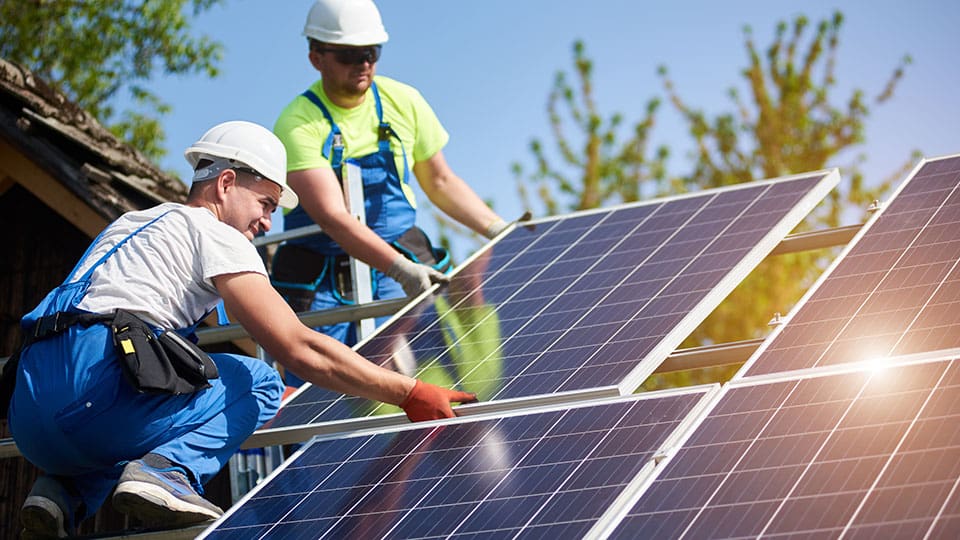
Aura Brand Solutions has invested in solar panels at its Lowestoft manufacturing facility
As global temperatures increase, and countries face more severe weather conditions, the need for businesses and governments to take action regarding sustainability has significantly increased. Local and national governments are working year on year to improve energy dependency levels and usage over the next decade, meaning that many grants and schemes have become available for individuals and businesses to invest in eco-friendly energy.
As more and more businesses feel the need to switch to the likes of solar panels and electric vehicles, we take a look at successful examples of renewable energy adoption and the options available to wide-format printers and signage companies.
A Worthwhile Investment?
When it comes to investing in renewable energy, the cost of investment or the challenges associated with installation may put off many businesses.
But as more and more customers ask for transparency and good environmental ethics from their suppliers, it may be hard to continue with what has been the norm for the past few decades.
Aura Brand Solutions, a EcoVadis Gold accredited provider of signage and branding solutions for the rail, fleet, and architectural industries, is one business that has chosen to invest in renewable energy in various ways.
Last year the company installed a 293kWp solar panel system at its Lowestoft manufacturing facility. In 2024 the system produced 38% of the site’s annual electricity and saved Aura 49,224.55kg of CO2. The company has also installed three electric vehicle charging stations to support its transition to a low-emission vehicle fleet.
Speaking about the investment decision, Nikki Jones, content executive at Aura, says: “The decision to invest in solar technology was driven by our commitment to environmental responsibility and the desire to reduce our carbon footprint. Our goal is to reduce our carbon footprint as much as possible without relying on offsetting as this masks the problem rather than solving it.
“Following a structural survey by qualified engineers, we saw an opportunity to align our operations with our sustainability goals. The impact has been substantial, with significant reductions in electricity costs and contributions to a cleaner energy ecosystem. The project has also enhanced our reputation as a leader in sustainable business practices.”
Many other producers of wide-format print and graphics have invested in solar technology in order to help with net zero targets.
In 2018, trade-only supplier of large-format print, Venture Banners, had a 50kW photovoltaic system comprising of 176 two-metre solar panels fitted on the roof of its premises.
The decision was made in order to align with Venture Banner’s environmental policy to minimise energy and water use within buildings and processes.
Working closely with contractors and navigating the challenges of different weather conditions and roof types can be areas to consider when installing solar panels
Scott Conway, director and co-founder of Venture Banners, says: “It was definitely a worthwhile investment. Although solar power doesn’t provide all of our energy, it does generate over a quarter of our annual electricity usage, so the installation has more than paid for itself in the years since."
Conway adds: “In the summer months we can produce as much as 7000kWh from the solar panels, and according to the system’s web control panel, we’ve offset 268 tonnes of CO2 and metaphorically planted 149 trees in just the past 12 months. We’re reducing our expenses and our carbon footprint at the same time - that’s a win-win in anyone’s book.”
Like any investment, solar energy can be costly and complex to understand, especially when it comes to factors like paying for the system, electricity rates, and solar consumption.
For other sign and print businesses looking to invest in renewable energy, Aura’s advice would be to start with a "thorough feasibility study to understand the potential benefits and challenges,” says Jones, who adds: “Collaborate with experienced contractors who can provide expert guidance and support you throughout the installation process.
“It's also important to consider the long-term financial and environmental benefits, as these investments can lead to significant cost savings and a positive impact on your brand's reputation. Lastly, engage your team and stakeholders in the process to ensure a smooth transition and maximise the benefits of your investment.”
Considerable Factors
With the recent increase in both energy rates and business expenses, especially following the UK government’s Autumn Budget, companies have various aspects to consider when making big changes to their premises and operations.
Anthony Rowell, sales & customer success director, and sustainability lead at Tradeprint, has recently researched renewable energy options for the Scottish-based trade company and has realised the complexities and considerations needed for such big initiatives. “The cost of funding the project requires significant investment, and the business needs to understand the return on the investment which changes dependant on location and aspect of the roof.”
Acknowledging the financial stresses in the UK print and signage industries, Rowell adds: “The British printing industry, like many others, faces significant energy challenges. These range from the high costs associated with energy-intensive processes to the need for reliable and sustainable energy sources to meet our net zero ambitions. Our experience in overcoming these challenges through innovative approaches and collaboration can provide a blueprint for other sectors.”
Speaking about changes required to make investment choices easier for companies, Rowell says: “The government needs to do more to allow choice when choosing energy providers and also needs to ensure there is financial support to help us with the transition to net zero as well as ensuring wider energy security.”
Our goal is to reduce our carbon footprint as much as possible without relying on offsetting as this masks the problem rather than solving it
Potts Print UK, an independently owned producer of lithographic and digital print for packaging, large-format, and direct mail, has also recently invested in a solar PV system.
Speaking about the investment, Beck Owen, deputy director of corporate services at Potts Print, comments: “The carbon savings coupled with the ongoing cost savings and potential revenue from selling energy back to the grid are well worth the investment.
“Environmentally, the system has made a notable impact by reducing scope 2 emissions by a predicted 76tCO2e annually. Financially, the installation has offered significant energy savings, ensuring long-term economic stability.”
In order to help manage the process, Potts Print partnered with CrowdHouse Energy which managed the entire process from initial planning to installation.
When it comes to installation advice, Owen says to build in plenty of time for unexpected elements of the process such as with the DNO (Distributor Network Operator) and your own network operator to undertake the system switch.
Discussing the financial and logistic considerations of exploring renewable energy, Rowell explains: There are different types of funding that can help mitigate these big outlays, such as a Power Purchase Agreement (PPA). A PPA for solar installation is a financial arrangement where a third party installs, owns, and operates solar panels on a property, and the property owner purchases the generated electricity at a fixed rate.”
Rowell adds: “It’s important to do your research as there’s a myriad of solutions alongside PPA’s such as upfront purchase, solar loans, leasing, grants, incentives, and even community solar where participants contribute to a shared solar program and then multiple users invest in a larger, off-site solar project, and benefit from reduced energy costs.”
Reflecting on the lessons Aura realised during its renewable energy investment, Jones says: “One of the key lessons we learned was the importance of working with reliable and experienced suppliers. “Our contractor, Genfit, played a crucial role in the successful installation of our solar panels, even under challenging weather conditions. Their expertise and professionalism ensured that the project was completed on time and to a high standard. Additionally, we found that clear communication and collaboration with all stakeholders, including employees and external partners, was essential for the project's success.”
As evident by the advice and insight shared in this article, it’s clear that investing in a renewable energy option, whether that be solar or other emerging technologies, is a complex but potentially very rewarding process.
Regardless of how much investment different companies have made across the UK, and how quickly grants will happen, importantly, businesses realise the need for change and are gradually learning the crucial steps required to initiate that change. The question now is how you will undertake environmental changes in your business?
With a career spanning many facets of sign-making, Signmode has taken David Mearns back to where it all started with no regrets. Ahead of Mearns’ return to The Sign Show, Sam Roberts speaks to this traditional signwriter
Following the success of the FESPA Next Generation initiative, we hear from Molly Jackson, head of content and marketing at FESPA UK, who gives her perspective on entering the industry, standing out to employers, and embracing the team you work with
In this Company Spotlight, we speak to Andrew Ballington-James, managing director of Just AJD, about the company’s quarter-century history and how it maximises its output with a small but experienced core team
Watch our latest video of the week
SignLink gives you the latest video coverage of companies, people, and events from within the signage, graphics, and wide-format print industries.