The Power of Partnerships in Sign-Making
Working with other businesses can open doors to new markets, services, and expertise. Here, SignLink examines how building the right partnerships can strengthen day-to-day operations and long-term success.

One of the most historic and loved types of sign-making, how are manufacturers stretching the boundaries of the tried and trusted technologies of the etching and engraving market?

If ever there is a discussion about legacy in signage, etching and engraving must be regarded as techniques that helped shape the industry that we know and love today. Techniques that stretch back thousands of years, both are still very much commonplace in the modern market and remain as popular as ever among sign-makers and customers alike.
What perhaps makes etching and engraving so intriguing is the constant development of new and exciting technologies in this area. Manufacturers and suppliers continue to bring to market all kinds of new machines that allow users to achieve even higher quality and accuracy in their work.
Whether you are providing specialist, niche work for high end brands and retailers, or a large quantity of pieces for a chain of restaurants or shops, work is available to those sign-makers that have the equipment to produce these applications. With this very much in mind, SignLink speaks with some of the specialist companies in this sector to find out more about their latest launches and the core benefits these offer to sign-makers.
First up, Trotec Laser has a range of high-tech solutions available to the market. Siân Ferry, marketing director for Trotec Laser UK and Ireland, says there is still a need for clear and hard-wearing engraving for interior signs and labelling in almost every business or public space.
“Etching and engraving is ever-present in wide reaching industries, with sign-making being one of the longest running applications for the process,” Ferry says, adding: “There is still a need for clear and hard-wearing engraving for the purpose of interior signs and labelling in almost every business or public space.
“As is the way with every economy, some industries will boom while others ebb but there is always a need for engraving somewhere. In our experience, for many applications the monochromatic result of engraving is perceived as being special and a more desirable effect than print. For example, it works very well for signage and labelling exhibits, historic sites, and on scientific or industrial items.
“Generally, etching and engraving work is more common on smaller products such as interior signage, door signs, and house names and numbers, than on larger sign applications. Some businesses find that they are hindered by slow entry-level engraving machinery as it can make it difficult to provide this service to customers at an attractive price.
“However, with professional-grade laser technology, it’s possible to produce highly detailed and quality engraving results with very quick turnarounds. Those businesses who explore the possibilities of the technology available to them can find engraving to be a lucrative income stream.”
Etching and engraving is ever-present in wide reaching industries, with sign-making being one of the longest running applications for the process
Ferry goes on to say the market for engraving continues to grow annually, as shown by the annual increase in engravable material sales. Laserable laminates, such as TroLase, can be laser cut to make complex and interesting shaped sign blanks, which can then also be engraved using the same laser system.
The demand for highly personalised signage, Ferry says, is also strong, with businesses looking to stand out from the crowd. She says the ability to offer laser engraving alongside print and CNC is an advantage for signage companies to pick up bespoke work which always commands a higher price tag.
“The lasers can offer unique advantage points that simply aren’t possible using a router,” Ferry says, adding: “For example, very small and complex shapes such as millimetres-tall text in thick acrylic can be cut with ease on a laser to produce 3D forms.
“We are also seeing a trend towards the use of sustainable and recyclable materials such as wood and bamboo. These materials are increasing in popularity for smaller signs and displays for private events or small independent shop point of sale. Since they can be both cut and engraved with a laser, these products can be made very efficiently with good profit margin.”
So, what’s the latest from Trotec? Ferry says the company is constantly developing its laser engraving technology and refined its systems to ensure high-speed processing without any compromise on quality, all while keeping them simple to operate and maintain.
In terms of recent developments, these have been centred around making the operator’s workflow more streamlined by introducing the new Ruby software, which integrates the full workflow and means only one software needs to be learnt for many applications. Trotec has also added a new lid camera which saves time and guesswork when positioning awkward shapes onto the laser bed.
Looking at materials, Trotec offers a laser-friendly metallic exterior-grade laminate, which Ferry says is an excellent cost-effective alternative to metals that will serve users reliably.
“It is lightweight and doesn’t need any additional solutions of post-processing after being laser engraved,” Ferry says, adding: “Given the increase in the cost of metals, we have seen many of our customers switch to TroLase Metallic with success.”
Making our way to the front line of this intriguing market and you will discover Impact Sign Solutions, a sign-maker that counts engraving among its range of services. Andy Borrow, managing director of the Aylesbury-based business, says demand for the type of work is steady, saying it is a business that takes a long time to build, but if done so correctly, it can pay dividends.
Offering advice to those looking to make their own impact (no pun intended) in the wider market, Borrow says there are certain types of work and areas that sign-makers can target in order to capture profitable jobs.
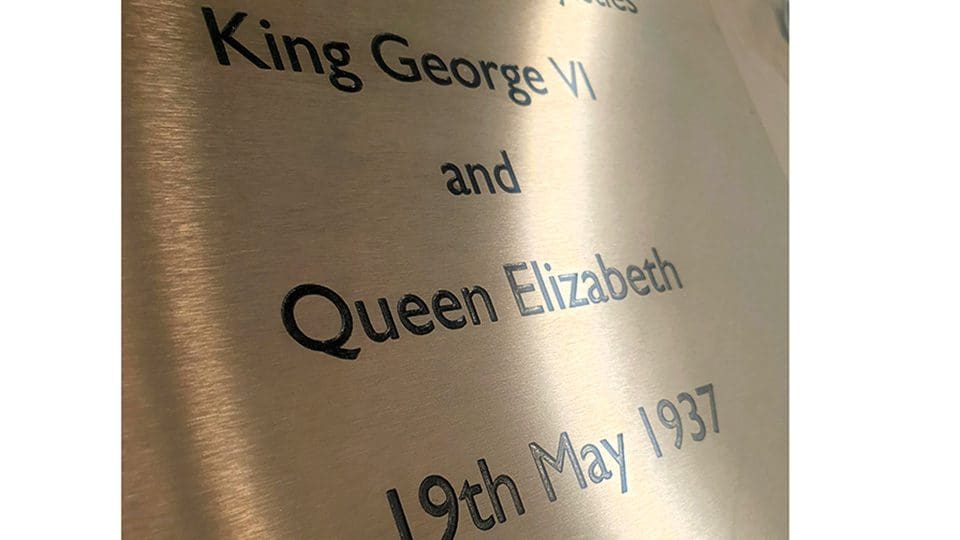
“Our engraving business breaks down to three different markets: industrial, prestigious, and awards,” Borrow explains, adding: “The stalwart of our engraving business is the not-so-sexy standard nameplates, data tags, CE badges, and functional labels.
“It is nice, however, to make chemically-etched prestigious brass and stainless steel plaques, as well as some technical, accuracy crucial control panels.”
Borrow goes on to say that in order to be niche and get your hands on certain types of work, then you need to invest in the right sort of kit, otherwise you simply will not be able to offer it as a service to your customers.
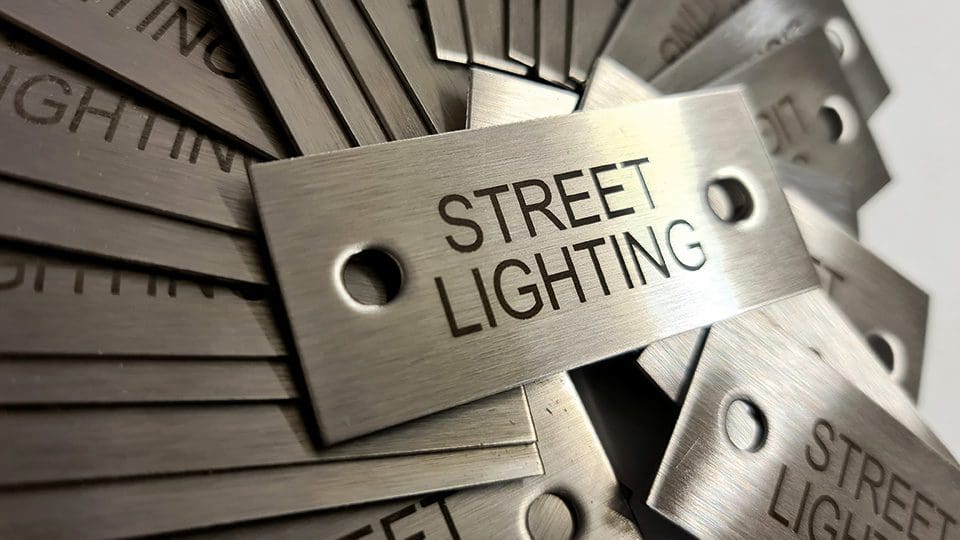
“For example, if you want to engrave stainless steel, you first need to cut it,” Borrow says, continuing: “For this, you will need a three-phase hydraulic guillotine, and a hydraulic press. Ideally you would need fibre and CO2 lasers, plus a good old-fashioned rotary, mechanical machine and a chemical etching plant.
“You can even add screen printing for reverse printed and cut acrylic panels. Then there is the ‘craftsmanship’ element to the process, machines are good, but they will only do what you tell them to! Staff training is paramount.”
Looking elsewhere in the market and Thinklaser specialises in industrial laser cutting, laser engraving, and 3D printing machines. Managing director Chris Rushworth says demand for engraving work is considerable and if sign-makers can get it right, they can look forward to a steady supply of profitable work.
“With the consumer demanding higher quality finishes than ever before, and with the ability to make more and more products specifically identifiable, the materials and products that we are seeing enquiries for is ever growing,” Rushworth says.
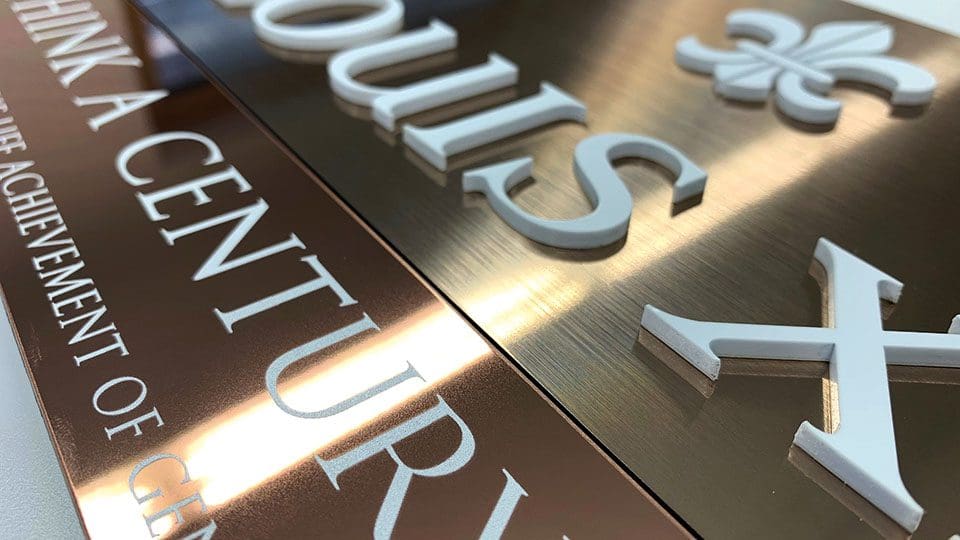
“The engineering market is always constant. Any parts that need to have an identifying mark or branding and be able to withstand heavy wear are ideal for laser marking more so than printing which can wear away. Personalisation with either names or branding is also popular as one-off gifts or as items for events.”
With this, Rushworth hints at some of the more niche markets that sign-makers can look at in an effort to access more work that previously may have gone under their radar. Namely, he picks out the events industry as a good sector for niche work, explaining that following the pandemic, Thinklaser has witnessed something of a resurgence in high volume demand, which it only expects to continue to grow and the market improves and returns to more normal levels of activity.
“With signs for reserved seating or table names for things like weddings where a more interesting sign is needed rather than a printout, this is where engraving comes in,” Rushworth says, adding: “We have undertaken projects for items for submarines, the space industry and aerospace as well as the more down to earth products such as bottles and medals.”
Taking a look at the solutions and products available from Thinklaser, Rushworth explains that the company sells three different types of premade laser systems depending on the user’s requirements.
“We have the light blade and Flux lasers which are out of the box ready,” Rushworth says, continuing: “These are flatbed lasers that can cut and engrave most non-metallic materials and are surprisingly affordable. This is most popular for industry and schools. We also design and build bespoke systems.
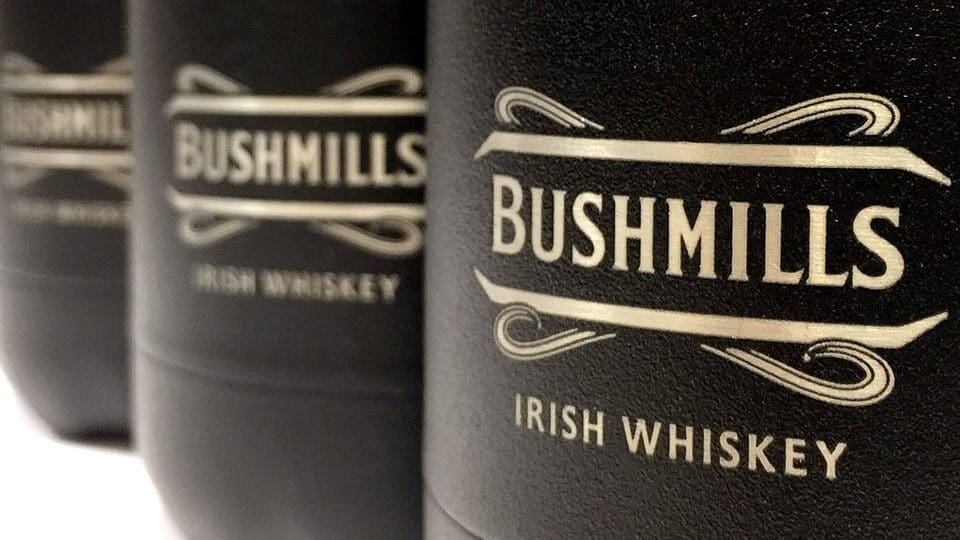
“If you can come up with an idea, we can make it. From cutting the shell of an egg to electric battery applications, we have technology that can support users with a wide range of jobs and projects, and our expert team is on hand to guide them to the best solution for their requirements.
With development clearly alive and well in the etching and engraving sector, there is plenty to get excited about when it comes to new technology. Forward-thinking manufacturers and suppliers have a lot to offer when it comes to new kit and the many different features that will help sign-makers and other companies in the sign sector access profitable new work and markets.
Of course, any sort of investment should be planned out properly and sign-makers need to ensure that there is an adequate level of demand or interest among their customers. To gauge what your clients are thinking, perhaps consider pitching ideas as to how engraved or etched products would benefit them and how you as their trusted partner can support with this process.