Drytac materials supercharge installation times for Signs Express
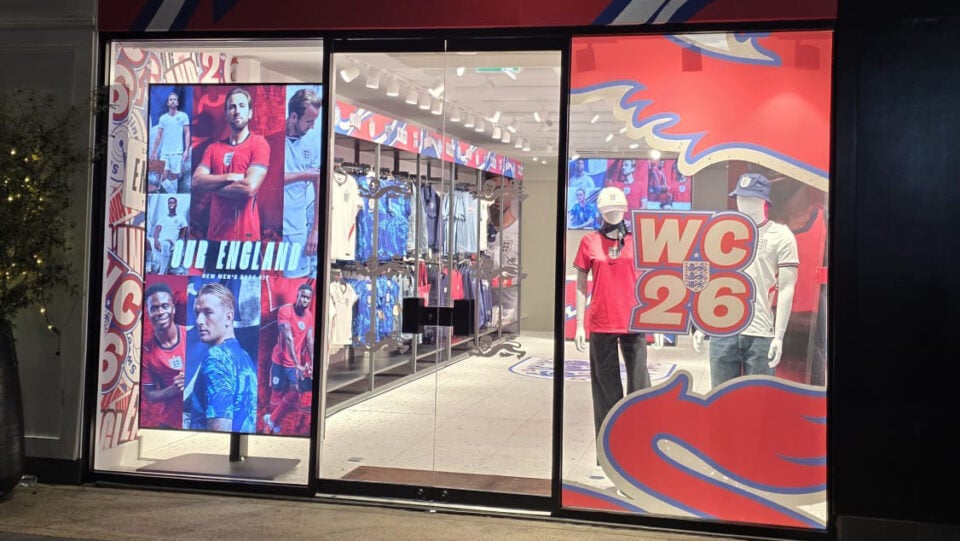
Signs Express utilised a range of rapid-turnaround Drytac media to deliver a high-impact pop-up experience for the England World Cup Fanatics Shop on London's Carnaby Street


Visitors to the recent Google Cloud AI Live Milano 2026 in Italy were invited to design their own T-shirts, with these then transformed into custom T-shirts with the use of Mimaki’s DTF print technology

Mimaki recently showcased the potential of combining artificial intelligence (AI) with digital print during Google Cloud AI Live Milano 2026, where attendees were able to create AI-generated artwork and have it transformed into personalised T-shirts in real time.
During a live personalisation experience, participants were invited to create unique Gemini AI-generated visuals. These were then transformed into custom T-shirts, with the help of a Mimaki TxF300-75 DTF printer.
According to Mimaki, this demonstrated how AI-driven creativity and professional digital print can work together to deliver immediate, personalised and high-quality experiences across a range of markets.
“The activation showed how artificial intelligence and on-demand textile decoration can work together,” Mimaki says, adding: “Each design started as a digital concept generated through AI, then Mimaki’s DTF technology enabled that concept to be transferred onto a T-shirt, creating a personalised garment in real time.
“For visitors, it was an engaging and tangible way to experience AI. For brands, events and creative businesses, it highlighted a much broader opportunity: turning digital interaction into physical products, quickly and at scale.”
Mimaki also notes how the Google Cloud AI Live Milano activation points to a wider shift in the role of print. It says how AI makes it possible to generate unique content instantly, with digital print becoming the link between the virtual design process and real-world application.
“It gives form to ideas that would otherwise remain on screen,” the manufacturer says, adding: “For Mimaki, this is where the value of DTF technology becomes especially clear: enabling businesses to respond to new expectations around personalisation, speed and experience without compromising on print results.
“From live events to retail activations and from limited-edition merchandise to custom t-shirts, the combination of AI and digital print opens new possibilities for brands looking to create more engaging and memorable customer interactions.”