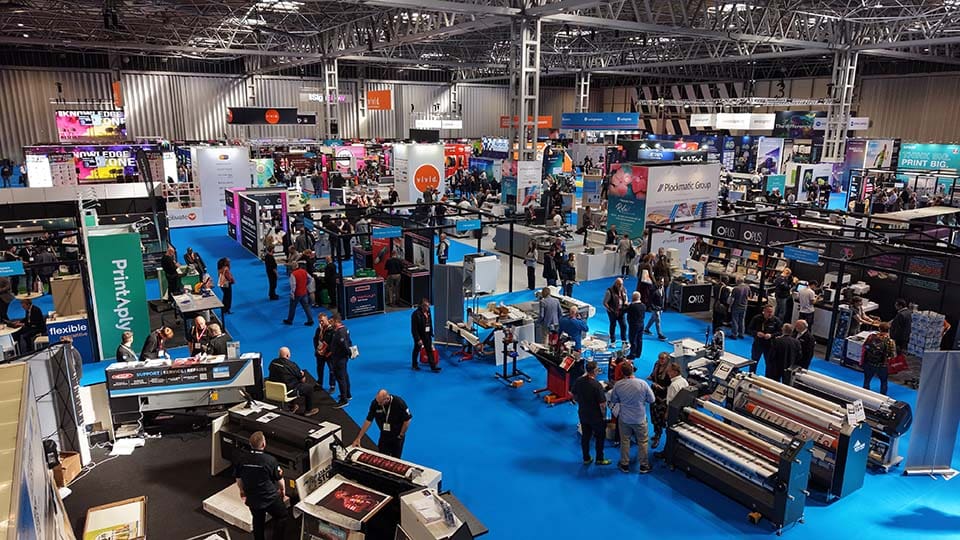
The Sign Show: Ready for Round Two?
Following a successful first outing in 2025, The Sign Show returns this year with more exhibitors, innovation, and opportunities for visitors to explore the latest developments shaping the UK sign-making sector

In a market squeezed by rising costs and tighter timelines, trade partnerships are becoming a strategic tool for protecting profit and delivering quality at scale. Rob Fletcher finds out more

The pressure on sign companies to deliver faster turnaround times, broader product ranges, and sharper pricing has never been greater. As expanding in-house capabilities in order to meet these demands may not be practical or financially viable, instead, a growing number of businesses are turning to trade partners to strengthen their offering without taking on additional risk.
Trade signage specialists operate behind the scenes, manufacturing every manner of application from illuminated letters and flex face signs to architectural features and complex fabrications that many sign companies simply do not have the space, equipment, or expertise to produce themselves. By working collaboratively, sign companies can say yes to projects that might otherwise be out of reach, confident in the knowledge that production quality and deadlines will be maintained.
But the benefits of such partnerships extend far beyond overflow capacity; from protecting margins and smoothing workflow to accessing specialist skills and investing in new technologies, trade partnerships are increasingly being viewed not as a fallback option, but as a strategic advantage. In this feature, SignLink speaks to several trade sign providers to understand why collaboration is becoming central to modern sign-making and how the right partnership can help businesses grow sustainably.
First up, Ben Gregory, group director and managing director of Trade Signs UK, explains that working with a specialist sign trade partner is not about “outsourcing” but instead extending what you can offer your customers without stretching your team, equipment, or turnaround times.
“The biggest benefit is capacity on demand,” he says, adding: “Even well-run sign shops hit pinch points: peak weeks, tight deadlines, staff holidays, or jobs that need a specific process you don’t run every day. A reliable trade partner gives you a safety net; you can say ‘yes’ more often, without compromising quality.
A reliable trade partner gives you a safety net; you can say ‘yes’ more often, without compromising quality
“The second benefit is specialist capability. Whether it’s CNC routing, large-format print, dibond/ACM fabrication, acrylic work, or finishing options like drilling and special fixings, a trade partner lets you offer a broader product range without heavy investment in every machine and workflow.
“Thirdly, consistency and confidence. A good trade partner has robust quality control, repeatable processes, and trade-friendly packaging, so your customer experience stays smooth and predictable. Communication matters too; fast responses, clear lead times, and proactive problem-solving when a job is time sensitive.”
Gregory goes on to say that the majority of customers have little interest in whether a sign has been produced in-house or elsewhere, saying their attention is more likely to be on speed, quality, and reliability. As such, trade partnering helps protect reputation while expanding a company’s offering.
He adds such partnerships can keep sign-makers stay commercially sharp, and that rather than tying up cash in equipment that is only used occasionally, sign companies can keep overheads lean and focus on what drives growth: sales, design, installation, and customer relationships.
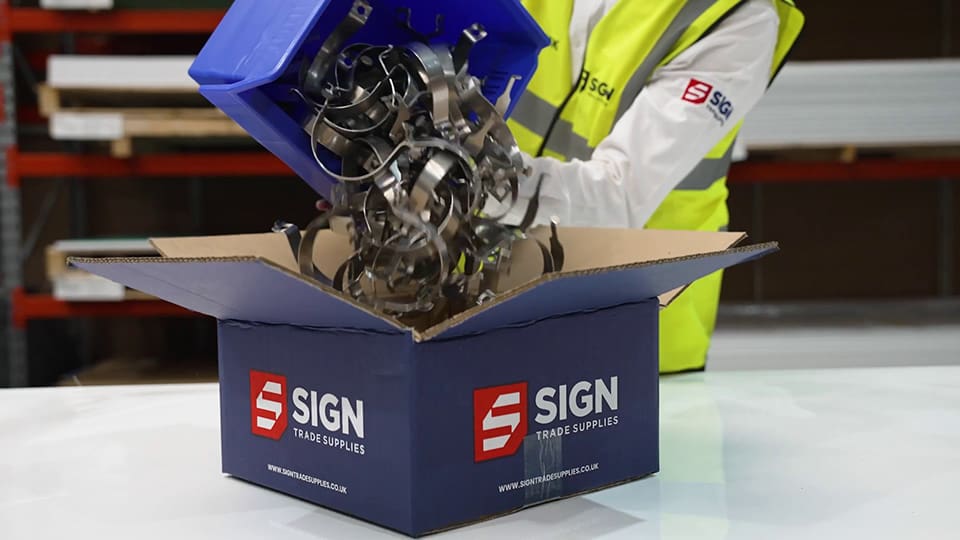
“For many, it’s the difference between turning work away and scaling confidently,” he says, adding: “Our printed vinyl range by UK-based Drytac, for instance, includes over 20 different materials for 100’s of applications. It means our trade customers can offer a wider variety solutions without needing to keep all of that stock in-house.
“There’s a strategic angle too. A strong trade partner is constantly refining processes, materials, and finishing options. That means you can offer more choice, including premium looks, and alternative substrates, without having to do all the testing and R&D yourself.”
At Trade Signs UK, its most popular work is trade signage that needs to look premium, last well, and be delivered fast. Gregory says dibond/ACM signage is a staple, including brushed aluminium finishes paired with stand-off wall fixings for a clean, high-end look ideal for use in offices, hospitality, and commercial spaces.
The company also produces a high volume of Foamex direct print sign boards for point-of-sale (POS) and internal marketing, alongside CNC-routed panels, laser cut acrylic letters/logos, and a wide range of large-format vinyl print for display and POS use.
“Where we also add real value is helping our trade customers hit deadlines with confidence; whether that’s a one-off urgent job or repeat work that needs to match perfectly every time,” Gregory says, adding: “The best trade partnerships feel simple: clear lead times, consistent quality, and people who pick up the phone. When that’s in place, trade partnering stops being a backup plan and becomes a genuine growth lever for sign-makers and printers.”
Next, Garrick Dartnell, marketing lead at Sign Trade Supplies, says that working with trade partners allows sign companies to have maximum confidence in their quoting, production, and supply.
“Building strong relationships with suppliers and partners means you know you can lean on them to help you with your project deliverables,” Dartnell says.
On this, Dartnell goes on to say that, in most cases, the sign companies driving the most growth do not just focus on doing everything in-house, but instead they look to their niche, customers service, and project processes. This, he explains, often means outsourcing a lot of the run-of-the-mill and labour-intensive tasks so their team can allocate maximum effort into producing something their clients love.
“Sign-makers and printers should consider this route as it can allow them to increase their output capacity and scale their business, all without a huge investment in new machinery or an increase in workforce. The key here is always with the end customer in mind, working with the right suppliers can mean having the confidence to tackle larger projects and contracts, without worrying about having the in-house production capacity to deliver.”
Factoid: There are more than 4,300 signage companies registered in the UK across all business sizes
As to how Sign Trade Supplies can help, the trade specialist works with all sizes of sign and display companies, with its core offering being a flexible supply of sign materials
“We pride ourselves on being solution driven, offering no minimum order quantities on our core range, and custom fabrication options that start at just custom-cut aluminium profiles, to full printed and assembled sign systems. This flexibility allows our customers to choose how much they want to produce in-house and how much they want to utilise our workshop capabilities.”
Elsewhere, Lisa Harvey, sign sales manager at Nova Aluminium Systems, says for sign-makers and installers, working with a trade supplier is not a convenience but a strategic advantage in a competitive market where efficiency, consistency, and reliability are more important than ever.
“One of the main benefits of working with a dedicated trade supplier is access to specialist knowledge and product expertise,” she says, adding: “At Nova, we focus on developing and refining our signage systems. This means our customers benefit from proven solutions, technical guidance, and industry insight that help streamline projects.
“Operational efficiency is another key advantage. By outsourcing manufacturing to a trade supplier, customers can free up internal resources and concentrate on their core specialisms. Faster turnaround times and dependable supply chains enable quicker responses to demand.
“Working with a trade supplier also allows sign-makers to scale their operations without expanding in-house production. Rather than investing heavily in equipment, stock, and additional labour, businesses can rely on specialist fabrication support. This flexibility makes it easier to take on larger or more complex projects with confidence.”
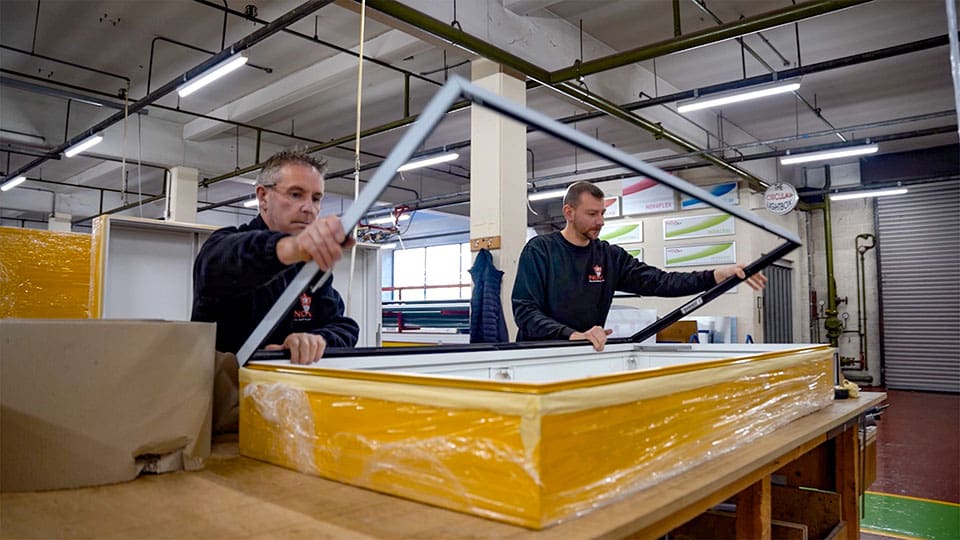
Nova Aluminium offers a range of systems, all manufactured and powder coated in-house and, where required, supplied with fitted LEDs and printed skins for flex systems. Acrylic-faced products, common in high street applications, are supplied with blank opal panels, fully prepared with hanging strips and rebated joins, ready for graphics application and installation.
Meanwhile, NovaTrim frames, a widely used framing system for acrylic or composite panels, are cut and mitred to size with corner angles pre-installed, eliminating an extra on-site fabrication step. In addition, overhead lighting systems are supplied with drivers fitted internally, ensuring they are installation-ready and minimising preparation time before heading to site.
“Internal and external flex systems remain among the most popular signage solutions, with many customers seeking advice from the early stages of a project,” Harvey comments, continuing: “With extensive in-house expertise and a large product portfolio, guidance can be provided to ensure the most suitable system is specified for each application.
“Our internal fabric system starts at 18mm deep and uses screw free corner cleats to enable a neat appearance. Our newly innovated and upgraded NovaTex has been designed with the installer in mind, with all internal supports removed and a full perimeter fix, it not only reduces the weight but halves the fabrication time, meaning costs to customers is significantly reduced.”
Also weighing in is Carl Hodgson, chairman of SignFab, who says rather than having to invest so much effort and cost in their own manufacturing facility, sign companies can get what they want through a reliable trade partner
“Since our inception in 2001 we have offered a very broad trade supply service; we want our clients to have a one-stop-shop and team who can support their signage needs,” Hodgson says, continuing: “We can support small, medium, and large sign companies on all key areas of sign manufacturing.
“All clients get a dedicated account manager to give that personal service. The production team are in regular contact with all customers, making sure they have agreed production slots and delivery dates, while our customers and their end clients have the reassurance of our ongoing three-year warranty.”
SignFab works across two factories, each of which is kitted out with a range of machinery. Its arsenal includes three laser cutting machines, three routers, 4,000mm-capacity brake presses and guillotines. In addition, Hodgson says the company’s new eight-stage powder and paint line gives high-quality finishing, with over 700 stock colours and a wet paint mixing system.
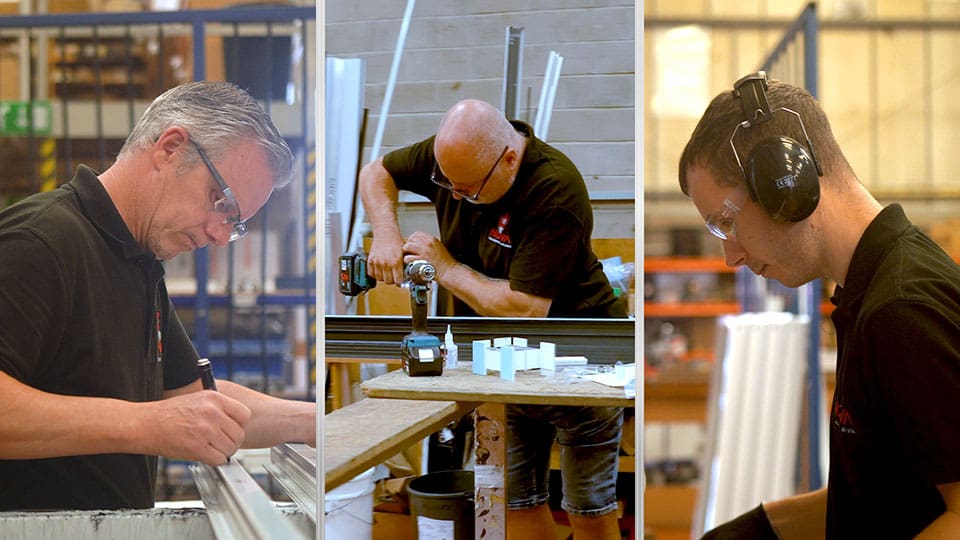
“We manufacture our own flex face units and are a partner of SignComp Europe,” explains Hodgson, adding: “We weld and coat all units for extra assurance of integrity and durability.
“SignFab is also certified and meets all ISO-9001 and ISO-14001 criteria, meaning that our customers have the assurance of our quality control procedures. In addition, we are working on waste management and recycling, and our sustainability credibility is at the highest level, with none of our waste going to landfill.”
Clearly, trade partnerships go much further than simply outsourcing certain work to a third-party; they allow you to significantly expand your service offering without having to plough thousands of pounds into new equipment. Linking up with a trusted and reliable trade sign company can help you access profitable work and take on new customers across a range of exciting markets.