The Power of Trade Signage
In a market squeezed by rising costs and tighter timelines, trade partnerships are becoming a strategic tool for protecting profit and delivering quality at scale. Rob Fletcher finds out more

We delve into the status of digital signage in 2026, speaking to both manufacturers and sign-makers to understand how digital solutions are made and utilised

For decades, sign-makers have relied on the allure of vinyl, metal, fabric, and print to capture attention. However, the rise of digital screens and DOOH displays has introduced a glowing new dimension to the possibilities of modern sign-making. As we move into 2026, the question is no longer just about whether pixels have a place alongside print, but how deeply they have embedded themselves into the DNA of the modern sign shop.
This feature explores the breadth of digital solutions available to the market, delving into perspectives both from the manufacturers of the solutions and the sign-makers utilising them in visual displays.
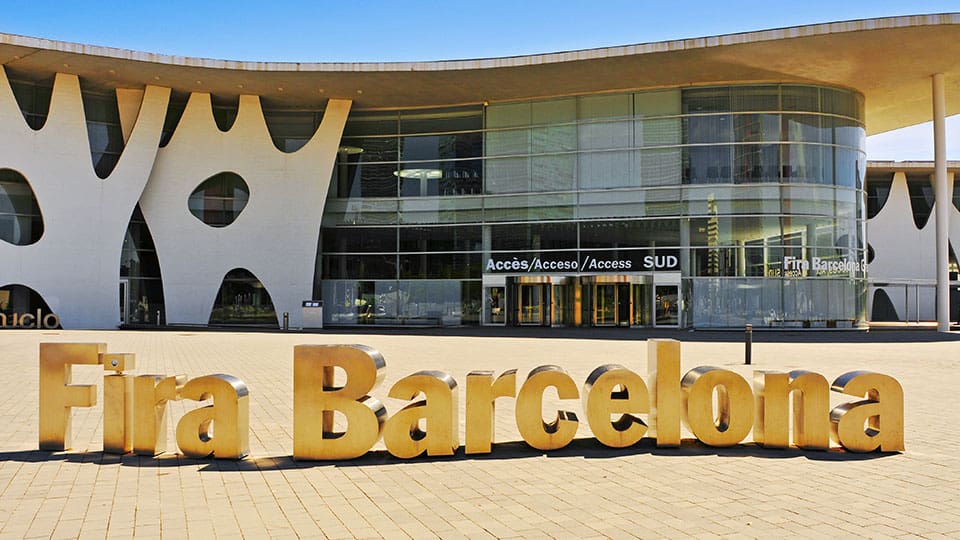
One way to get an understanding of modern digital signage is to look at the latest solutions showcased at ISE 2026, the world's largest trade show for the AV and systems integration industries which recently took place in Barcelona. The event broke all previous attendance records, hosting 92,170 unique attendees and 1,751 exhibitors across 101,000sq m of floor space, with the exhibition including a number of debuts and world-firsts.
Sony used this year’s ISE to showcase a range of new products and refreshed product line-ups, including a new wide-format digital signage portfolio which includes 16 new models across the flagship BZ40P, enhanced BZ35P, and core BZ30P tiers.
These 4K HDR displays range from 43” to 85” and feature Sony’s ‘Deep Black Non-Glare’ technology designed to provide richer blacks and dark colours in all brightness environments. Other features of the portfolio include higher brightness and up to 31% lower power consumption in comparison to previous models, as well as increased use of recycled plastic material.
Sony also demonstrated a ‘glasses free’ 3D solution made in collaboration with Ameria, which is designed for applications including signage and display. The technology, first announced in January, allows users to interact with high-quality 3D visuals using gestures instead of touching a screen. Speaking at the time of the announcement of the solution, Rik Willemse, head of professional displays and solutions at Sony Europe, said: “At a time when brands are looking for richer customer experiences and greater operational efficiency, this collaboration delivers a truly unique proposition. It opens the door to real-world applications that previously required complex, bespoke setups.”
Nsign, a cloud-based digital signage platform designed to manage and automate content, revealed a significant evolution of its digital signage vision at ISE 2026. The software company used the event to introduce an AI-powered orchestration layer designed to support large-scale deployments, retail media strategies, and enterprise-grade environments.
The new orchestration feature offers a central layer for connecting LED displays, projectors, and sensors, with automated reporting and contextual intelligence capabilities. The tool is designed to use AI to analyse live data – such as who is in front of a screen or which product has been touched – to automatically change content without human intervention.
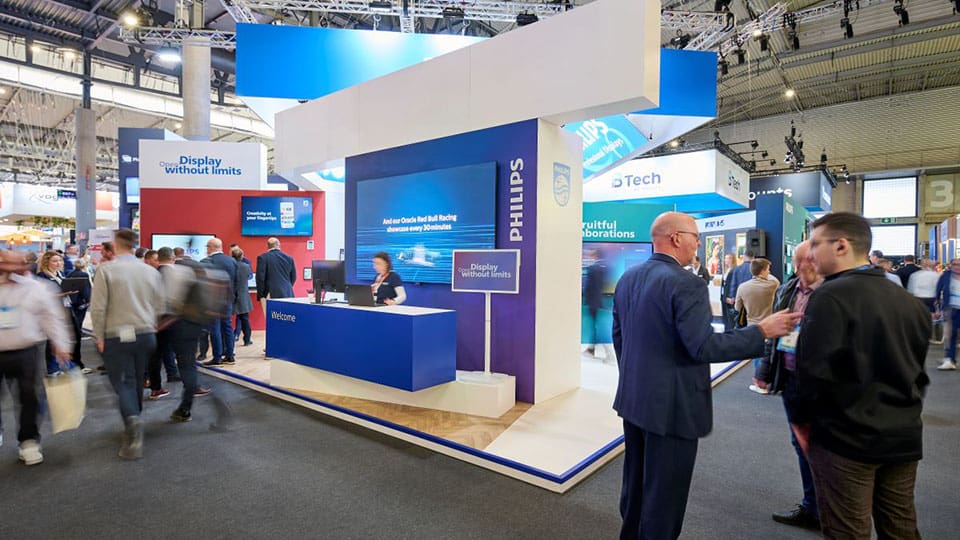
Philips Professional Displays (PPDS) also used ISE to launch a host of new digital and signage solutions. This included the debut of the Philips Signage 5000 Series D-Line, the first in the company’s Android SoC range to feature a six-trillion-operations-per-second (6 TOPS) neural processing unit (NPU). The display, which is marketed as the first AI-ready display within the Philips professional range, is designed to allow AI tasks to run natively without slowing down the primary CPU or GPU.
Of course, this is only a small snapshot of the thousands of solutions at ISE 2026, but they are indicative of recent trends within digital signage which can suggest where the market may be shifting in the near future.
Factoid: According to Grand View Research, the retail sector registered the maximum market share of 21% in the global digital signage market in 2024
The range of new solutions at ISE suggest that alongside a continued focus on image quality and brightness, the digital signage industry is moving further towards providing intelligent communication solutions, many of which utilise AI-powered orchestration to analyse data and trigger contextual content. This push for interactivity is in response to market desire, with modern digital solutions expected to be smart, integrated, and data-led. The industry is therefore focusing on releasing more interactive, high-ROI technologies that measure customer engagement in real-time.
Alongside this, the trends in new solutions indicate a shift towards sustainable hardware with features such as energy-efficient displays and low-power computing technology. This market shift is not only being pushed by rising energy prices, but also compliance with new regulations such as the EU Digital Product Passport, as well as consumer and brand pressure from those prioritising environmental sustainability.
Simply put, a modern digital signage client wants displays that are smart, easy to manage, look fantastic, and consume as little power as possible – and it seems that manufacturers are responding to this desire across the board.
Another company that made a splash at ISE 2026 was Panasonic, which offered a range of its latest digital solutions including the introduction of the TL-55LV12A COB dvLED display. The latest TL model is a HDMI-ready, VESA-mountable solution that works without a controller and is designed to drop into existing LCD video walls with ease. The company also manufactures projectors with brightness levels of up to 50,000 lumens, allowing them to be used in locations with high ambient light.
Panasonic’s digital signage solutions have been utilised in an array of large-scale projects in recent years. Vanessa Lovric, European product marketing manager for Panasonic Visual System Solutions, highlights a project supporting a large German transportation client with implementing digital signage across several train stations.
Describing the project in more detail, Lovric says: “The goal was to entertain and inform passengers while they waited, using interactive quiz content and real-time information displays through a mix of projectors and digital screens.
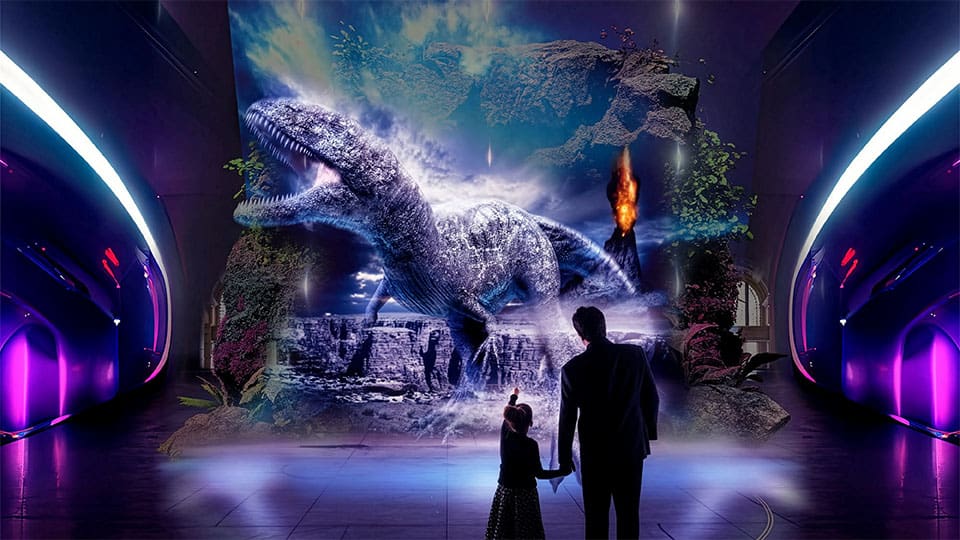
“The main challenge was the environment: many projectors were installed inside train tunnels where dust levels are high, and foot traffic is constant. Reliability and durability were therefore critical.”
For the project, Panasonic provided 1-chip DLP projectors designed for demanding conditions, boasting strong brightness levels and long operational life. These systems were combined with digital displays connected to the client’s content management software (CMS), allowing them to update quizzes, announcements, and information centrally.
Lovric highlights the importance of collaboration between signage installers, AV experts, and manufacturers, who all need to be working in tandem for digital signage projects to be successful. She explains: “Modern digital signage projects often involve more than just installing a screen – they require proper integration into IT systems, power planning, structural considerations, and software configuration.”
With LED screen installations, Lovric points out that precise alignment and calibration are essential to ensure uniform brightness and colour quality, with mistakes during installation leading to performance issues or higher maintenance costs later. She adds: “Experienced AV specialists help ensure reliability, long-term stability, and optimal performance, which ultimately reduces risk and total cost of ownership.”
Experienced AV specialists help ensure reliability, long-term stability, and optimal performance
Companies such as Panasonic have particularly felt the impact of rising energy costs and stronger corporate social responsibility (CSR) requirements and their influence on purchasing decisions. As Lovric describes: “Customers are paying much closer attention to power consumption, the use of sustainable materials, and the overall total cost of ownership across the product lifecycle.”
However, she believes that rather than reducing demand, this change has encouraged manufacturers to take concrete steps toward more responsible product design. She states: “For example, we are working on incorporating recycled plastics into our projector chassis, improving power management systems, and reducing energy consumption while still maintaining the brightness and performance levels our customers expect.
“We are also focusing on smarter brightness control, more efficient LED technologies, and longer product lifetimes to reduce waste and operating costs. It’s an ongoing process, but we see sustainability not as a mere trend or buzzword, but as a central guiding principle for all of our future product development.”
However, rather than simply focus on the viewpoints of the manufacturers of digital solutions, it is important to get an insight from the actual UK signage market, to understand if the growth that companies like Panasonic suggest is reflected on the ground and for your average UK sign-maker.
One company that can offer a broad ‘birds-eye view’ of the trends and preferences of the UK signage industry is FASTSIGNS, which currently has a UK network including 23 independently owned sign-making centres in locations as diverse as Hull, Bristol, and Sheffield.
When speaking to John Davies, managing director of FASTSIGNS UK, about the prevalence and status of digital offerings in modern signage, he makes it clear that digital signage is an integrated part of FASTSIGNS’ regular output, not simply something its centres keep in reserve for special occasions.
Describing this focus, Davies says: “For us, digital has evolved into a core component of how we approach every project. Today’s clients aren’t simply looking for a sign – they’re looking for a complete communication solution. By embedding digital signage into our standard offering, we’re able to consult on hybrid schemes from the very first site survey.”
According to Davies, a typical shopfront project for a FASTISGNS centre will often include a discussion around adding an ultra-high-brightness window screen to complement the physical fascia, rather than treating digital as a bolt-on extra.
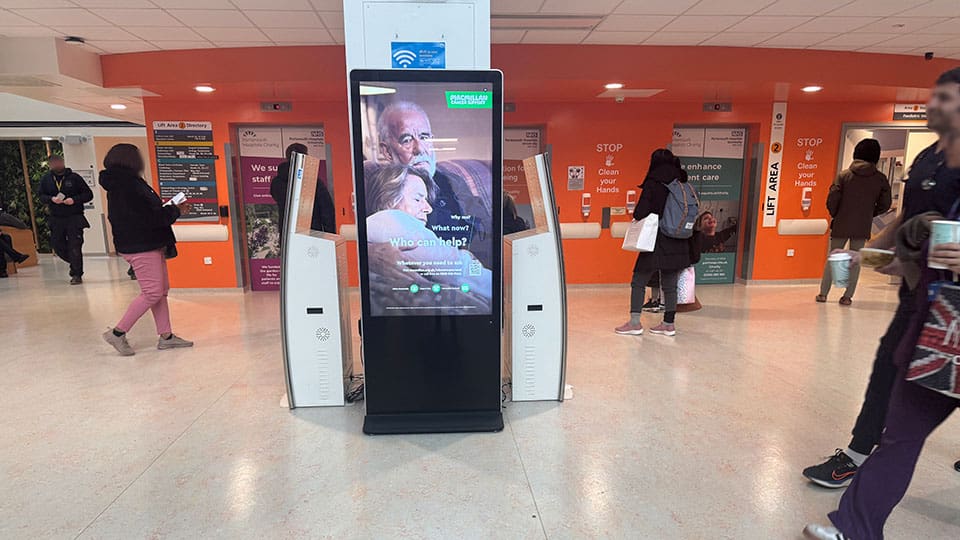
He gives the recent example of a digital signage installation completed by FASTSIGNS Tunbridge Wells as part of partnership with UK digital advertising company, Pulse Outdoor Media. Pulse works with NHS hospitals nationwide to install digital displays in high-footfall healthcare environments. The company required a signage partner capable of delivering robust, professional-grade hardware, suitable for busy hospital foyers and waiting areas, alongside a system that could be managed centrally as the network expanded.
Describing the project in more detail, Davies says: “The brief included a mix of freestanding digital totems and wall-mounted displays, all designed for high visibility and continuous operation in demanding public environments. Equally, the content needed to be updated quickly and efficiently across multiple sites.
“The team at Tunbridge Wells were responsible for specifying and installing the digital hardware across the estate. This included commercial-grade freestanding totems positioned in main thoroughfares to attract attention from multiple directions, as well as wall-mounted screens located in waiting areas to maximise dwell time. The displays were selected for their durability, brightness levels, and suitability for extended daily use in healthcare settings.”
The network – now deployed in more than 70 NHS locations – operates via a cloud-based CMS provided and managed by FASTSIGNS Tunbridge Wells. The CMS allows Pulse to upload and schedule campaigns remotely, adjust messaging nationally or by individual site, and monitor screen performance centrally.
Davies explains that, alongside a spike in growth in healthcare, FASTSIGNS is seeing the strongest growth in demand for digital signage within retail. Explaining this trend, he states: “In retail, the role of digital signage has evolved significantly over the last few years. It’s no longer about simple digital posters – retailers are now investing in sophisticated POS integrations and high-brightness window displays, capable of combating direct sunlight and interactive solutions, that bridge the gap between online and in-store shopping.”
As Davies describes, these clients now expect digital signage solutions to include tech such as QR code integration, real-time stock updates, and dynamic promotional content. As he puts it: “Digital signage is increasingly becoming a strategic sales and customer engagement tool, rather than just a marketing display.”
Digital signage is increasingly becoming a strategic sales and customer engagement tool, rather than just a marketing display
FASTSIGNS Leeds is no stranger to this shift, having supported the Trinity Kitchen concept at Trinity Leeds Shopping Centre by replacing traditional printed posters with dynamic digital screens to showcase the rotating street food vendors at the centre. Content could be updated remotely with each new residency, with the aim of helping to maintain excitement, improve flexibility, and drive footfall. Davies points to this as “a clear example of how retail signage is evolving into a live, revenue-supporting platform.”
Conversely, Davies suggests that there has been a slight cooling for digital in the traditional corporate office sector, particularly for basic lobby screens. He continues: “While premium headquarters still invest in large-scale, high-impact video walls, mid-market offices are moving away from passive displays that simply show news or weather. This is largely driven by tighter budgets, hybrid work reducing footfall, and a shift toward ROI-focused, integrated communication tools rather than standalone passive displays.”
However, Davies stresses that this doesn’t mean demand for corporate digital signage is disappearing – it is instead becoming more specialised. In his view, organisations now expect screens to deliver measurable value, such as integration with meeting room booking systems or workplace management platforms. He adds: “In short, customers no longer want a screen ‘just because’ – it must serve a clear, data-driven purpose.”
In the opinion of FASTSIGNS, offering digital signage in 2026 is no longer a ‘nice-to-have’ extra, with Davies describing it as “mission-critical for any modern sign-making company that wants to remain relevant and competitive.”
He concludes: “The industry has moved well beyond the era of vinyl and substrate alone – today’s customers expect their physical environments to be as dynamic and responsive as their digital ones. If a sign-maker cannot provide a credible digital signage solution, they risk being pushed into a sub-contractor role, losing the primary client relationship to IT providers or AV integrators who then influence and dictate the wider signage requirements.”